

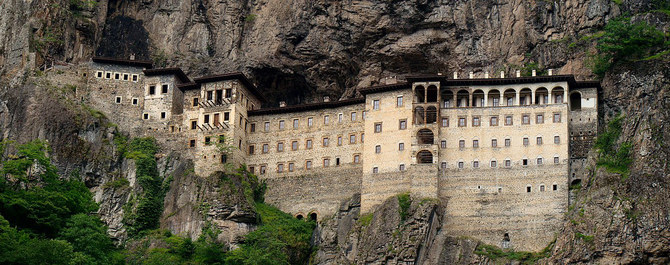

ANKARA: A dramatic monastery nestled in a cliff in the Turkish Black Sea province of Trabzon reopened to visitors on July 1 following a five-year restoration effort.
Sumela Monastery, which dates back to the fourth century, is considered one of Turkey’s most important faith tourism centers and is included in UNESCO's temporary list of World Heritage sites.
It was reopened on Aug. 15, 2010, for the religious practice of the Christian Orthodox community following an 88-year hiatus. But it has remained closed since 2015 due to the risk of rockfall from the neighboring Karadag mountain. The monastery is nestled in a steep cliff at an altitude of around 1,200 meters.
Restoration efforts began in Feb. 2016. They cost around TRY57 million ($6.53 million) and work was carried out by a team of 100 people.
It covered the main church, 10 chapels, a holy spring, a bell tower, a two-story kitchen, a fountain, a library, administrative spaces, monks’ rooms, and a guesthouse.
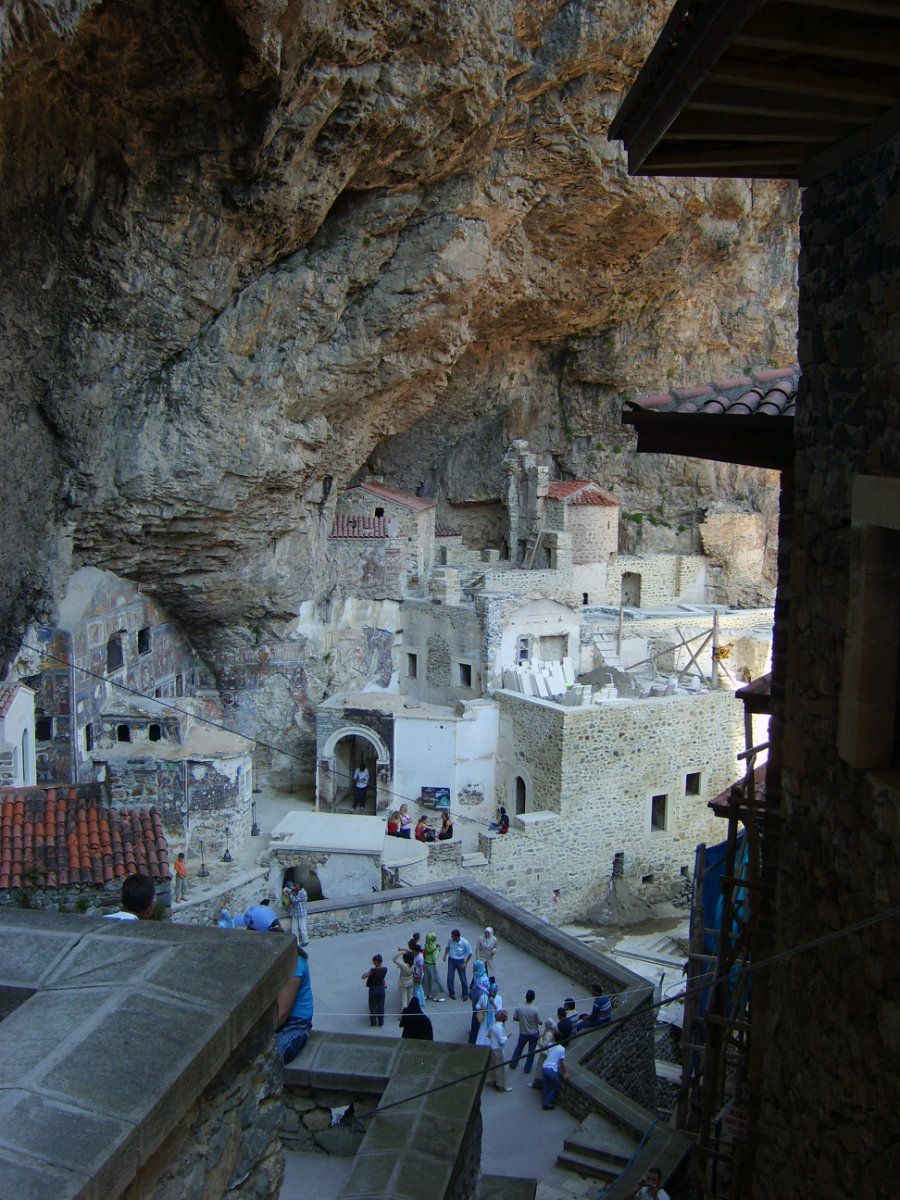
Inside the Sumela Monastery in Trabzon province, Turkey. (Wikimedia Commons)
A hidden chapel with walls full of frescos was also unearthed through the restoration, and the work also reinforced the rock mass by covering risky areas with steel nets.
A ceremony featuring a concert from the Presidential Symphony Orchestra was held to mark the reopening.
Last year, when most of the restoration work was complete, the monastery reopened to the public from July 28 to Nov. 3. It welcomed almost 124,000 visitors during this time.
Turkey aims at putting Sumela Monastery on the UNESCO World Heritage List next year.
Hasan Volkan Kantarci, a tourism professional from the Association of Turkish Travel Agencies, said the region had been an emerging hotspot for Gulf tourists for a few years.
“In 2019, over 1,300 flights were recorded to Trabzon from the Middle East region, especially from Amman, Dubai, Abu Dhabi,” he told Arab News. “During that year, 450,000 tourists from the Gulf countries visited the city and the opening of the monastery to visitors will increase these figures.”
Over the past four decades, the region attracted mostly European tourists because they were visiting the monastery as the first stop in their holiday packages.
But other international visitors have also been discovering the charms of the area.
Kantarci said that Gulf tourists particularly liked the location of the monastery because of the vast national park and highlands that surrounded it.
“We are expecting more Saudi visitors after mid-July to the region,” he added.


