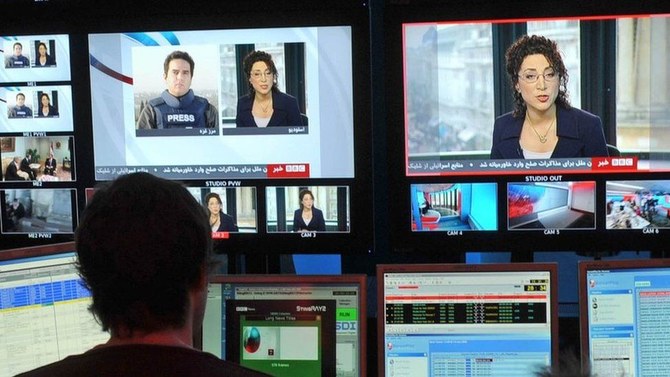

LONDON: The BBC has complained to the UN about Iran’s harassment of its Persian-language staff.
According to the British broadcaster, Iranian agents have threatened to kidnap London staff and take them to Iran.
The BBC’s legal team has urged the UN Human Rights Council (UNHRC) to take action on the issue.
BBC Persian is a very popular source of information for Iranians, boasting an estimated 18 million regular readers and listeners — around a quarter of the country’s population.
In an internal survey of 102 BBC Persian staff carried out in March last year, 71 said they had experienced harassment.
A third have also had one or both parents harassed or called in for questioning by Iranian authorities, and over half say they feel under pressure to leave their jobs.
In one instance, a reporter received threats to her life via online messaging platform Skype, and was told to quit her job — or spy on her colleagues — in return for the release of her 27-year-old sister who had been detained in Iran.
Tehran also froze the assets of BBC Persian staff in 2017. A year later, it accused all 152 current and former staff of “conspiracy against national security,” and initiated criminal investigations against them.
On Thursday, the BBC hosted a virtual side event to coincide with a UNHRC meeting, in which it raised concerns about an escalating campaign of harassment by Iran toward its Persian journalists and other Persian-language media.
BBC Persian reporter Kasra Naji spoke at the event and revealed the threats and cyberbullying that he, his colleagues and their families have endured.
He said in December 2020, six staff members had family called in for questioning by Tehran’s intelligence agents. All were told to pass on death threats to their London-based relatives.
According to Naji, agents made consistent references to Ruhollah Zam, an Iranian journalist operating from Paris who was tricked into traveling to Baghdad, kidnapped by Iranian agents while there and then executed for his writing.
“Perhaps the most shocking thing is the intelligence officers who made these threats against our lives were so comfortable that they handed over their phone numbers for us to contact them — acting with total impunity on behalf of the state,” said Naji.
“We ask you to help shine a light on what’s happening to us. It’s the only way to safeguard us. It’s a matter of life and death for us — and our families — to speak out.”
The BBC first complained in 2018 when criminal cases were opened against all staff, but staff say the assault on them began over a decade ago when Iran was convulsed by its worst unrest since the 1979 revolution.
The harassment campaign began in 2009 when the BBC covered Iran’s “Green Revolution,” which saw millions take to the streets to protest what they saw as a rigged election that placed hardliner Mahmoud Ahmadinejad in power as president.
Tehran blamed Western media for stoking unrest, and since then BBC Persian staff say they have been subjected to a campaign of harassment and death threats that has escalated in recent years. In some cases, staff have required police protection.
In March 2019, a group of UN experts condemned Iran’s treatment of the broadcaster, saying its actions violated international law and “ultimately (constituted) serious threats to global security.”