KUNDUZ, Afghanistan: Fear stalked Kunduz Thursday as residents prepared for a lengthy siege, with government forces patrolling the streets and Taliban insurgents surrounding the northern Afghan city.
The Taliban have held the city twice in recent years — both times briefly — but have now captured the surrounding districts and the main border crossing with Tajikistan.
“The Taliban have besieged our city,” said Qudratullah, a fruit seller who has done hardly any business since fighting first erupted in Kunduz province two weeks ago.
“Even today there is sporadic fighting on the outskirts of the city,” said Qudratullah, who like many Afghans uses only one name.
“If the government does not launch an operation against the Taliban, their siege will continue for a long time.”
Most businesses in Kunduz remained shut and vehicles stayed off the roads, an AFP correspondent who toured the city reported.
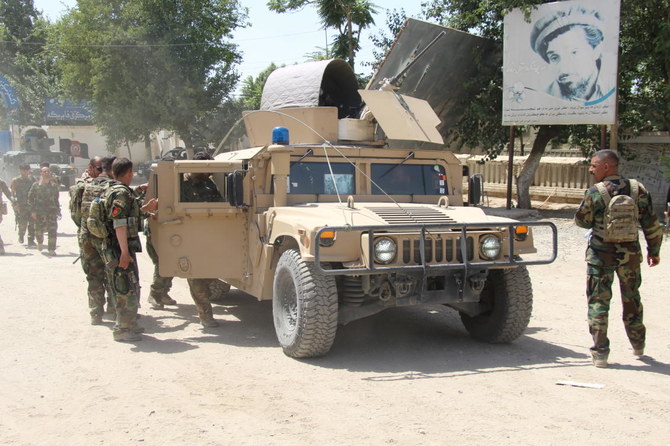
Dozens of military vehicles patrolled the streets as new government forces were deployed in the city of around 300,000, swelled by an influx of rural residents fleeing fighting in the districts.
Troops were seen firing sporadically at Taliban positions, and the bodies of two insurgents lay on the ground on the eastern edge of Kunduz.
The city’s public health director told AFP that since the fighting erupted a week ago, 21 civilians have been killed and 225 wounded.
Residents said they were suffering from water and power cuts, and few shops were open.
Kunduz resident Hasib said he feared the Taliban would soon launch a major offensive on the city.
“We don’t feel safe... We have seen the Taliban capture the city twice before, and we do not want the city to fall again to them,” he said.
“The government forces should break the Taliban siege, if not the Taliban will continue their offensives... and their siege will continue forever.”
Fighting has raged across Kunduz province for days, with the Taliban and Afghan forces engaged in bloody battles.
On Tuesday the insurgents captured Shir Khan Bandar, Afghanistan’s main border crossing with Tajikistan, in one of their most significant gains in recent months.
On Thursday, Afghan authorities attempted to put on a brave front, with Interior Minister Abdul Satar Mirzakwal flying in for a brief visit.
“Saving and protecting Kunduz is among our top priorities,” he said in a video message released to reporters.
“We are taking serious measures and will provide more weapons and technical equipment to Afghan forces in all provinces.”
Since early May, the Taliban have launched several major offensives targeting government forces across the rugged countryside and say they have seized at least 87 of the country’s more than 400 districts.
Many of their claims are disputed by the government and difficult to independently verify.
Violence surged after the US military began the withdrawal of its last remaining 2,500 troops from the country to meet the September 11 deadline announced by President Joe Biden to end America’s longest war.


![]()

Fear stalks northern Afghan city as Taliban lay siege
Short Url
https://arab.news/27kns
Fear stalks northern Afghan city as Taliban lay siege
- The Taliban have held Kunduz twice in recent years — both times briefly — but have now captured the surrounding districts and the main border crossing with Tajikistan
- Violence surged after the US military began the withdrawal of its last remaining 2,500 troops from the country to meet a September 11 deadline


Latest updates





© 2026 SAUDI RESEARCH & PUBLISHING COMPANY, All Rights Reserved And subject to Terms of Use Agreement.