

Pakistani Taliban warn women in northwest against working for government, NGOs

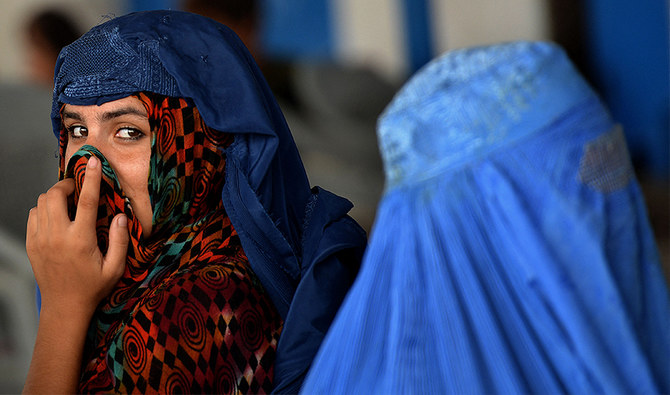
Women wait to board trucks at the United Nations High Commissioner for Refugees (UNHCR) centre on the outskirts of Peshawar on July 28, 2016. (AFP)
Short Url
Updated 25 June 2021
Follow

Pakistani Taliban warn women in northwest against working for government, NGOs

  • Threaten "consequences" if women in North Waziristan take up jobs with government departments
  • In February this year, militants shot dead four female aid workers near a main town in North Waziristan

PESHAWAR: The Pakistani Taliban on Thursday warned women in Pakistan's northwest of "consequences" and meeting their "ultimate fate" if they took up jobs with the government or non-governmental organizations.

The Pakistani Taliban are an umbrella of militant groups called the Tehrik-e-Taliban Pakistan (TTP), which is banned by the Pakistani government and designated a terrorist group by the US. They are a separate entity from the Afghan Taliban.

In February this year, militants shot dead four female aid workers near Mir Ali, a main town in North Waziristan.

“Women are strictly warned not to undertake jobs at any government body or its stooges (NGOs) on the soil of (North) Waziristan, otherwise everyone knows its consequences,” TTP's spokesperson for North Waziristan, Abdul Rehman, said in a statement.

"Females from the adjacent Bannu or other districts continue to work with government or NGOs presumably for public welfare, but they are causing obscenity despite repeated warnings," Rehman said, adding that the women were "under our observation" and "will meet their ultimate fate soon."

TTP has been in disarray in recent years, after Pakistan military operations and US drone strikes targeting their hideouts in North and South Waziristan, but in August announced a reunion with some of its splinters. The group has since stepped up attacks on government troops and installations in tribal regions bordering Afghanistan, rising concerns that the militants are regrouping there.

The war-torn tribal belt remains one of the most underdeveloped areas of Pakistan.

Senior analyst Rustam Shah Mohmand said the TTP was trying to regain grip over the region and building pressure with threats.

"The TTP is now disorganized, desperate and wants to restore its standing," he said. "But people aren’t ready to accept them." 


Police in Pakistan’s Karachi say 71 of 75 extortion cases traced as businesses complain of threats

Updated 6 sec ago
Follow

Police in Pakistan’s Karachi say 71 of 75 extortion cases traced as businesses complain of threats

  • Builders told provincial authorities this week extortion calls were traced to numbers operating from abroad
  • Police say 128 suspects were identified, with 91 arrested and six killed in encounters during investigations

ISLAMABAD: Police in Karachi said on Saturday they traced 71 of 75 confirmed extortion cases this year, arresting 91 suspects and killing six in encounters, amid complaints from businesses about rising threats in Pakistan’s commercial hub.

The disclosure follows recent complaints by builders and developers who told provincial authorities that extortion demands had increased in Karachi, with some calls traced to numbers operating from abroad, prompting assurances of tougher enforcement by the Sindh government.

“In 2025, a total of 171 extortion cases were registered, of which 75 were confirmed as genuine extortion,” police said in a statement. “Of these 75 cases, 71 were traced, representing a 95 percent trace rate.”

According to the report released by the Special Investigation Unit (SIU) of the Crime Investigation Agency (CIA) Karachi, the remaining 96 cases initially registered as extortion were later found to be linked to financial disputes, land and plot conflicts, personal matters, fights and other non-extortion-related disagreements.

Police said 128 suspects were identified in the confirmed extortion cases. Of these, six were killed in encounters with the SIU, while 14 others were arrested in injured condition during operations.

A total of 91 suspects were arrested over the course of the year, the statement said, adding that crackdowns against extortion would continue.

Karachi, Pakistan’s largest and most populous city, is the country’s financial and commercial capital, accounting for a significant share of national revenue, trade and industrial activity.

The city has long struggled with crime, political violence and organized criminal networks, with members of the business community repeatedly warning that extortion poses a persistent threat to investment and economic stability.