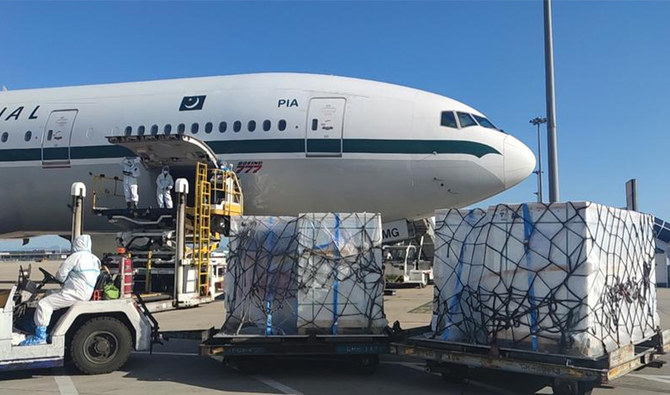
ISLAMABAD: Pakistan received a new batch of two million doses of COVID-19 vaccines from China on Wednesday amid a shortage of the crucial jabs in various parts of the country.
Authorities shut down several vaccination centers including in the capital city, Islamabad, and the southern Sindh province last week due to supply chain obstacles which the government hopes to overcome with the latest imports.
The National Command and Operation Center (NCOC), the federal body dealing with the COVID-19 pandemic, said that the procurement of two million doses of Sinovac on Wednesday was part of a planned purchase deal signed with China.
“These doses will be deployed to all vaccine centers across the country for which arrangements are already in place,” the NCOC said in a statement on Tuesday, adding: “The daily average administering of doses across the country will be enhanced considerably.”
The South Asian Nation of 220 million people has emerged from a third wave of the coronavirus outbreak in recent months and began a mass vaccination drive for all adults earlier this month.
It is heavily reliant on China for its supply – three of the six vaccines approved for use in Pakistan are Sinopharm, SinoVac and CanSinoBio produced by Beijing.
According to data shared with Arab News by Pakistani health chief Dr. Faisal Sultan, as of June 9, the country had received 14.5 million vaccine doses, of which 11.06 million had been purchased from pharmaceutical companies, while China donated 2.7 million and a consignment of 1.34 million was contributed by Covax, the global dose-sharing platform for developing nations.
On Monday, Pakistan signed a deal with Pfizer for an additional 13 million COVID-19 doses without releasing more details about the agreement, including the contract amount.
As of June 8, 9.9 million doses of the 14.5 million total doses received had been administered, according to data provided by the health chief.
As per a government portal, 3.6 percent of Pakistan’s 70 million adult population has been fully inoculated so far.
Of the doses administered, the majority of the people — 3,513,088 — have received a Sinovac jab, while 2,548,788 people have been given the Sinopharm vaccine, Sultan said.
In recent weeks, Pakistan has witnessed a steady decline in COVID-19 cases and its positivity ratio.
According to official data, 930 people tested positive for the disease and 39 deaths were reported on Wednesday, taking the total tally to 950,768 and 22,073 fatalities since last year.


![]()

Pakistan receives new batch of two million COVID-19 vaccine doses from China
Short Url
https://arab.news/rwy3e
Pakistan receives new batch of two million COVID-19 vaccine doses from China
- Procurement of two million doses of Sinovac is part of an agreement with Beijing
- Officials to restore inoculation drive with new consignment after several centers shut down due to vaccine shortage last week, NCOC says
Latest updates


© 2026 SAUDI RESEARCH & PUBLISHING COMPANY, All Rights Reserved And subject to Terms of Use Agreement.