RIYADH: The COVID-19 pandemic has impacted the Saudi property market in many ways, with a number of trends emerging, such as a focus on apartment living, the growth of e-commerce impacting the warehouse and retail sector and the reopening of international movement spurring a rebound in the hospitality sector.
In its new report, real estate consultancy firm CBRE observed that in the residential sector there has been “increased demand witnessed across major markets for smaller residential typologies, with increased focus on community living environment. Developers are responding by introducing a greater proportion of apartments and townhouses within their mega projects.”
As part of its Vision 2030 program, the government is aiming to increase homeownership in the Kingdom to 70 percent, up from about 47 percent in 2017. One of the ways it is doing this is through the launch of Roshn, which is owned by the Public Investment Fund (PIF). Roshn is planning to start off-plan sales at its flagship project in Riyadh later this year, with the handover of the first homes to tenants likely in early 2022.
“Our communities are entirely inclusive, with homes to suit all tastes and budgets. Our aim is to provide a modern, aspirational living experience while giving residents the freedom to interpret what this means to them in their own unique way. Our communities have been designed to inspire a strong sense of neighborly spirit and genuine connection between residents,” Roshn’s Group CEO David Grover told Arab News.
CBRE said that millennials were emerging as a key consumer class for residential units and demand is high for “digitally enabled homes.”
Within the office sector, the report believed that the recent announcement of the Riyadh Strategy 2030, which aims to attract hundreds of companies to set up their headquarters in the Saudi capital, will benefit developers building office space. While the pandemic saw workers staying at home, CBRE believed that “physical offices are here to stay” but developers may need to move away from traditional models and offer more flexible spaces to accommodate hybrid working plans.
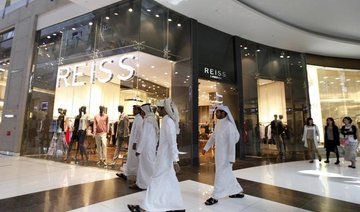
Within the retail sector, the surge in e-commerce in 2020 has led to the development of more fulfilment sectors, warehouses and collection points. “Rapid growth of online shopping is likely to result in more omni-channel retail, however, preserving the ‘physical experience’ will be a critical component of these omnichannel strategies, particularly in the KSA,” the CBRE report observed.
This was echoed by Ahmad BinDawood, CEO of BinDawood Holding, one of the Kingdom’s biggest supermarket operators, who told Arab News in May that while the company had seen a spike in online sales, he believed consumers still prefer to come to the stores to buy their produce.
“The primary way that the customer prefers to shop is actually visiting the stores, not through online. Online shopping is still going to be good for the future but so far we see that the customer prefers to shop in stores to have that experiential element when they come,” he said.
However, other retailers are adopting a more hybrid model. Dubai’s Majid Al Futtaim operates 21 Carrefour stores across nine Saudi cities and is aiming to double its store network by 2025. It saw online sales in the Kingdom rise by 285 percent last year, therefore, alongside the store network expansion, it is also adding fulfilment centers and boosting door-to-door delivery.
Hani Weiss, CEO of Majid Al Futtaim Retail, told Arab News: “This included opening a large online fulfilment center in Riyadh and activating nine of our customer stores to also fulfil online orders. The opening of our automated fulfilment center in Jeddah is the latest in Majid Al Futtaim’s digital transformation of its Carrefour operations.”
The 9,000 square meter center in Riyadh is Majid Al Futtaim’s largest for its online Carrefour business and operates 24 hours a day, seven days a week, handling up to 5,000 orders a day.
Within the hotel sector, CBRE believed the recovery may take more time as borders only reopened on May 17. While there was little impact on the guest experience, CBRE believed that hoteliers did have to reduce costs and salaries, but these were coming back. Jochem-Jan Sleiffer, president of Hilton Middle East, Africa and Turkey, told Arab News that while the company is aiming to increase its presence in the Kingdom from 15 properties to 56 by 2025, the last year was tough. The company postponed some investment deals to preserve cash and it did make some layoffs, but it is now back rehiring staff at an accelerated rate.