

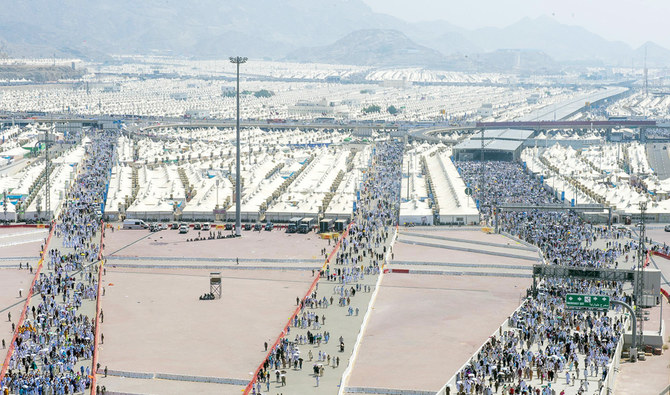


JEDDAH: Saudi Arabia’s decision to only allow 60,000 residents vaccinated against the coronavirus disease (COVID-19) to perform this year’s Hajj, and to bar Muslims from abroad for a second straight year, has been widely welcomed.
The Hajj — a must for able-bodied Muslims at least once in their lives — packs millions of pilgrims into religious sites and could be a major source of contagion amid the COVID-19 pandemic.
This year, the pilgrimage will be “open for nationals and residents of the Kingdom, limited to 60,000 pilgrims,” the Kingdom's Hajj Ministry said, quoted by the Saudi Press Agency.
The event, scheduled to be held in July, will be limited to those who have been vaccinated and are aged 18-65 with no chronic illnesses, it added. Those wishing to perform the pilgrimage will have to apply online.
Only around 10,000 Muslims took part in the Hajj in July last year.
Khalifa Shaheen Al-Marar, UAE minister of state, said his country “welcomes the Kingdom’s decision and supports all measures the Kingdom takes as part of its efforts to fight the COVID-19 pandemic, contain its spread and ensure the safety and security of pilgrims and the community.”
Al-Marar added: “The scientific achievements of Saudi Arabia testify to the importance the Kingdom attaches to science as the key driver in supporting healthcare and overcoming the major challenges from the impact of the pandemic.”
Sheikh Khalid bin Ali Al-Khalifa, Bahraini minister of justice, Islamic affairs and endowment, said the decision “falls in line with preserving Hajj rituals and meeting Shariah exigency.”
The Muslim World League (MWL), in a statement issued on behalf of all scholars under its umbrella, supported the measures taken by Saudi Arabia to confront new mutated variants of the virus.
Dr. Muhammad bin Abdul Karim Al-Issa, MWL secretary-general and chairman of the Association of Muslim Scholars, said the rules of Islamic law emphasize the inevitability of taking all safety precautions in such a pandemic.
He added that several senior scholars of the Islamic world contacted the MWL expressing support for the Kingdom’s decision.
The statement stressed the “exceptional efforts” made by the Saudi government, “which clearly demonstrates its concern for the safety of visitors and pilgrims of the Grand Mosque and visitors to the Prophet's Mosque.”
Dr. Yousef bin Ahmed Al-Othaimeen, secretary-general of the Organization of Islamic Cooperation, said the Saudi decision emanates from the Kingdom’s success in organizing last year’s Hajj season, held following all the precautionary measures, which effectively contributed to preventing the virus’s spread.
He said the Kingdom assumed responsibility toward organizing the Hajj, which required it to take strict decisions and measures based on current health data and well-established Islamic jurisprudence rules.
Egyptian Grand Mufti Shauqi Allam also hailed the decision.


