

Three agreements signed to shoot Hollywood, Saudi movies in AlUla

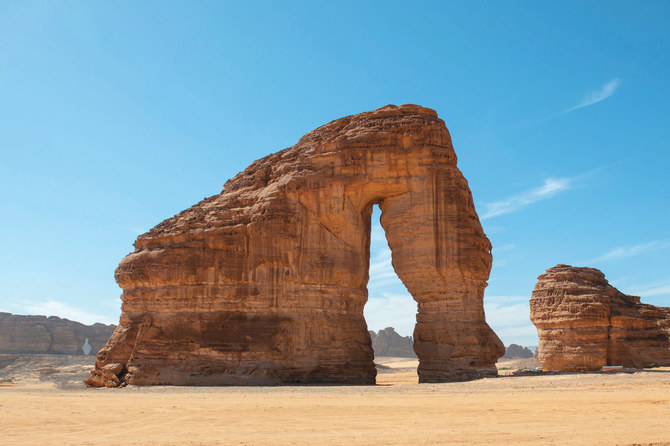
Saudi Arabia’s attractive landscapes, including its historical heritage, play a key role in promoting the development of the local film industry. (AN file photo)
Short Url
Updated 11 June 2021
Follow

Three agreements signed to shoot Hollywood, Saudi movies in AlUla

  • ‘Film Commission is doing all it can to help local talents to harness the benefits of modern technology’

RIYADH: The Film AlUla department at the Royal Commission for AlUla has signed agreements to shoot three films in the governorate — an American movie directed by and featuring big Hollywood names and two Saudi movies.

The Saudi projects are “In Sands” directed by Muhammad Al-Atawee and “Nourah” directed by Tawfeeq Al-Zayedi. The Hollywood film has not yet been named.

The Film Commission at the Ministry of Culture will finance both Saudi films in full and will coordinate with Film AlUla to meet all shooting requirements in AlUla.

The agreements were signed following the great success of the American movie “Cherry” directed by Anthony and Joe Russo. Scenes from “Cherry” were shot in AlUla and Riyadh, a first for Saudi Arabia, in collaboration with Film AlUla, which is working hard to attract Saudi and global talents to shoot movies here.

Mohammad Al-Asmari, a documentary film director, said that the exchange of expertise in the filmmaking industry is a great stimulant for Saudi talent, noting that the industry is a lucrative source of income and a stimulant for domestic and foreign investors.

FASTFACTS

The Saudi projects are ‘In Sands’ directed by Muhammad Al-Atawee and ‘Nourah’ directed by Tawfeeq Al-Zayedi. The Hollywood film has not yet been named.

The agreements were signed following the great success of the American movie ‘Cherry’ directed by Anthony and Joe Russo. Scenes from ‘Cherry’ were shot in AlUla and Riyadh, a first for Saudi Arabia, in collaboration with Film AlUla, which is working hard to attract Saudi and global talents to shoot movies here.

Al-Asmari commended the Film Commission for encouraging the success of Saudi production and setting up the regulatory framework to help Saudis make their dreams come true.

The Film Commission is doing all it can to help local talents to develop their filmmaking skills and to harness the benefits of modern technology, Al-Asmari said.

The Film Commission was established in February last year. Its board of directors chaired by the minister of culture is responsible for developing the film sector in the Kingdom and encouraging individuals, institutions and companies to develop content.

Tariq Al-Khawaji, a cultural consultant at Ithra Programs, said the Kingdom’s attractive landscapes, including its historical heritage, have played a key role in promoting the development of the film industry.

Since Saudi Arabia started issuing tourist visas, it has been visited by numerous movie and television production companies exploring shooting in AlUla and other locations.

AlUla’s landscapes are among the best filming locations in the world and Film AlUla is seeking to establish AlUla as international filming and content destination and to create a film infrastructure in northwestern Saudi Arabia.

It provides a package of services to attract international filmmakers. This includes a team of film experts in AlUla to facilitate production and build a suitable ecosystem for filmmaking.

On the practical side, it can handle film crew visas, secure ground and air transportation, facilitate the import and export of cameras and other production equipment, sort out accommodation in Riyadh and AlUla and grant permits.

In addition to its cultural heritage dating back more than 200,000 years, AlUla has a fascinating diversity of terrains covering an area of more than 22,500 km that includes charming valleys and amazing rock formations created by wind and water over millions of years. The governorate’s farms, villages and cities with their range of old and new architecture offer a variety of options for filmmakers.

Film AlUla also works to stimulate local film production, in partnership with other government agencies, based on the Royal Commission’s endeavor to empower national talents in the film industry.


Cairo book fair breaks visitor records

Updated 03 February 2026
Follow

Cairo book fair breaks visitor records

  • Strong Saudi participation underscores KSA’s prominent role in Arab cultural landscape
  • Egyptian writer Naguib Mahfouz, who was awarded the Nobel Prize in Literature in 1988, was selected as the fair’s featured personality

CAIRO: The 57th edition of the Cairo International Book Fair has attracted record public attendance, with the number of visits reaching nearly 6 million, up from a reported 5.5 million previously.

Egypt’s Minister of Culture Ahmed Fouad Hanou said: “This strong turnout reflects the public’s eagerness across all age groups to engage with the exhibition’s diverse cultural and intellectual offerings.”

Hanou said the event included “literary and intellectual activities, meetings with thinkers and creative figures, and thousands of titles spanning various fields of knowledge.”

The Egyptian writer Naguib Mahfouz, who was awarded the Nobel Prize in Literature in 1988, was selected as the fair’s featured personality, coinciding with the 20th anniversary of his death.

The exhibition’s official poster features a famous quote by Mahfouz: “Who stops reading for an hour falls centuries behind.”

A total of 1,457 publishing houses from 83 countries participated in the fair. Mahfouz’s novels occupied a special place, as Egypt’s Diwan Library showcased the author’s complete works, about 54 books.

“The pavilion of the Egyptian National Library and Archives witnessed exceptionally high attendance throughout the fair, showcasing a collection of rare and significant books.

Among the highlights was the book “Mosques of Egypt” in Arabic and English, Dr. Sherif Saleh, head of financial and administrative affairs at the Egyptian National Library and Archives, told Arab News.

The fair ended on Tuesday with a closing ceremony that featured a cultural performance titled “Here is Cairo.”

The event included the announcement of the winners of the fair’s awards, as well as the recipient of the Naguib Mahfouz Award for Arabic Fiction.

Organizers described this year’s edition as having a celebratory and cultural character, bringing together literature, art, and cinema.

Romania was the guest of honor this year, coinciding with the 120th anniversary of Egyptian-Romanian relations.

At the Saudi pavilion, visitors were welcomed with traditional coffee. It showcased diverse aspects of Saudi culture, offering a rich experience of the Kingdom’s heritage and creativity.

There was significant participation from Saudi Arabia at the event, highlighting the Kingdom’s prominent role in the Arab cultural arena.

Saudi Arabia’s participation aimed to showcase its literary and intellectual output, in alignment with the objectives of Vision 2030.

The Kingdom’s delegation was led by Saudi Arabia’s Ambassador to Egypt Saleh bin Eid Al-Hussaini. Also in attendance were Dr. Abdul Latif Abdulaziz Al-Wasel, CEO of the Literature, Publishing and Translation Commission, and Dr. Hilah Al-Khalaf, the commission’s director-general.

The King Abdulaziz Public Library placed the Encyclopedia of Saudi Arabia in a prominent position at the pavilion. The encyclopedia, consisting of 20 volumes, is organized according to the Kingdom’s culturally diverse regions.

Founded in 1980 by King Abdullah, the library was established to facilitate access to knowledge and preserve heritage collections. Over the years, it has grown into one of the Kingdom’s most important cultural institutions.

Internationally, the library has strengthened ties between Saudi Arabia and China, including the opening of a branch at Peking University and receiving the Crown Prince Mohammed bin Salman Award for Cultural Cooperation between the two nations.

Regionally, the library has played a pivotal role in the Arab world through the creation of the Unified Arabic Cataloging Project, one of the most important initiatives contributing to knowledge accessibility and alignment with global standards.