

Memories of one of Saudi Arabia’s oldest bakers live on

1 / 9
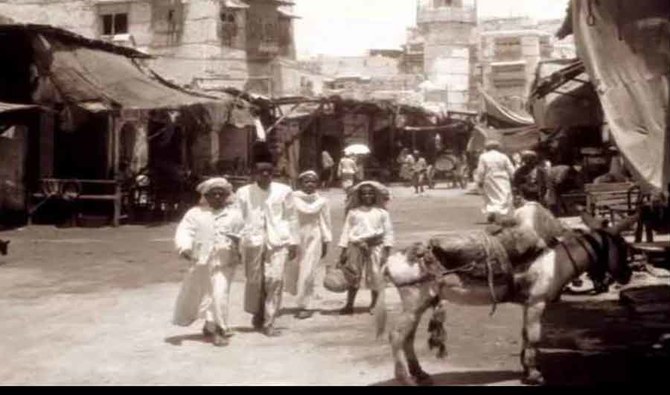
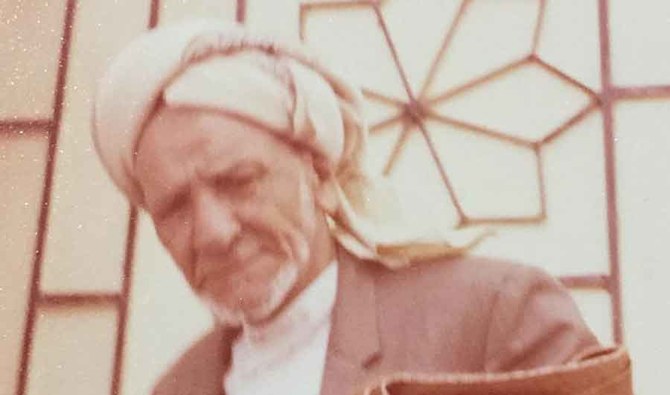
It has been more than half a century since one of the oldest existing bakeries was opened in Saudi Arabia. (Supplied)
2 / 9
Photo/Supplied
3 / 9
Photo/Supplied
4 / 9
Photo/Supplied
5 / 9
Photo/Supplied
6 / 9
Photo/Supplied
7 / 9
Photo/Supplied
8 / 9
Photo/Supplied
9 / 9
Photo/Supplied
Short Url
Updated 08 June 2021
Follow

Memories of one of Saudi Arabia’s oldest bakers live on

  • In 1924, Shoukry was the contemporary of then Mayor Ali Salama and the 13 mayors of Jeddah after that

MAKKAH: For many Jeddawis, the smell of freshly baked bread awakens memories of their early childhood, and for many local bakers, it is the continuous flow of valued customers that keeps that memory alive.
It has been more than half a century since one of the oldest existing bakeries was opened in Saudi Arabia. Forn Al-Shaikh was founded by Sheikh Youssef Shoukry more than 50 years ago and provided the residents of Jeddah with some of the freshest baked goods in the city. Shoukry’s reputation spread so fast that it crossed borders into Bahrain, Pakistan and Egypt, and as far as the UK and the US, as people exported his freshly baked bread across the Red Sea and beyond.
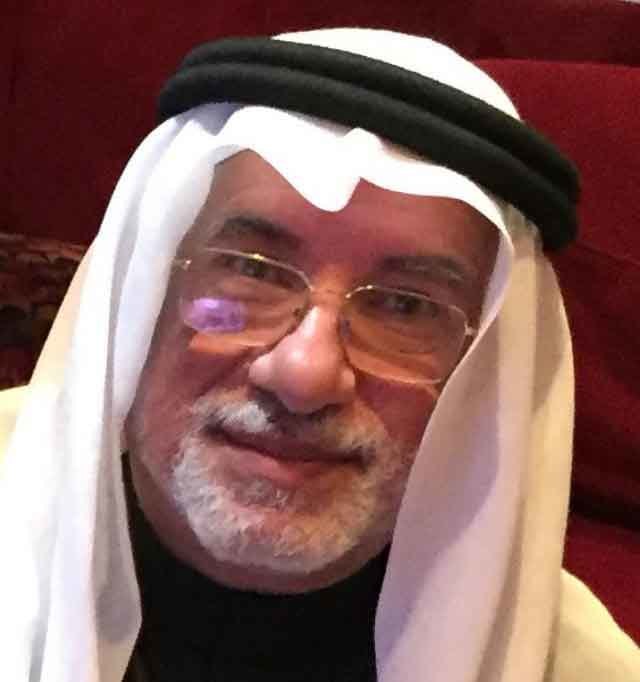
Speaking to Arab News, Mukhtar Shoukry said that his father was the head baker in Jeddah from 1952 until he died in 1999, building up years of experience in the baking business.
Mukhtar told Arab News: “My father was born in Madinah in 1888 and lived most of his life in Madinah. He was raised as an orphan and by the time he was 10 years old, he worked for the head baker in Al-Madinah at the time.”
He added that his father and relatives “were grain merchants, and when my aunt married the head baker in Madinah at the time, Mahmoud Azzouni, my father started working as a baker for very little money, but he loved the profession.
“He worked with his uncle for about eight to 10 years, after which he met Uncle Fakhri, who used to send merchants to the Levant. My father traveled and resided for three years in the AlUla region and then moved to Al-Wajh during the days of the Sharif Al-Ghalib family and the Turks, before moving to Makkah. Then, he returned to Madinah to work as a baker again.
“He had a harsh upbringing, as he worked from a very early age, but he gained experience and knowledge from the company of men surrounding him, moving from one social circle to the next even though he was illiterate,” he said.

FASTFACTS

• Forn Al-Shaikh was founded by Sheikh Youssef Shoukry more than 50 years ago.

• Shoukry’s reputation spread so fast that it crossed borders into Bahrain, Pakistan and Egypt, and as far as the UK and the US.

Shoukry said that the Hijaz region was the corridor through which millions of Muslims crossed through the ages to the Two Holy Mosques in Makkah and Madinah, bringing with them their culture, heritage, traditions and experiences.
He added: “Therefore, the Hijaz is the crucible in which Eastern experiences and science accumulated throughout the centuries, bringing together traditional Eastern and Arab medicine, culminating in the slogan ‘Food is Medicine,’ because people used to treat themselves with food.
“My father had great experience and knowledge of various types of food that were used as medicine, and had a strong religious background. Therefore, he was known as a pious and wise man.”
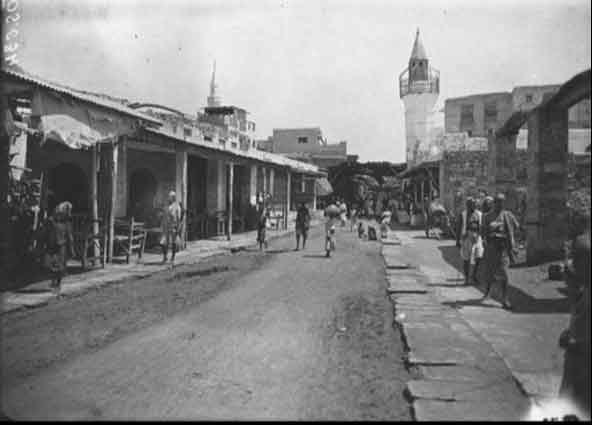
After years of working in Madinah, a misunderstanding and dispute between Shoukry and the head baker of the city at the time made him leave Madinah and move to Jeddah, where he opened a small bakery in the city’s Nada market, located in Harat Al-Sham, northwest of the city.
In the early 1950s, the quality of his bread and mastery of the profession had people flocking to his bakery, and soon after, he was recognized as the official head baker of the city, and was given the authority to inspect and direct all bakers. A ceremony was held to celebrate the event that included former head bakers, too, including Hassan Maghribi, Hamid Al-Hubaishi, Mustafa Amin, Saleh Hamada and Mohammed Ali, among others.
In 1924, Shoukry was the contemporary of then Mayor Ali Salama and the 13 mayors of Jeddah after that.
Mukhtar Shoukry said: “My father used to sit in a special place at the entrance of Souk Al-Nada. He used to be dressed in a distinguished traditional sedairy (vest), his imamah or head wrap and carried his prayer beads and pocket watch. Sometimes, he led the prayers at Souk Al-Nada’s small mosque in front of the bakery. He would walk for several kilometers from his home in the Al-Kandara neighborhood before the dawn call to prayer alone, in order to reach the Al-Basha Mosque or the Al-Nada Mosque in time for prayer. He worked in the bakery until past his 60s and then trained his workers to maintain the quality of bread.”
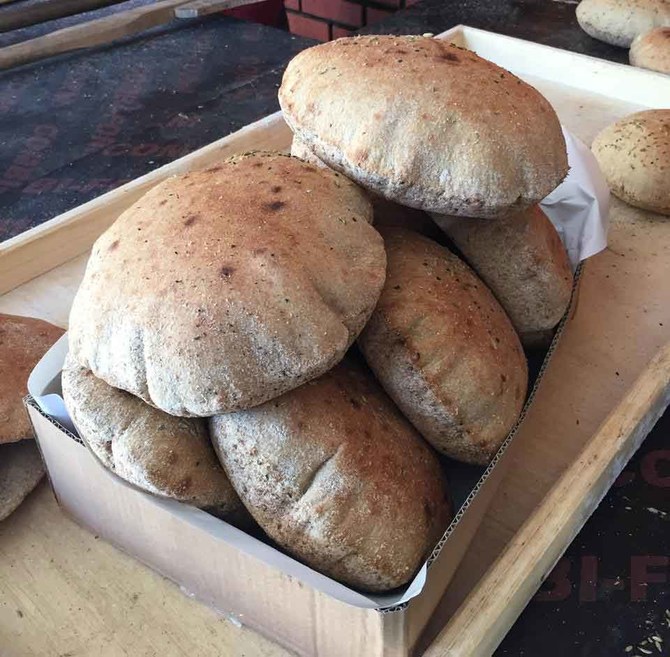
Distinguished by piety, righteousness, intelligence and wise opinions, Shoukry’s bakery has lived on to serve thousands, if not millions of people, from the days of the Ottomans until today. A bakery that started off selling three types of bread — Samoli bread, which resembles French bread, Shami bread, a pita bread, and flatbread — has now moved on to bake other popular products.
“The oven is still working and produces the same old special taste with its distinct aroma and flavor,” Shoukry’s son said. “The old mixture is still preserved in this bakery even after his passing more than two decades ago, and most of his customers are from Al-Balad, Qabel Street, Suwaiqah, Al-Sham Street and other nearby neighborhoods of the old city of Jeddah.”
The freshness of the aroma can still be detected when passing by the old market, in the exact same spot it was first established all those years ago, serving the people, both old and young, in the same quality and quantity, a treasured relic of the old city still going strong today.


National program identifies 165 native plants for afforestation efforts in Asir

Updated 29 December 2025
Follow

National program identifies 165 native plants for afforestation efforts in Asir

  • The survey is part of broader plans focused on restoring degraded land, using native vegetation 

JEDDAH: Saudi Arabia’s National Afforestation Program has identified more than 165 species of native plants suitable for afforestation in the Asir region, highlighting the ecological diversity of one of the Kingdom’s most environmentally varied areas, the Saudi Press Agency reported.

The findings form part of broader national efforts to expand vegetation cover, address land degradation, and support sustainability goals linked to the Saudi Green Initiative and Vision 2030.

According to the program, the identified species are distributed across a wide range of natural environments in Asir, including mountainous terrain, highlands, slopes, valleys, plains, rocky landscapes, and coastal areas stretching from the Red Sea to Tihama.

The species belong to numerous plant families, including Fabaceae, Anacardiaceae, Burseraceae, Capparaceae, Ebenaceae, Euphorbiaceae, Malvaceae, Myrtaceae, Oleaceae, and Primulaceae, among others.

Plants suitable for afforestation range from large and small trees to perennial and annual shrubs, herbs, succulents, bulbs, and climbing plants. 

Among the most notable species identified are the grey mangrove, mastic tree, mooring or ben tree, juniper, sycamore fig, wild olive, henna, wild jasmine, hawthorn, and arak.

The Saudi Arabian Botanical Society described the announcement as an important step in protecting plant diversity and strengthening the ecosystem conservation in the Kingdom. 

Munirah bin Hamad Al-Hazani, founder and president of the society, said that prioritizing native species is central to sustainable afforestation.

“Focusing on the cultivation of native plants adapted to diverse environments forms the cornerstone of sustainable afforestation projects, as it plays a pivotal role in enhancing vegetation cover, combating land degradation, and conserving natural and financial resources,” she told Arab News.

Al-Hazani added that long-term success depends on cooperation between government bodies and the nonprofit sector, alongside community involvement and environmental awareness programs.

The National Afforestation Program has increasingly emphasized community participation, working with government agencies, private companies, and nonprofit organizations to support planting initiatives and environmental education. Its approach includes promoting volunteerism and discouraging harmful environmental practices, while focusing on the use of native plants adapted to local conditions.

Parallel efforts are underway in other regions of the Kingdom to support vegetation restoration through research and infrastructure development. In Jouf, often referred to as the Kingdom’s food basket, the King Salman bin Abdulaziz Royal Reserve Development Authority has established a Central Nursery and a Wild Seeds Research and Production Station to address the growing demand for reliable sources of native seeds and seedlings.

The project was launched in 2023 under the directive of Prince Abdulaziz bin Saud bin Naif, the minister of interior and chairman of the authority’s board of directors. 

Since then, the facilities has become a key component of vegetation restoration efforts within the reserve.

The authority has focused on building operational capacity by recruiting and training specialists to manage cultivation and research activities. The research and production station includes 14 mother-seed production fields containing over 400,000 trees and shrubs. 

Planting began in late 2024, with more than 30 native plant species represented, selected for their role in the reserve’s natural ecosystem. 

The facility also includes two seed storage units with a combined capacity of 3,000 kilograms. Seeds are collected annually from multiple sites within the reserve and used for seedling production habitat rehabilitation.

The Central Nursery spans 6,000 square meters and includes 30 greenhouses spanning 1,500 square meters, as well as two shade houses used during summer months. A plant hardening facility, designed to prepare seedlings for natural environmental conditions, covers 10,000 square meters and is divided into seven sections. The nursery’s annual production capacity reaches 1.5 million seedlings, representing more than 15 native plant species. 

Together, these initiatives underscore the growing role of native plant research and propagation in Saudi Arabia’s afforestation strategy, particularly as the Kingdom works to balance environmental restoration with long-term sustainability goals.