Mass arrests in Pakistan's Karachi as Bahria Town land dispute turns violent

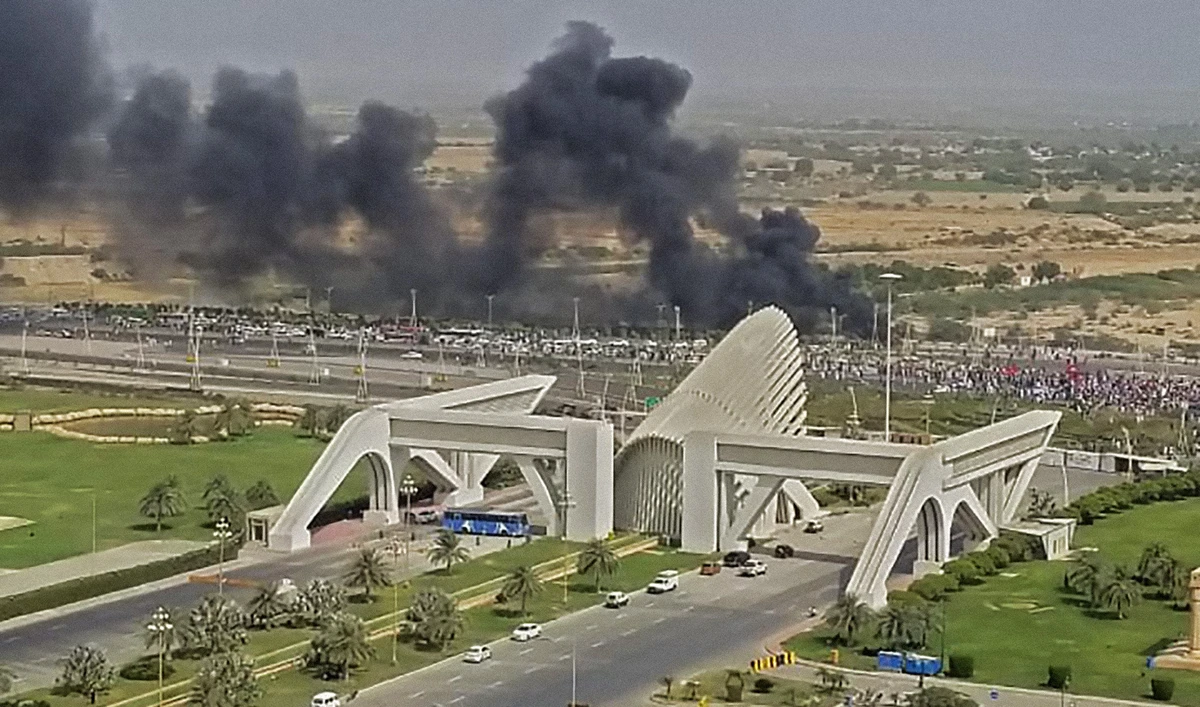
Smoke billowing outside the main entrance of the Bahria Town neighborhood in Karachi, Sindh province on June 6, 2021 amid protests by indigenous Sindhi groups against alleged land grabbing. (Photo courtesy: social media)
Short Url
Updated 07 June 2021
Follow

Mass arrests in Pakistan's Karachi as Bahria Town land dispute turns violent

  • Main road connecting Karachi with the rest of the country was blocked by the protesters for several hours
  • Indigenous Sindhi communities have been accusing Bahria Town Karachi of land grabbing

KARACHI: At least 90 people have been arrested in the Bahria Town neighborhood of Karachi, southern Sindh province, as a protest against alleged land grabbing turned violent on Sunday evening, police said.

Bahria Town Karachi (BTK) is a privately owned gated housing society covering 68 square kilometers off the M-9 Motorway northeast of Karachi. It was established by Pakistani property tycoon Malik Riaz Hussain in 2014, whom for the past few years indigenous Sindhi communities living in the area have been accusing of usurping their ancestral land.

Sunday's demonstration was organized by various Sindhi groups, including the Sindh United Party, Sindh Taraqi Pasand Party, Qaumi Awami Tehreek, Jiye Sindh Mahaaz, Awami Workers Party, Awami Jamhoori Party, Sindh Mazahmat Tehreek, Hari Committee and Karachi Indigenous Rights Alliance.  

Shops, cars and other property were set ablaze in the upscale housing community and the main road connecting Karachi with the rest of the country was blocked by protesters for several hours.

"Around 90 people have been arrested,” Saqib Ismail Memon, deputy inspector general of Karachi East, told Arab News.

He added the situation was under control, traffic was restored, and an investigation was underway.

Gul Hasan Kalmati, a local historian and one of the organizers of the protest, said police and BKT management had blocked the way to the place where the demonstration was scheduled to be held and that prompted the protesters to block the motorway.

"We don’t know who attacked and managed to enter Bahria town amid strict security measures and who allowed them to spoil a peaceful protest for the rights of indigenous people," Kalmati told Arab News.

While neither the housing community nor the local government have commented on the incident, Sindh Governor Imran Ismail said in a statement that BTK "should resolve their matter at the soonest so that citizens may live peacefully."

In May 2018, the Supreme Court ruled that the Malir Development Authority under the Sindh government, had illegally granted land to BTK. In 2019, the court agreed to BTK's final settlement of Rs460 billion to be paid over seven years.

In April this year, clashes broke out between BTK and indigenous communities when the housing development allegedly expanded into nearby villages.

Kazakhstan offers to finance rail link to Pakistan ports via Afghanistan

Updated 4 sec ago
Follow

Kazakhstan offers to finance rail link to Pakistan ports via Afghanistan

  • Kazakh envoy says country ready to fully fund Central Asia-Pakistan rail corridor
  • Project revives Pakistan’s regional connectivity push despite Afghan border disruptions

ISLAMABAD: Kazakhstan has offered to fully finance a proposed railway linking Central Asia to Pakistan’s ports via Afghanistan, according to a media report, a move that could revive long-stalled regional connectivity plans and deepen Pakistan’s role as a transit hub for landlocked economies.

The proposal would connect Kazakhstan to Pakistan’s ports of Karachi and Gwadar through Turkmenistan and Afghanistan, providing Central Asia with direct access to warm waters and offering Pakistan a long-sought overland trade corridor to the region.

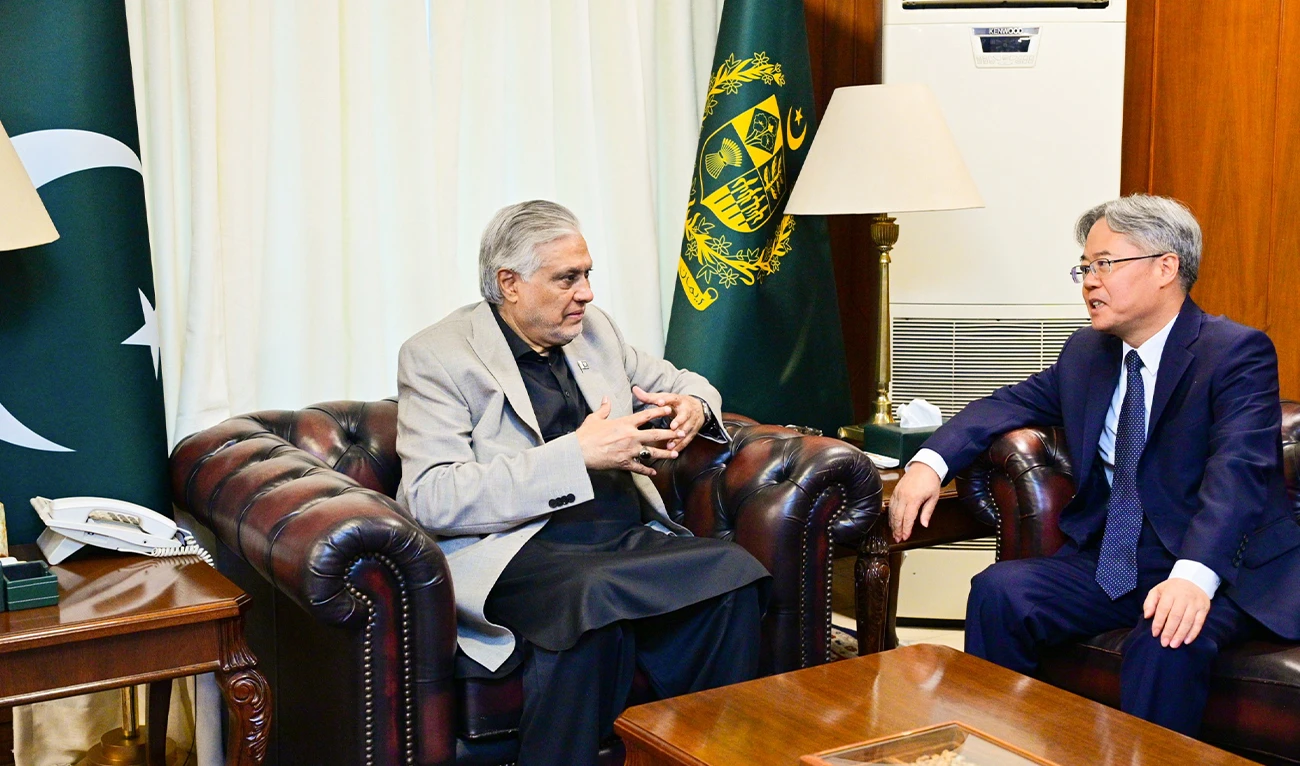
“We are not asking Pakistan for a single penny,” Kazakhstan’s ambassador to Pakistan, Yerzhan Kistafin, said in an interview with Geo News on Tuesday. “This is not aid. It is a mutually beneficial investment.”

Pakistan has for years sought to position itself as a gateway for Central Asian trade, offering its ports to landlocked economies as part of a broader strategy to integrate South and Central Asia.

However, its ambition has faced setbacks, most recently in October last year when border skirmishes with Afghanistan prompted Islamabad to shut key crossings, suspending transit and bilateral trade.

Kistafin said the rail project would treat Afghanistan not as an obstacle but as a transit partner, arguing that trade and connectivity could help stabilize the country.

“Connectivity creates responsibility,” he said. “Trade creates incentives for peace.”

Under the proposed plan, rail cargo would move from Kazakhstan through Turkmenistan to western Afghanistan before entering Pakistan at Chaman and linking with the national rail network.

Geo News reported the Afghan segment, spanning about 687 kilometers, is expected to take roughly three years to build once agreements are finalized, with Kazakhstan financing the project.