SINGAPORE: Global liquefied natural gas (LNG) trade volumes rose to a record last year led by Asia, though growth was marginal as demand was slammed by coronavirus-induced restrictions, according to a report by the International Gas Union (IGU).
Overall LNG trade increased to 356.1 million tons last year, up by 1.4 million tons or about 0.4 percent from 2019, mostly driven by increased exports from the United States and Australia, the group said in its annual report released on Thursday.
This was smaller than the growth of 40.9 million tons, or 11.5 percent, in 2019, the IGU said. But, LNG was one of the few commodities that had an increase in trade in 2020, it said.
“LNG trade in 2020 was heavily impacted by COVID-19, as markets, cities and producers across the globe wrestled with lockdowns and a multitude of other disruptions,” said the IGU, which comprises more than 160 members and advocates the use of gas.
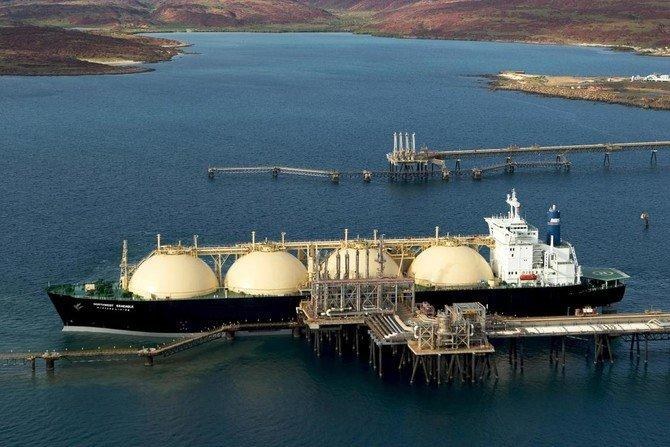
Australia overtook Qatar as the largest LNG exporter in the world, while the US and Russia remained as the third- and fourth-largest exporters respectively, it added.
In 2020, the US exported 11 million tons, or about 33 percent, more than in 2019 due to new production from Freeport LNG, Cameron LNG and Elba Island. Exports, however, declined from Trinidad and Tobago, Malaysia, Egypt, Algeria and Norway, the IGU said.
For imports, Asia made up 70 percent of overall volumes with growth mainly driven by China, India, Taiwan and South Korea, with Myanmar being a new importer.
“While COVID-19 meant significant restrictions for some of these markets, they likely also benefited from the lower price period in 2020 and purchased additional short-term volumes, and expansion of regasification capacity in some cases,” IGU said.
Extended lockdowns and the increased share of renewables in the energy mix reduced net imports into Europe by 4.3 million tons.
COVID-19 also severely impacted liquefaction development with companies delaying final investment decisions on projects up to 2021 and later because of the uncertain economic climate with developers prioritising deferment of capital expenditure, IGU said.
For instance, a total of 87.3 million tons per annum (mtpa) of capacity were expected to be sanctioned in 2020, but only one project of 3.25 mtpa in Mexico was approved.
New regasification projects in China and India will continue to support gas demand while projects under construction in Ghana, El Salvador, Cyprus and Nicaragua and expected online over the next two years could see these countries make their debut LNG purchases, IGU said.


![]()

Australia overtakes Qatar as the largest LNG exporter in the world
Short Url
https://arab.news/bm6w6
Australia overtakes Qatar as the largest LNG exporter in the world
- LNG trade rises to record in 2020 but growth slowed by COVID-19


Latest updates


© 2026 SAUDI RESEARCH & PUBLISHING COMPANY, All Rights Reserved And subject to Terms of Use Agreement.