RIYADH: Saudi authorities on Tuesday foiled attempts to smuggle 308.6 kilograms of hashish and 23.7 tons of khat into the Kingdom.
Lt. Col. Misfer bin Ghannam Al-Quraini, spokesman for the Border Guards, said that coastal patrols in Ras Tanura in the Eastern Province thwarted a bid to sneak 220.6 kilograms of hashish into the country, and in another operation stopped 88 kilograms of hashish and 23.7 tons of khat entering the Kingdom.
Security officials also seized 14,224 pills subject to the regulation of medical circulation in Jazan region.
Twelve people were arrested, five of them Ethiopians, four Saudis, and three Yemenis, Al-Quraini revealed, adding that legal procedures had been completed, and the seized goods had been handed over to the relevant authority.

Saudi authorities thwart bids to smuggle hashish, khat into Kingdom
https://arab.news/5nh26
Saudi authorities thwart bids to smuggle hashish, khat into Kingdom
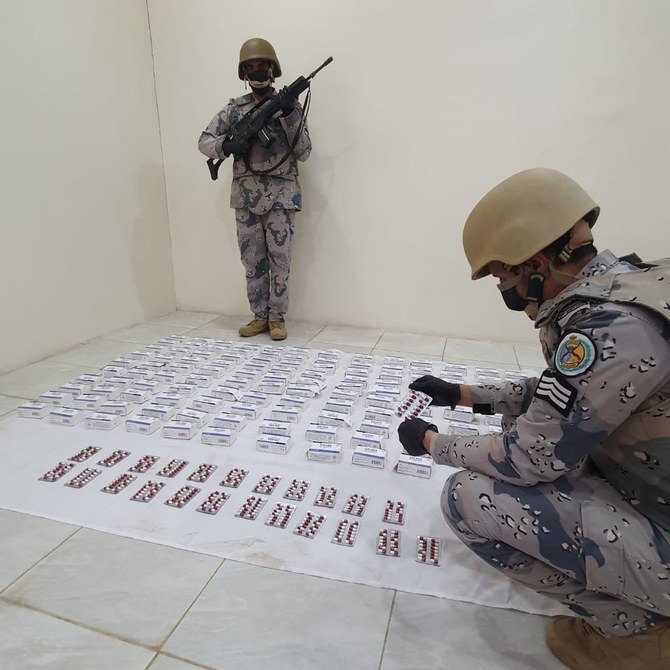
- Twelve people were arrested, including 5 Ethiopians, 4 Saudis, and 3 Yemenis
Program to train experts in forest rehabilitation
- Forest Ambassadors program is one of several specialized training initiatives designed to equip forestry personnel, relevant authorities, and university students
- Program focuses on providing trainees with advanced scientific knowledge and skills in fieldwork, data management, and technical report writing
RIYADH: The National Center for Vegetation Cover Development and Combating Desertification continues to strengthen national capabilities to implement environmental initiatives requiring advanced technical skills and scientific expertise in assessing and rehabilitating vegetation resources.
The Forest Ambassadors program is one of several specialized training initiatives designed to equip forestry personnel, relevant authorities, and university students with the knowledge and skills to conduct vegetation inventories, assessments, and prepare technical plans for rehabilitating degraded forest areas.
The program offers a mix of theoretical and practical training, including presentations, educational modules, group discussions, and case studies, according to the Saudi Press Agency.
These components enable participants to conduct vegetation inventories and assessments, identify degradation, determine rehabilitation needs, and develop technical forest management plans.
The program focuses on providing trainees with advanced scientific knowledge and skills in fieldwork, data management, and technical report writing, the SPA reported.
It serves as a model for building highly qualified national cadres capable of applying best scientific practices in forest management and rehabilitation, contributing to the protection of natural resources, advancing the Saudi Green Initiative, and supporting the long-term sustainability of the Kingdom’s vegetation cover.