MANILA: The Philippine president has rejected full public disclosure of details of his administration’s deadly anti-drug crackdown, citing national security.
President Rodrigo Duterte said in televised remarks Monday night that divulging confidential information like intelligence about suspects used by law enforcers for drug raids could undermine his administration’s campaign against criminality. Duterte has long faced demands from human rights groups to open up police records about the drug killings for scrutiny and for him to agree to an international investigation, a call he has steadfastly rejected.
Duterte compared the anti-drug crackdown to the government’s war against communist New People’s Army guerrillas.
“This is a national security issue like the NPA,” he said.
Duterte said people could inquire about general details of how drug raids were carried out and could even observe them from a safe distance. “But if you ask what prompted the police and the military to go into this kind of operation based on their reports and collated dossiers, you cannot intrude into that,” he said, adding that he himself has limited knowledge of the drug operations.
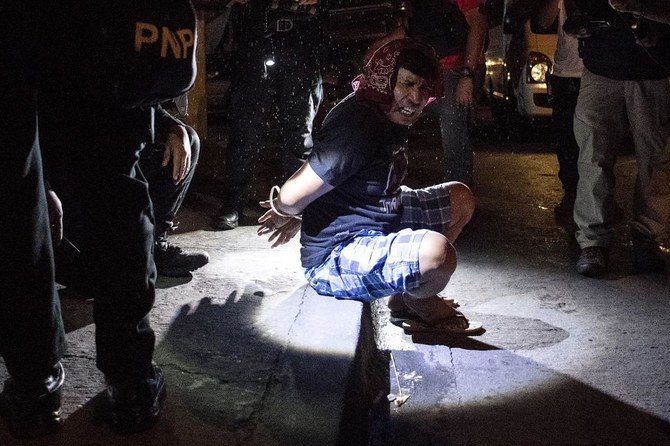
More than 6,000 mostly petty drug suspects have been killed and 289,000 others arrested since Duterte launched his massive campaign against illegal drugs after taking office in mid-2016, according to official statistics, which human rights groups suspect are vastly understated. The large number of killings has alarmed Western governments and human rights watchdogs and sparked an International Criminal Court examination of complaints of potential crimes against humanity.
Last week, the Department of Justice said it has been given access to a few dozen police investigations of police officers involved in anti-drug raids that turned deadly. Duterte’s officials have argued that the country’s justice system could address complaints of extrajudicial killings by law enforcers and that there is no need for international criminal inquiries.
“There are public documents that can be shown to the public at large,” Duterte said, adding that confidential papers would be kept from the public.
The Supreme Court said in a 2018 resolution that details surrounding police operations against illegal drugs do not normally “involve state secrets affecting national security” like those dealing with “rebellion, invasion, terrorism, espionage, infringement of our sovereignty or sovereign rights by foreign powers.”
The court said it has a mandate to safeguard the people’s constitutional right to information on pressing issues. “The undeniable fact that thousands of ordinary citizens have been killed, and continue to be killed, during police drug operations certainly is a matter of grave public concern,” the court said.
Duterte acknowledged that the anti-drug crackdown has left many dead and warned that “many more will die.” But he repeated that there was no government policy condoning extrajudicial killings and added that some of the killings of drug dealers were carried out by syndicates to eliminate potential government informants.
“My policemen and my army are trained to kill,” he said, but added, “they are not allowed to kill a man kneeling down or with his back turned.”
The tough-talking leader repeated his death threats to drug lords preying on young Filipinos. “If I am there, I will really kill you. I don’t care if there’s TV around. I will really kill you,” he said.
Rights groups have warned that such remarks by the president have fostered a culture of impunity in the police force, which Duterte once called “corrupt to the core,” and have emboldened law enforcers to commit abuses.


![]()

Philippine president Rodrigo Duterte opposes full disclosure of deadly drug raid details
Short Url
https://arab.news/9kycc
Philippine president Rodrigo Duterte opposes full disclosure of deadly drug raid details
- Divulging confidential information could undermine his administration’s campaign against criminality


Latest updates


Recommended


© 2026 SAUDI RESEARCH & PUBLISHING COMPANY, All Rights Reserved And subject to Terms of Use Agreement.