AMMAN: The Saudi Fund for Development (SFD) has signed a financing agreement with the National Bank of Iraq (NBI) to provide $10 million in credit facilities to Iraqi investors wanting to import products and services from Saudi companies.
The move aims to contribute to strengthening trade relations between the two countries, a statement issued by Saudi Press Agency said.
Under the agreement, SFD will grant NBI, a subsidiary of Capital Bank Group, a revolving financing line to import various goods and services of Saudi origin for the bank’s importing company clients, with a 100 percent financing rate of its value.
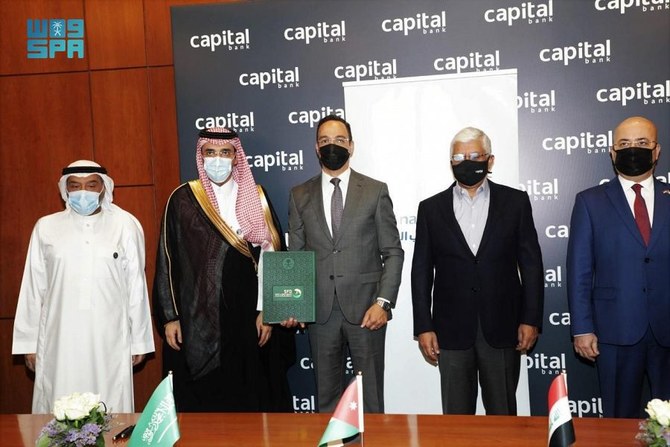
The agreement was signed in Jordan’s capital Amman by SFD CEO Sultan Abdulrahman Al-Marshad and Bassem Al-Salem, chairman of the board of directors of Capital Bank Group.
It will grant a payment period of up to 36 months depending on the type of imports and the nature of the operation.
The agreement “reflects the two countries’ desire to enhance cooperation between them in various fields, and is part of what was allocated by the Saudi government to support reconstruction and development projects in Iraq, exceeding $1.5 billion,” said Al-Marshad.
He added that supporting stability in countries seeking to achieve sustainable economic and social development is one of the fund’s most important priorities, and through this agreement, Saudi Arabia seeks to enhance efforts to achieve joint prosperity.
The agreement is in line with the Kingdom’s efforts to diversify sources of national income and increase the volume of non-oil exports of Saudi goods and services, as it will open new markets for Saudi producers and contribute to stimulating Iraq’s commercial and financial sectors, he said.
Al-Salem praised SFD for its efforts to support and finance development projects in Iraq and stimulate bilateral trade relations.
“The fund’s role reflects the Kingdom’s historical orientations and its continuous support of joint Arab action, and contributes to achieving Arab economic integration,” he said.
Al-Salem added that the agreement will contribute to increasing trade between the two countries by providing NBI with credit facilities for importers to import high-quality Saudi goods and services at competitive prices to the Iraqi market. The agreement will also activate transport operations between the two countries.


![]()

Saudi Fund for Development signs $10m deal with National Bank of Iraq
Short Url
https://arab.news/46vje
Saudi Fund for Development signs $10m deal with National Bank of Iraq
- The agreement will grant a payment period of up to 36 months depending on the type of imports
- It is in line with the Kingdom’s efforts to diversify sources of national income and increase the volume of non-oil exports


Latest updates


© 2026 SAUDI RESEARCH & PUBLISHING COMPANY, All Rights Reserved And subject to Terms of Use Agreement.