Who’s Who: Faisal Al-Haqbani, first secretary at Saudi Arabia’s UN mission in New York

Faisal Al-Haqbani
Short Url
Updated 28 May 2021
Follow

Who’s Who: Faisal Al-Haqbani, first secretary at Saudi Arabia’s UN mission in New York

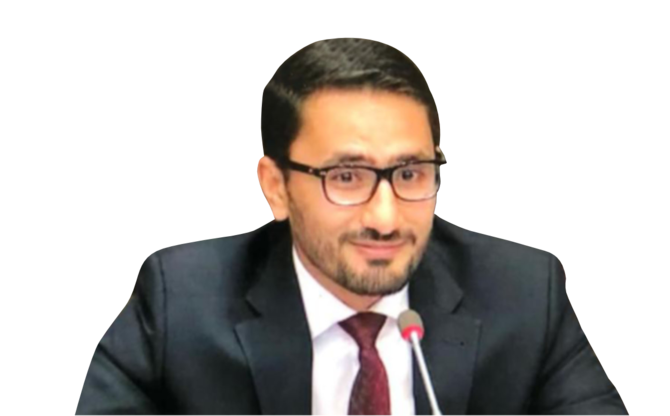
Faisal Al-Haqbani is the first secretary of the permanent mission of Saudi Arabia to the UN in New York.

During his time at the mission, Al-Haqbani was elected vice chair of the fourth committee at the UN General Assembly’s 73rd session.

He has also served as the mission’s chef de cabinet, head of the economic and financial committee, head of the special political committee and head of the organizations and international groups department.

Prior to that, he served at the Saudi Embassy in Havana, Cuba, between 2015 and 2017, as head of the consulate section, chargé d’affaires, head of the political department and head of the economic and cultural department.

Between the years of 2011 and 2015, Al-Haqbani served as a cultural attaché in the UN department of the Saudi Ministry of Foreign Affairs.

Al-Hakbani holds a bachelor’s degree in political science from the Misr University for Science & Technology, as well as a high diploma in diplomatic studies.

He is also a graduate of the Ministry of Foreign Affairs’ Future Leaders Program.

Al-Haqbani said that through Saudi Vision 2030, the Kingdom aims to be at the same level as developed countries, since Saudi leaders believe that ambition has no boundaries and is a motivation to reach the skies.

He noted that success stories start with a vision, and the most successful visions are the ones built on strengths and full knowledge of how to exploit them, therefore, the Saudi Vision 2030 was to build an ambitious and thriving country for all.

Al-Haqbani said: “The 2030 Agenda for Sustainable Development was adopted by the UN to achieve a better future for the world’s nations, a future that is sustainable for all. Seeking to implement the goals of the UN vision is indicative of the nations’ desire to take determined steps, in the global quest to advance our nations and to address the global challenges we face, including the ones related to poverty, inequality, climate and environmental deterioration, as well as the achievement of prosperity, peace and justice.


Pioneering electric bus service takes to the road in Makkah

Updated 19 December 2025
Follow

Pioneering electric bus service takes to the road in Makkah

  • The bus rapid transit project, a system designed to have higher capacity and reliability than conventional bus services, is said to be the first of its kind in the Kingdom
  • The vehicles operate in dedicated bus lanes within a network that includes two main bus stations and 11 stops along the route connecting them

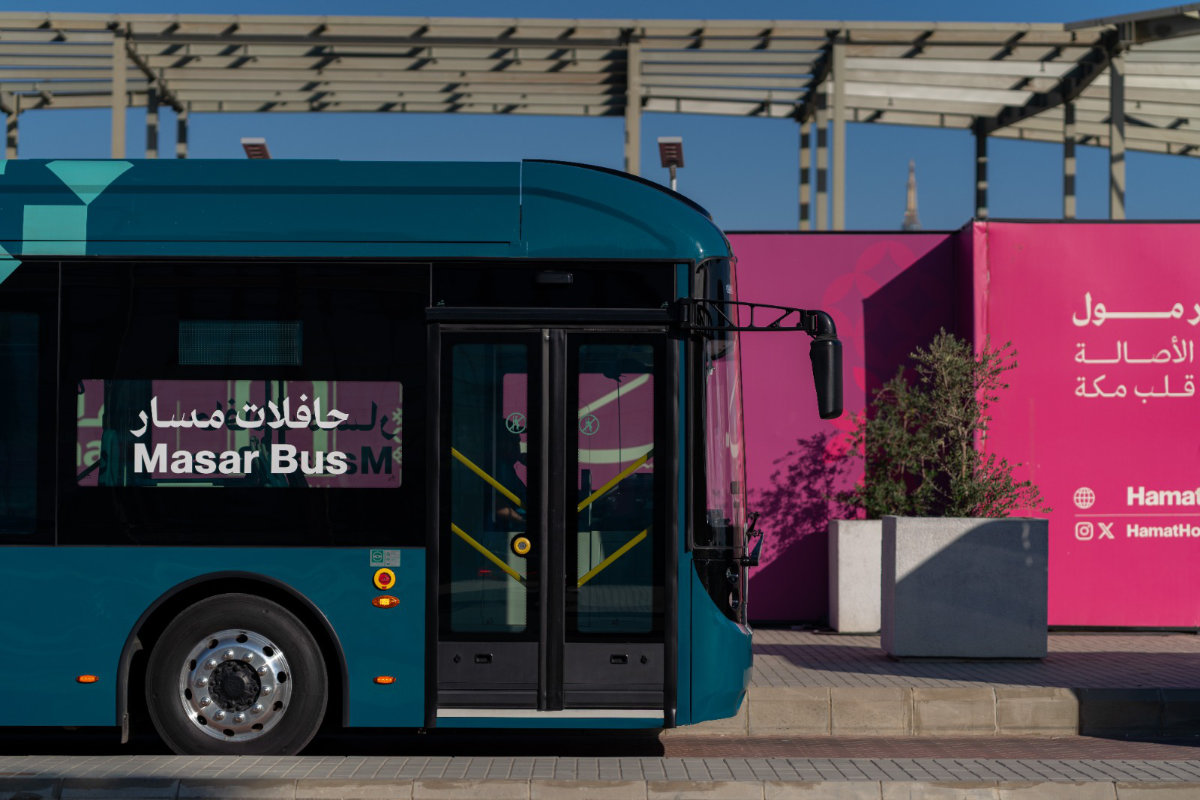
MAKKAH: A pioneering electric bus service took to the road in Makkah this week.

Electromin, the developer and operator of the service in partnership with Umm Al-Qura for Development and Construction, said it is expected to serve more than 125 million passengers over the next 15 years, while cutting carbon dioxide emissions by more than 31,500 tonnes compared with traditional vehicles.

The bus rapid transit project, a system designed to have higher capacity and reliability than conventional bus services, is said to be one of the first of its kind in the Kingdom. It was inaugurated on Wednesday by Amr Al-Dabbagh, chairperson of Al-Dabbagh Group; Samir Nawar, managing director of Petromin; and Yasser Abu Ateeq, CEO of Umm Al-Qura.

The bus rapid transit project is designed to have higher capacity and reliability than conventional bus services. (Supplied)

Electromin, a subsidiary of Petromin specializing in energy and mobility solutions, said the new service, which forms part of the Masar Destination mixed-use real estate development project in Makkah, is one the first transport networks of its kind in the country, and represents a significant shift toward a cleaner, more efficient urban transport model.

It operates in dedicated bus lanes, connecting key hubs within Masar and providing safe, reliable and environmentally friendly transportation for residents and visitors, the company added. The network includes two main bus stations and 11 stops along the route connecting them. It has been designed to serve more than 5 million visitors and pilgrims annually, and to be easily accessible to all users.

Operators say the service is designed as a foundation for Makkah’s future transportation system, through its integration with the broader Masar project, which includes pedestrian walkways, more than 5,000 parking spaces, metro services and other urban infrastructure.