

Russia fines Google, Facebook for failing to delete banned content

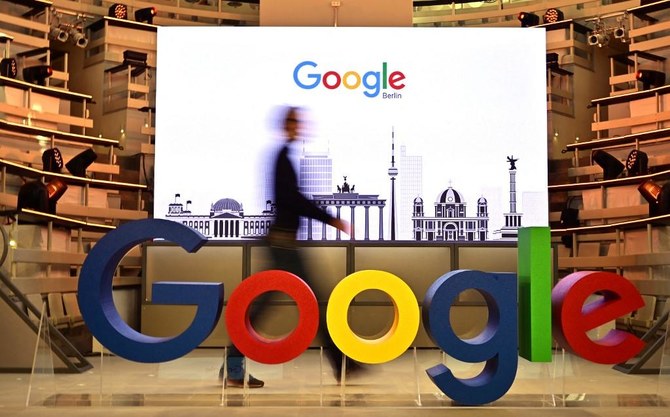
A technician passes by a logo of US internet search giant Google during the opening day of a new Berlin office of Google in Berlin (File/AFP).
Short Url
Updated 26 May 2021
Follow

Russia fines Google, Facebook for failing to delete banned content

  • Russian court fines Facebook 26 million roubles and Google 6 million roubles.
  • Fines were ordered given Facebook and Google's failure to delete content that Russia deems illegal.

MOSCOW: A Russian court said on Tuesday it has fined US technology giants Google and Facebook Inc. over a failure to delete content that Moscow deems illegal, the latest development in an escalating standoff between Russia and Big Tech.

Russia has already placed a punitive slowdown on US social network Twitter for not deleting banned content, part of a push by Moscow to rein in Western tech companies and beef up what it calls its Internet “sovereignty.”

Facebook was fined 26 million roubles ($353,890) in total, on eight separate counts, while Alphabet Inc’s Google was ordered to pay a total of 6 million roubles for three different offenses, Moscow’s Tagansky District Court said.

Both companies were guilty of administrative offenses, the court said in separate statements.

Google Russia declined to comment. Facebook did not immediately respond to a request for comment.

The charges concern posts that Russia says encouraged minors to join unsanctioned protests in January, when people across the country took to the streets to support Kremlin critic Alexei Navalny after he was detained.

The fines come amid a wider spat between Moscow and Google. Russia’s communications watchdog on Monday warned that Moscow could eventually slow down the company’s traffic in the country if it failed to delete prohibited content.

Last week, Google’s Russian arm said it had lodged an appeal against a Moscow court order obliging it to unblock the YouTube account of a Christian Orthodox news channel owned by a Russian businessman who is under US and EU financial sanctions.

In April, a court issued three separate fines against Twitter Inc. totalling 8.9 million roubles, over accusations it had failed to delete banned content. TikTok has also been fined for similar offenses this year.


Gems of Arabia magazine launched to spotlight talents shaping Saudi Arabia’s evolving cultural landscape

Updated 15 January 2026
Follow

Gems of Arabia magazine launched to spotlight talents shaping Saudi Arabia’s evolving cultural landscape

  • The publication features established and emerging talents elevating the region across design, fashion, art, tech, music, architecture and media
  • Saudi fashion designer Hatem Alakeel seeks to highlight the richness of the Kingdom, and wider modern Arab culture to global audiences

DUBAI: When Saudi fashion designer Hatem Alakeel interviewed Princess Reema bint Bandar Al-Saud before her appointment as Saudi ambassador to the US, the longtime advocate of women’s empowerment made a powerful prediction: “I look forward to the day that the Saudi woman is no longer the story but rather a phenomenal achievement.”

That moment would become the foundation for Gems of Arabia, an arts and culture audio-visual podcast that spotlights the creative talents shaping the landscape of Saudi Arabia and the broader region.

Over six years, Gems of Arabia has documented the sweeping transformation of the Kingdom’s art and culture scene, and is now evolving into a full-fledged magazine.

Hatem Alakeel is a Saudi fashion designer. (Supplied)

“It started off as a column I used to write, and from there, it turned into a podcast. Now it is growing into a magazine,” Dubai-based Alakeel, the magazine’s founder and editor-in-chief, told Arab News ahead of the launch of the digital publication on Thursday.

Besides spotlighting celebrated regional artists, Alakeel said Gems of Arabia is in search of the “hidden gems” elevating the region across design, fashion, art, tech, music, architecture and media.

The magazine serves as a platform for talented, authentic creatives and tech entrepreneurs unable to articulate their work “because they don’t have the public relations or capacity to promote themselves even through social media.”

Alakeel added: “Our job is to identify all these authentic people; you don’t have to be famous, you just have to be authentic, and have a great story to tell.”

The digital publication offers a dynamic blend of short-form podcasts, coverage of regional cultural events, in-depth features and editorials, long-form interviews and artist profiles — spotlighting both celebrated and emerging talents. This is complemented by social media vox pops and bite-sized coverage of art events across the region.

Alakeel, who also runs Authenticite, a consulting and creative production agency connecting creators and brands who want to understand Saudi culture, said the magazine content is “carefully curated” to feature topics and personalities that resonate in the region.

What differentiates Gems of Arabia, he said, is its story of continuity and substance amassed over the years that has captured the evolution of the wider regional landscape.

“The website represents an archive of nearly 150 articles compiled through years of podcasts and long-form conversations that show continuity and depth changes,” he said.

“So, it’s an evolution and it’s another home for all our content and our community.”

Growing up in France, Alakeel said his mission started early on when he felt the need to represent his Saudi culture “in a way where it can hold its own internationally.”

Through his first brand, Toby, he sought to bring the traditional thobe into modern designs and introduce it to the luxury fashion world. This mission was accomplished when his thobe designs were placed alongside global labels such as Harvey Nichols, Dolce & Gabbana and Prada.

What began as a personal design mission would soon expand into a broader platform to champion Saudi talent. 

“I was articulating my culture through fashion and it just felt natural to do that through the incredible people that the region has,” Alakeel said, adding that the magazine aims to highlight the richness of the Kingdom, and wider modern Arab culture to global audiences.

“Art is such a great way of learning about a culture and a country,” he said. 

On the ground in Saudi Arabia, the publication hosts GEMS Forum, a series of live cultural gatherings that bring together prominent artistic figures for in-depth conversations later transformed into podcast episodes recorded with a live audience.

Alakeel said the print edition of Gems of Arabia will debut in March, designed as a collectible coffee-table quarterly distributed across the Gulf.

He envisions the platform growing into a long-term cultural record.

“It's a Saudi-centric magazine, but the idea is to make it inclusive to the region and everyone authentic has a seat at the table,” said Alakeel.