

Tanzanian president holds talks with Saudi foreign minister

1 / 9
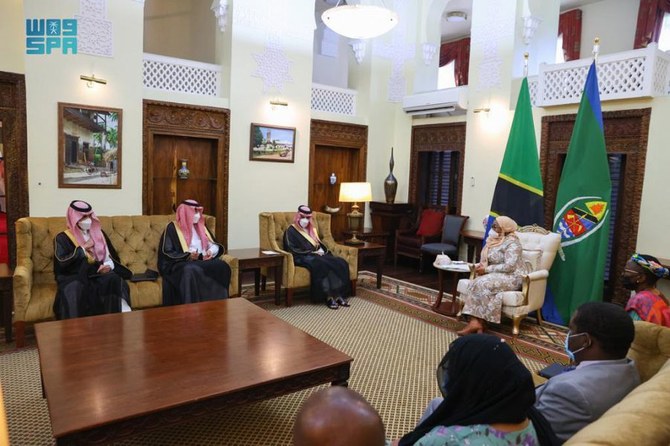
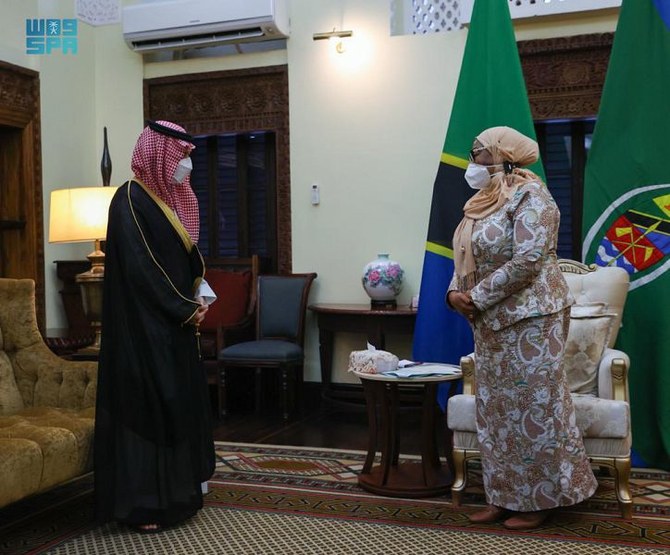
Tanzanian President Samia Suluhu Hassan receives Saudi Arabia’s Foreign Minister Prince Faisal bin Farhan. (SPA)
2 / 9
Tanzanian President Samia Suluhu Hassan receives Saudi Arabia’s Foreign Minister Prince Faisal bin Farhan. (SPA)
3 / 9
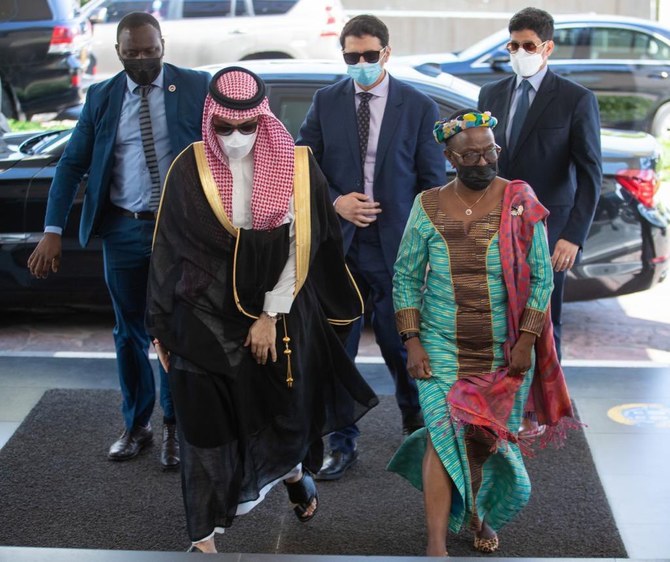
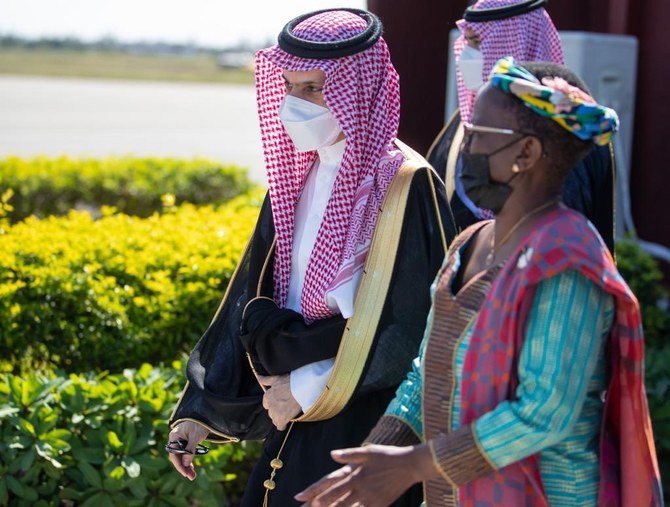
Saudi Arabia’s Foreign Minister Prince Faisal bin Farhan arrives at Julius Nyerere International Airport in Tanzania. (Twitter/@KSAMOFA)
4 / 9
Saudi Arabia’s Foreign Minister Prince Faisal bin Farhan arrives at Julius Nyerere International Airport in Tanzania. (Twitter/@KSAMOFA)
5 / 9
Saudi Arabia’s Foreign Minister Prince Faisal bin Farhan arrives at Julius Nyerere International Airport in Tanzania. (Twitter/@KSAMOFA)
6 / 9
Saudi Arabia’s Foreign Minister Prince Faisal bin Farhan arrives at Julius Nyerere International Airport in Tanzania. (Twitter/@KSAMOFA)
7 / 9
Tanzanian President Samia Suluhu Hassan receives Saudi Arabia’s Foreign Minister Prince Faisal bin Farhan. (SPA)
8 / 9
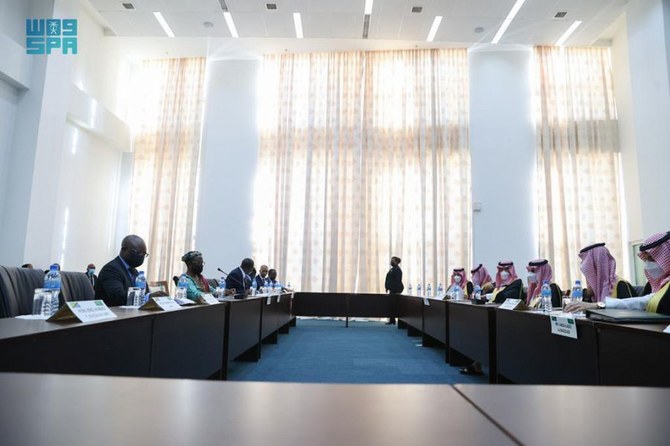
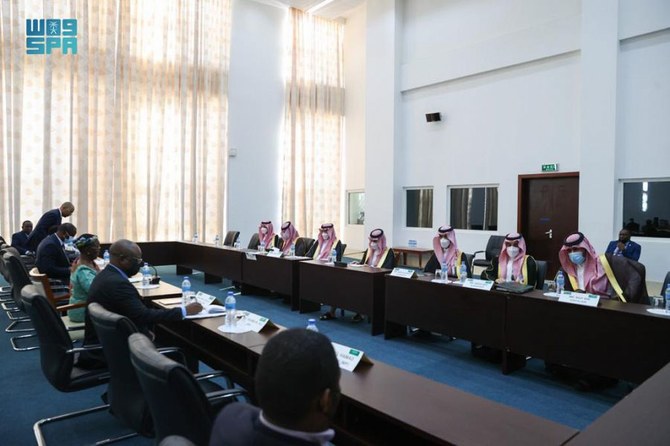
Saudi Arabia’s Foreign Minister Prince Faisal bin Farhan held talks with senior government officials from Tanzania and Zanzibar. (SPA)
9 / 9
Saudi Arabia’s Foreign Minister Prince Faisal bin Farhan held talks with senior government officials from Tanzania and Zanzibar. (SPA)
Short Url
Updated 26 May 2021
Follow

Tanzanian president holds talks with Saudi foreign minister

  • They reviewed bilateral relations and ways to enhance them in all fields

RIYADH: Tanzanian President Samia Suluhu Hassan received Saudi Arabia’s Foreign Minister Prince Faisal bin Farhan, and his accompanying delegation, at the Presidential Palace in Dar es Salaam on Tuesday, the Kingdom’s foreign ministry said.
Prince Faisal arrived in Tanzania earlier on Tuesday on an official visit, where he was received at Julius Nyerere International Airport by his Tanzanian counterpart Liberata Mulamula.
During the reception, the Saudi foreign Minister conveyed greetings from King Salman and Crown Prince Mohammed bin Salman, while Hassan reciprocated the sentiments.

Hassan said she “appreciated the Kingdom’s tireless efforts in support of regional and international efforts to lay the foundations of security and stability, resolve conflicts in the African continent, advance development and enhance investment.”
During the meeting, they also reviewed bilateral relations and ways to enhance them in all fields, in addition to discussing regional and international developments and issues of common interest.
Prince Faisal also held official talks with Mulamula, along with the Tanzanian minsters of finance and industry and the Zanzibari ministers of finance and transport and other senior government officials from all sides.


The founding economy: A blueprint for stability in the First Saudi State

Updated 23 February 2026
Follow

The founding economy: A blueprint for stability in the First Saudi State

  • The establishment of the First Saudi State created a secure environment that facilitated the arrival of caravans, secured vast trade routes, and revived commerce across the Arabian Peninsula

RIYADH: The economy during the founding stage of the First Saudi State served as a fundamental pillar in building the nation, consolidating its influence, and ensuring its stability. This early economic growth was inextricably linked to achieving security, unifying regions, and organizing society—factors that directly stimulated trade, stabilized markets, and enhanced the foundations of daily life in Diriyah and its surrounding areas.
According to Dr. Abdullah Al-Saleh Al-Othaimeen's "Diriyah: Origins and Development during the First Saudi State," published by the King Abdulaziz Foundation for Research and Archives (Darah), the founding economy stands as a historical model reflecting the reciprocal relationship between political stability and early economic prosperity.

Beyond its political and intellectual prominence, Diriyah emerged as a vibrant economic hub. (SPA)

The establishment of the First Saudi State created a secure environment that facilitated the arrival of caravans, secured vast trade routes, and revived commerce across the Arabian Peninsula.
Beyond its political and intellectual prominence, Diriyah emerged as a vibrant economic hub. Its active markets attracted merchants and students from across the region, all of whom benefited from the state-provided stability. The local society relied on diverse activities for its livelihood, including trade, agriculture, and livestock breeding, with horses and camels playing crucial roles in transportation, commerce, and securing roads.
The social and administrative organization upon which the state was founded ensured the continuous availability of goods and sustained market stability. Ultimately, the close relationship between public security and economic growth during this founding phase solidified Diriyah's position as a premier political and commercial center in the Arabian Peninsula.