

Saudi authorities to extend residency, visit visas for expats from countries with suspended travel

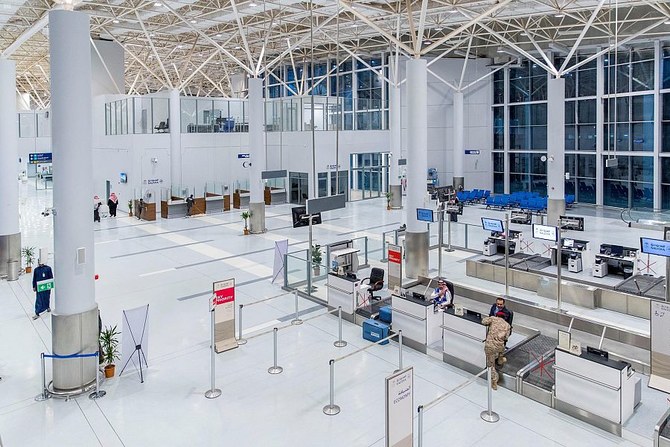
The General Directorate of Passports said the extension contributes to mitigating the economic and financial impacts of the coronavirus pandemic. (File/SPA)
Short Url
Updated 24 May 2021
Follow

Saudi authorities to extend residency, visit visas for expats from countries with suspended travel

  • The steps were being taken automatically without fees or financial payments until June 2
  • 1,157 new coronavirus cases reported in Saudi Arabia

JEDDAH: King Salman has ordered the extension of visit, exit and return visas’ validity without fees in an effort to lessen the effects of COVID-19 in Saudi Arabia.

Visas of expat residents of the Kingdom from red-list countries prohibited from entering Saudi Arabia due to an uncontrolled outbreak in their respective countries will be extended until June 2. The extension includes resident permits and visitors visas. Visas will be automatically renewed, according to the General Directorate of Passports.
In addition, the General Authority of Civil Aviation (GACA) issued guidelines for institutional quarantine procedures and for those who are non-Saudis citizens, not immunized and those coming from red-listed countries. Along with details on the insurance policy, the guide reiterates the importance of following regulations and protocols in the airports, the use of Tawakkalna and the health and vaccination requirements for travel and for those arriving.
GACA suggests downloading the guide and keeping it for reference when needed.
Saudi Arabia’s Health Ministry announced that more than 12.9 million doses of the COVID-19 vaccine have been administered so far. That is equivalent to 37.3 doses for every 100 people. Specifically, 95,161 doses were given in the past 24 hours.
The Kingdom reported 1,157 new cases on Monday, raising the total number of confirmed cases to 442,071. That means Saudi Arabia makes up less than 0.3 percent of total cases globally.

HIGHLIGHTS

• The Health Ministry reported that 987 patients have recovered from COVID-19, bringing the total number of recoveries in the Kingdom to 425,677.

• There are 9,130 active cases with 1,334 of them in critical condition.

• The ministry recorded 15 new COVID-19-related deaths, raising the death toll to 7,264.

There are 9,130 active cases with 1,334 of them being critical, a decrease of 10 patients in the past 24 hours.
According to the figures provided by the MOH, Makkah had the highest number of new confirmed cases with 357 instances followed by Riyadh (320) and Madinah (100). The region with lowest confirmed cases is Jouf with only five cases.
The ministry recorded 15 new COVID-19-related deaths, raising the national death toll to 7,264.
The MOH reported that 987 patients have recovered from COVID-19, bringing the total number of recoveries in the Kingdom to 425,677.
About 81,094 PCR tests were administered in the past 24 hours, raising the total number of tests conducted in the Kingdom so far to more than 18.6 million.
The Ministry of Interior has recently updated the list of fines for violating COVID-19 protocols, including penalties for social gatherings. Gatherings beyond the numbers specified by authorities in a single or specific space without a residential relation inside houses, farms and the like will be fined SR10,000 ($2,700).
As for family gatherings beyond the specified number in one space inside homes, farms, camps, chalets or open areas for people living in the same neighborhood, the fine is SR15,000. Gatherings for social purposes such as funerals and parties exceeding the specified numbers will attract a fine of SR40,000.


Experimental farm in Al-Lith looks into future of Saudi Arabian agriculture

Updated 5 sec ago
Follow

Experimental farm in Al-Lith looks into future of Saudi Arabian agriculture

  • Research initiative reflects strategic transformation

JEDDAH: An experimental farm in Saudi Arabia’s Al-Lith Governorate is one of the research initiatives reflecting the strategic transformation taking place in the Kingdom’s agricultural sector.

The farm uses highly efficient, sustainable production models that combine scientific research with commercial application, contributing to strengthening the country’s food security system and the sustainability of water resources.

Located in the Ghumaiqa Center on an area of about 10 hectares, the cutting-edge farm is a testing platform for modern agricultural technologies that tackle the challenge of water scarcity.

The farm includes developed open fields and modern greenhouses, supported by smart irrigation encompassing drip and sprinkler irrigation alongside surface and subsurface technologies.

All the systems operate via smart controls that enable the monitoring of water consumption and ensure improved efficiency, thereby achieving a balance between agricultural production and water conservation.

The farm also uses treated and diluted low-salinity seawater.

It aims to diversify agricultural water sources, reduce reliance on freshwater, and open new horizons for agriculture in coastal and semi-arid environments.

The project represents a promising investment opportunity in the field of smart agriculture, enabling the development of commercially scalable production models, particularly for high-value vegetables and fruits, while reducing operational costs associated with water and energy, enhancing the economic feasibility of future agricultural projects.

In addition, the project contributes to transferring and localizing agricultural expertise, supporting local food supply chains, and creating an attractive environment for agricultural investment.

This aligns with Sustainable Development Goals and enhances the efficiency of the private sector in adopting innovative agricultural solutions.

Yahya bin Abdulrahman Al-Mahabi, the director of the Ministry of Environment, Water and Agriculture office in Al-Lith Governorate, told the Saudi Press Agency that the project represented the future of agriculture in the Kingdom.

He explained that the vision was based on investing in technology, enhancing the return on water per unit, and integrating scientific research with investment opportunities.

Al-Mahabi spoke of the experimental farm as a modern, scalable and replicable model applicable in several regions of the Kingdom, particularly in coastal environments.

Al-Mahabi highlighted the Ministry of Environment, Water and Agriculture’s commitment to supporting distinctive projects that contributed to achieving food security while developing rural areas and enhancing agricultural production efficiency, in line with the objectives of the Kingdom’s Vision 2030.