

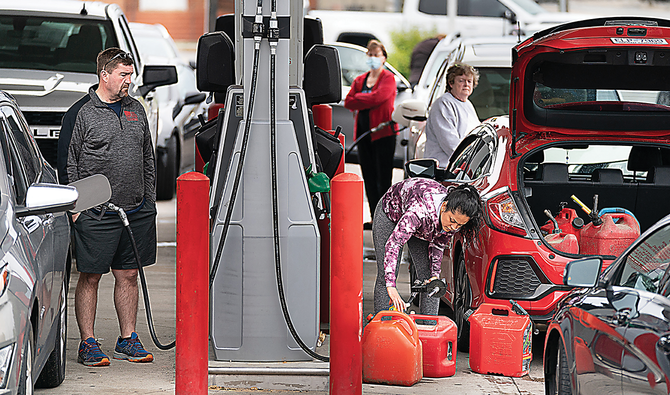

NEW YORK: The US capital was running out of gasoline on Friday even as the top US fuel pipeline ramped up deliveries following a cyberattack and Washington officials assured motorists that supplies would return to normal soon.
Servers for Darkside were taken down by unknown actors Friday, a US cyber security firm said.
Recorded Future, the security firm, said in a post that the allegedly Russia-based Darkside operator "Darksupp" had admitted in a web post that it lost access to certain servers used for its web blog and for payments.
Accessed via TOR on the dark web, the Darkside onionsite address showed a notice saying it could not be found.
The six-day Colonial Pipeline shutdown was the most disruptive cyberattack on record, which underscored the vulnerability of vital US infrastructure to cybercriminals.
Widespread panic buying continued two days after the nation’s largest fuel pipeline network restarted, leaving filling stations across the US Southeast out of gas even in areas far from the pipeline.
US pump prices are at their highest in years, just two weeks before the peak summer driving season kicks off and as traffic continues to recover from mobility restrictions during the COVID-19 pandemic. The average national gasoline price has climbed to almost $3.04, the most expensive since October 2014, the American Automobile Association said.
On Friday gas station outages in Washington, DC climbed to 87 percent, from 79 percent the day before, tracking firm GasBuddy said.
“Most of these states/areas with outages have continued to see panicked buying, which is likely a contributing factor to the slowish recovery thus far,” said GasBuddy’s Patrick De Haan. “It will take a few weeks.”
Colonial Pipeline announced late Thursday it had restarted its entire pipeline system linking refineries on the Gulf Coast to markets along the eastern seaboard.
President Joe Biden also reassured US motorists that fuel supplies should start returning to normal by this weekend.
Some states experienced modest improvements in gas outages but still saw a high amount. About 70 percent of gas stations in North Carolina were without fuel, while around 50 percent of stations in Virginia, South Carolina and Georgia had outages.
The hacking group believed to be responsible for the attack, DarkSide, said it had hacked four other companies including a Toshiba subsidiary in Germany.
Colonial Pipeline, which is owned by pension funds, private equity and energy firms, has not determined how the initial breach occurred, a spokeswoman said on Thursday. The company has focused on cleaning its networks, restoring data and reopening the pipeline.
Colonial has not disclosed how much money the hackers were seeking or whether it paid. However, Bloomberg News reported that it paid nearly $5 million to hackers.
To stem fuel shortages, four states and federal regulators relaxed fuel driver restrictions to speed deliveries of fresh supplies. Washington also issued a waiver to US refiner Valero Energy Corp. allowing it to transport gasoline and diesel from the US Gulf Coast to East Coast ports on foreign-flagged vessels. The US normally limits deliveries between domestic ports to US-built and crewed vessels.
Gulf Coast refiners that send their fuel to market through the Colonial Pipeline have had to cut production because they have not been able to move their gasoline, diesel and jet fuel through the pipeline. A smaller, alternative pipeline filled to capacity quickly after Colonial announced its network was shut last Friday.


