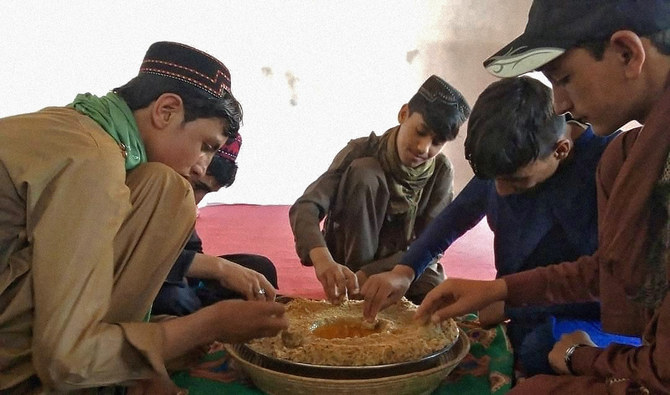

TANK, Pakistan: As the Muslim fasting month of Ramadan comes to an end and people start celebrating the Islamic festival of Eid al-Fitr, families across Pakistan’s northwestern tribal territories usually open their doors to invite friends, relatives and strangers as a gesture of hospitality and serve them traditional food.
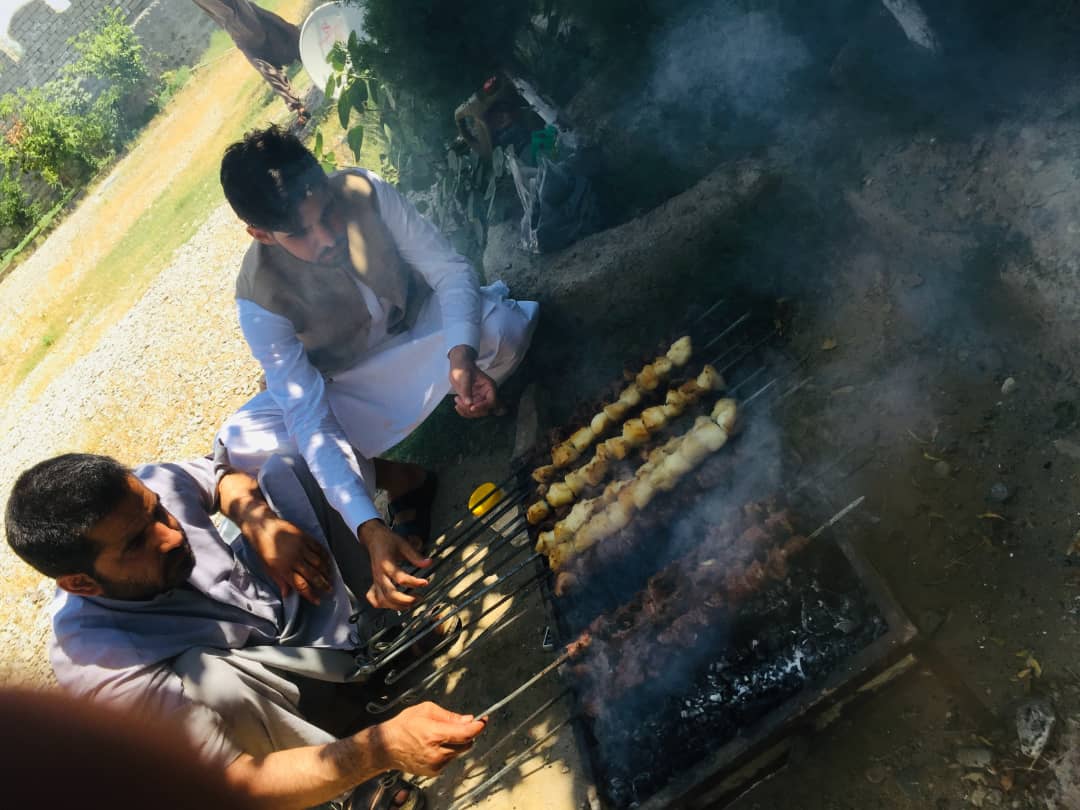
A group of young people in Wana, South Waziristan, prepare mutton tikka on Eid al-Fitr on May 13, 2021. (Photo courtesy: Anwar Shakir Wazir)
According to the region’s elderly residents, however, such tribal conventions are gradually fading away since most people prefer to celebrate the occasion within their limited circle and enjoy foreign cuisines.
“The decades-old tradition is on the verge of extinction,” Haji Nawaz Khan, an octogenarian, told Arab News on Thursday. “Many people in this settlement do not prefer their traditional food anymore. These social changes have followed the displacement of local families during the military offensive in this area.”
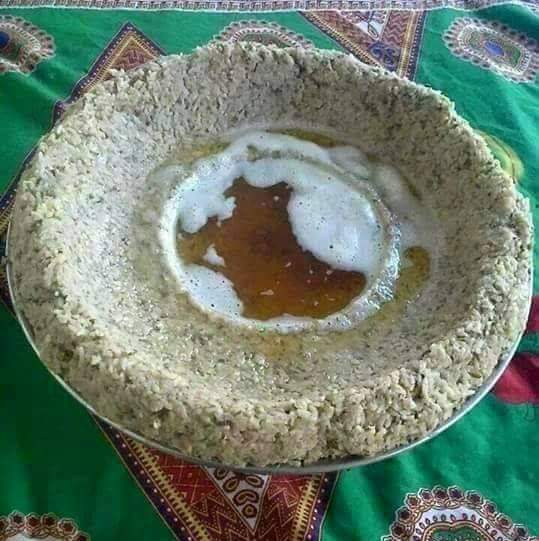
Litai, another traditional tribal food, is prepared with rice and pulses before being served to guests with sweet soup and pure ghee. Picture taken in South Waziristan tribal district on May 13, 2021. (Photo courtesy: Anwar Shakir Wazir)
Pakistan’s northwestern tribal belt, which borders Afghanistan, witnessed significant conflict after the United States sent its forces to the neighboring country in the wake of the 9/11 attacks.
Pakistani security forces launched a military campaign against militant outfits taking shelter in the craggy mountainous terrain to reclaim the territory, though the ensuing violence uprooted the local residents and forced them to migrate to nearby towns.
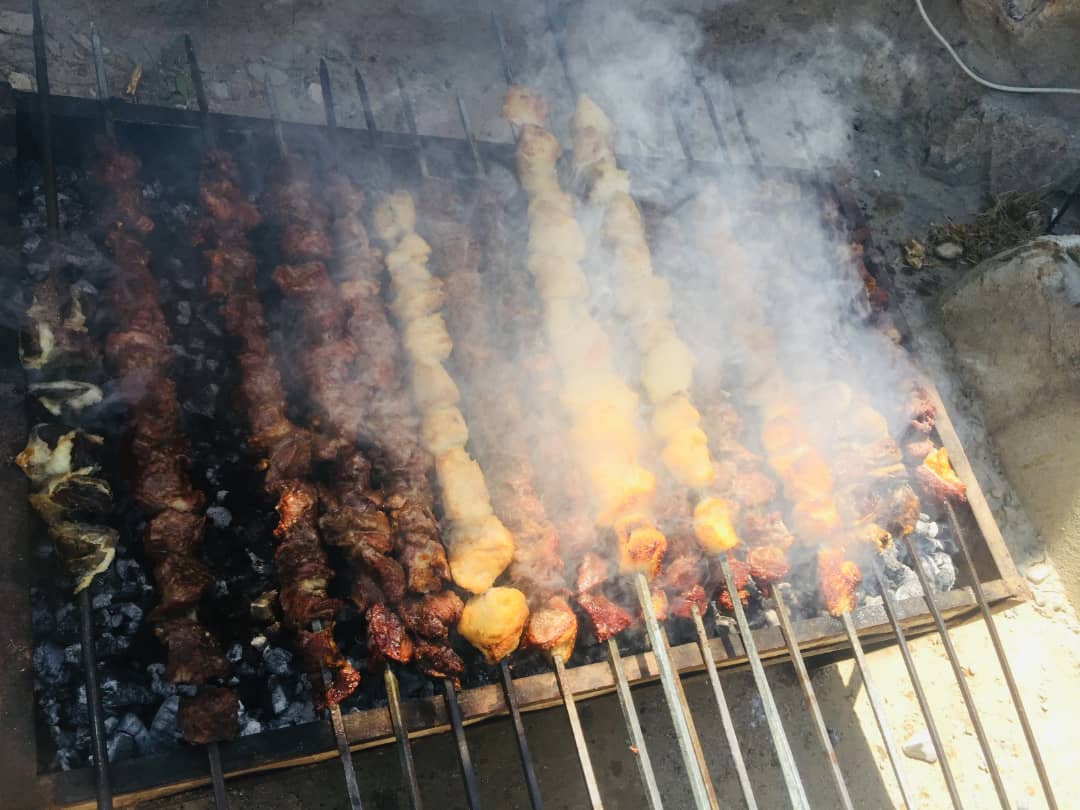
A family in South Waziristan prepares mutton tikka on light heat on May 13, 2021. (Photo courtesy: Anwar Shakir Wazir)
With the security situation improving, Pakistani tribesmen have returned to their homes. Many of them were seen greeting one another after offering their Eid prayer on Thursday.
While young male residents of the tribal districts traditionally participated in the “attan” dance that originated in Afghanistan to cherish the day, the tight coronavirus restrictions this year precluded the possibility of such public gatherings.
“There are very few families that continue to keep the old tradition alive by serving the traditional Pashtun cuisine to their guests,” Khan continued while discussing the "social transformation" around him. “For many others, this has been replaced by fast food or simple snacks.”
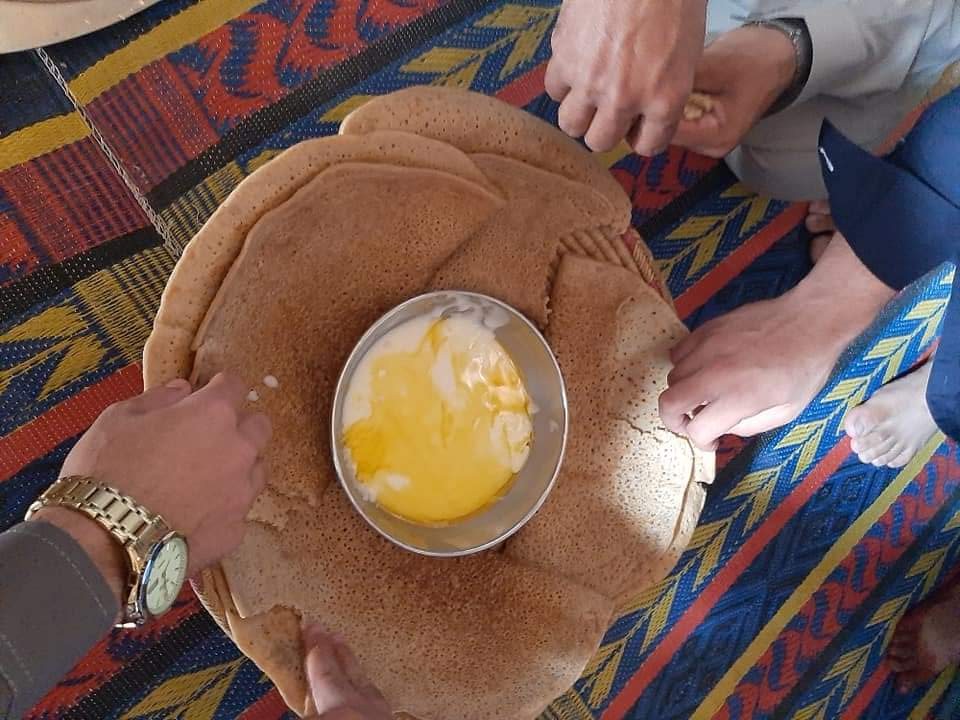
Waishalay, a home-cooked bread, is served to people on Eid al-Fitr along with yoghurt and pure ghee in Pakistan’s South Waziristan tribal district on May 13, 2021. (Photo courtesy: Anwar Shakir Wazir)
Anwar Shakir Wazir, a tribal elder from Wana in South Waziristan district, agreed.
“The food in our region is not too spicy,” he said. “Our traditional tribal cuisines seem to be on the verge of extinction. Some of us continue to enjoy ‘painda’ which is made of rice or baked bread and is placed in a bowl before being served to seven or eight people who sit around it in a circle. However, there are other forms of traditional food that have almost disappeared.”
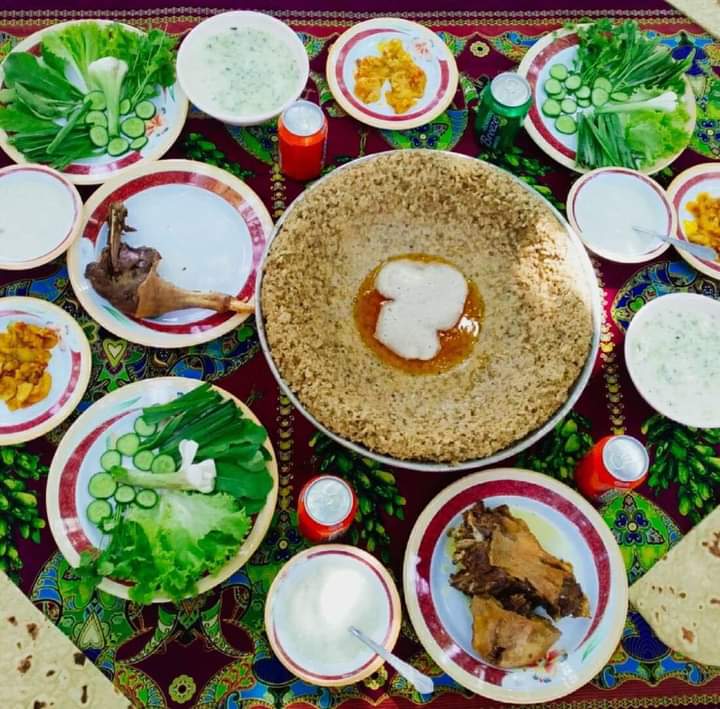
Painda, a traditional tribal dish, is ready to be served to guests in Wana, the central settlement of South Waziristan district, as people celebrate Eid al-Fitr on May 13, 2021. (Photo courtesy: Anwar Shakir Wazir)
Wazir recalled how the close-knit tribal community in tiny settlements operated in the past.
“People were more eager to entertain uninvited guests or strangers than those they were expecting,” he continued. “One could visit any house in the neighborhood without hesitation and was always received with warm hospitality.”
Muhammad Farhan, a resident of South Waziristan who is enrolled in a college in Lahore, said he was fed up with packaged food.
“I always have a craving for our traditional food on special occasions like Eid,” he told Arab News. “However, it has become difficult to find these dishes in our native towns or other parts of Khyber Pakhtunkhwa province these days. I find that a little tragic.”