RIYADH: Carlos Ghosn told prosecutors during his detention in late 2018 that there was no legal obligation for Nissan to pay any deferred compensation that was voluntarily waived, according to statements read aloud in court during the trial of former director Greg Kelly, Asharq Business reported.
“The reason I cut my salary was because of public opinion, and to preserve the motivation of Nissan employees,” Ghosn told prosecutors at the time, according to testimony read by Kelly’s attorney in Tokyo District Court last Tuesday. Kelly has denied charges that he helped Ghosn not report his wages at more than 9 billion yen ($ 83 million), the news site said.
Actions against Kelly, 64, is about to enter its final stage. Kelly is due to stand in front of the podium, eight months after hearing testimonies from current and former carmaker executives, experts and other witnesses. Although Ghosn fled Japan from what he called an unfair legal system at the end of December 2019, his presence loomed large on the horizon during the trial, Asharq Business reported.
In comments translated into Japanese and then into English, Ghosn said: “As a businessman, I had hoped that Nissan, or through the alliance, would legally compensate me. People around me wanted to find ways to legally compensate me. They wanted me to stay in April.”
Ghosn’s testimony was presented as evidence by Kelly’s defense attorney, as well as by prosecutors, and Nissan, who was also accused of providing false information about Ghosn’s compensation. Despite the presence of Nissan’s defense attorney in court, the company has not actually appealed any dispute.
The arrest of Ghosn and Kelly in November 2018 caused a major uproar in companies and in the legal community, and its resonance continues to this day. Nissan has recorded low profits for a decade and has embarked on a cost-cutting plan to transform itself. The carmaker’s alliance with Renault SA and Mitsubishi Motors has also collapsed. The Americans, Michael and Peter Taylor, were extradited to Japan to face accusations of helping Ghosn flee the country, and the first hearing will take place next month.
Ghosn is now in Beirut, and he’s trying to restore his reputation. Besides conducting interviews, Ghosn has also launched a website, published a book, and is working on a documentary. Tuesday’s court testimony is a rare glimpse of what the former auto company’s CEO told prosecutors while in detention in Tokyo.
Ghosn, who was arrested twice in 2019, spent around 130 days in prison before being released for the last time in April of that year.
Ghosn told the prosecution office during his detention: “What I revealed was the amount I received, and if the deferred compensation was conditional, then this means that I understood that it is in a gray area. The reward will not be paid if the conditions are not met, and the amount should not be paid if it is not met. Disclose it. Compensation determined to be payable must be disclosed. “
Ghosn criticized the Japanese legal system, describing it as “a system of justice that violates basic principles of humanity.” The Japanese government described these allegations as unfounded, and accused the former CEO of spreading false information about the legal system in the country. The Justice Ministry also pledged to return Ghosn to Japan for trial, although this is unlikely, given that Japan does not have an extradition treaty with Lebanon.


![]()

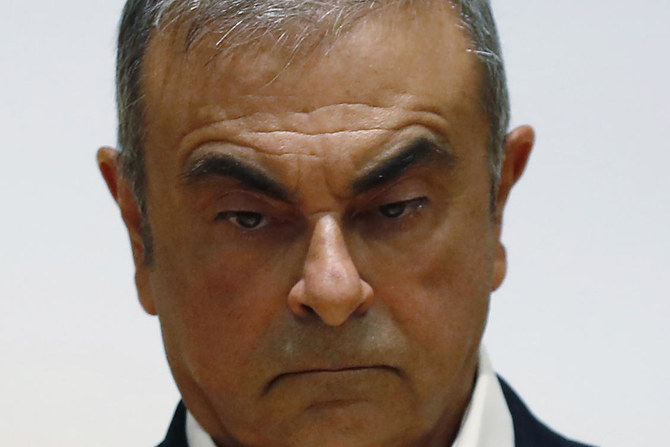
Carlos Ghosn says he cut salary because of public opinion, court hears
Short Url
https://arab.news/mfeum
Carlos Ghosn says he cut salary because of public opinion, court hears
- Ghosn’s testimony was presented as evidence by Kelly’s defense attorney

Latest updates


© 2026 SAUDI RESEARCH & PUBLISHING COMPANY, All Rights Reserved And subject to Terms of Use Agreement.