RIYADH: Saudi Arabia, one of the world’s biggest buyers of wheat and barley, is preparing to sell some of its grain silos, Bloomberg reported.
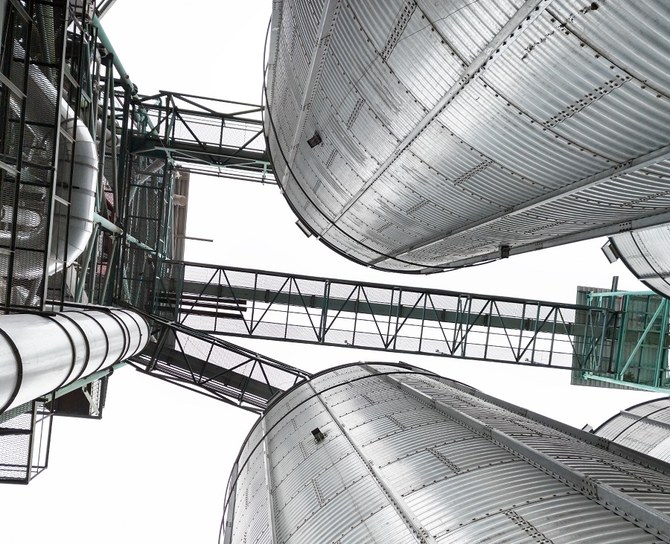
State-owned Saudi Grains Organization aims to start selling silo sites as soon as this year, according to people familiar with the matter. SAGO will seek bids from foreign and local firms, said the people. No decisions have been made and SAGO may retain the assets, they said.
Saudi Arabia has increased asset sales as it looks to open up and diversify the economy from oil.
SAGO has been a key part of the Kingdom’s privatization plans. In the past year, it sold all its flour mills to groups of local and international investors for about $1.5 billion. HSBC Holdings Plc advised it on all those transactions.
SAGO has 3.3 million tons of grain-storage space, according to its website. Saudi Arabia vies with China as the biggest importer of barley, buying about 6.9 million tons annually. It uses the grain mostly to feed sheep, camels and goats. It also ships in around 3 million tons a year of wheat, Bloomberg said.

After the flour mills, Saudi Arabia said to mull grain silo privatizations
https://arab.news/46huj
After the flour mills, Saudi Arabia said to mull grain silo privatizations
- State-owned Saudi Grains Organization aims to start selling silo sites as soon as this year
Saudi POS spending jumps 28% in final week of Jan: SAMA
RIYADH: Saudi Arabia’s point-of-sale spending climbed sharply in the final week of January, rising nearly 28 percent from the previous week as consumer outlays increased across almost all sectors.
POS transactions reached SR16 billion ($4.27 billion) in the week ending Jan. 31, up 27.8 percent week on week, according to the Saudi Central Bank. Transaction volumes rose 16.5 percent to 248.8 million, reflecting stronger retail and service activity.
Spending on jewelry saw the biggest uptick at 55.5 percent to SR613.69 million, followed by laundry services which saw a 44.4 percent increase to SR62.83 million.
Expenditure on personal care rose 29.1 percent, while outlays on books and stationery increased 5.1 percent. Hotel spending climbed 7.4 percent to SR377.1 million.
Further gains were recorded across other categories. Spending in pharmacies and medical supplies rose 33.4 percent to SR259.19 million, while medical services increased 13.7 percent to SR515.44 million.

Food and beverage spending surged 38.6 percent to SR2.6 billion, accounting for the largest share of total POS value. Restaurants and cafes followed with a 20.4 percent increase to SR1.81 billion. Apparel and clothing spending rose 35.4 percent to SR1.33 billion, representing the third-largest share during the week.
The Kingdom’s key urban centers mirrored the national surge. Riyadh, which accounted for the largest share of total POS spending, saw a 22 percent rise to SR5.44 billion from SR4.46 billion the previous week. The number of transactions in the capital reached 78.6 million, up 13.8 percent week on week.
In Jeddah, transaction values increased 23.7 percent to SR2.16 billion, while Dammam reported a 22.2 percent rise to SR783.06 million.

POS data, tracked weekly by SAMA, provides an indicator of consumer spending trends and the ongoing growth of digital payments in Saudi Arabia.
The data also highlights the expanding reach of POS infrastructure, extending beyond major retail hubs to smaller cities and service sectors, supporting broader digital inclusion initiatives.
The growth of digital payment technologies aligns with Saudi Arabia’s Vision 2030 objectives, promoting electronic transactions and contributing to the Kingdom’s broader digital economy.


