
JEDDAH: A pedestrian walkway in Madinah connecting the Prophet’s Mosque and Quba Mosque is bringing families together to enjoy the Ramadan atmosphere.
After a year of very limited public events due to coronavirus disease (COVID-19) pandemic restrictions, people across the Kingdom have been excited to experience the holy month while being out and about and with their loved ones.
Ramadan is even more special for those in Madinah, one of Islam’s two holy cities.
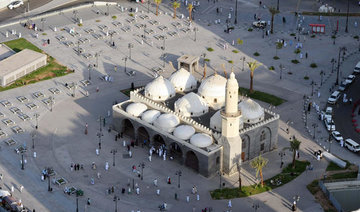
Jadat Quba (Quba Avenue) is named after Islam’s first mosque, with the Prophet Muhammad (PBUH) laying its foundation stone when he first arrived in Yathrib, as Madinah was then known, after migrating from Makkah.
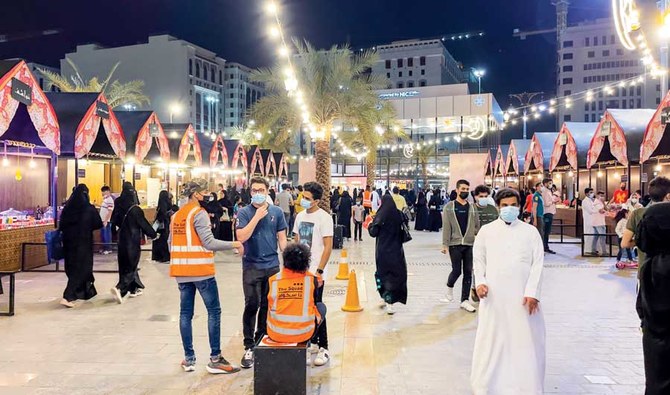
Families and friends have been flowing into the three kilometer-long walkway, a space lined with food trucks and shopping kiosks that meet every taste and budget, while the open courtyard of Quba Front offers family-friendly placements of cafes, shopping booths and a carnival area, all decorated with Ramadan-themed lights.
Ahmed Sadat is the CEO of NICE, the social enterprise that developed Quba Front. It received 45,000 visitors in one day when it opened in January.
He said the front’s first space was the square near the Prophet’s Mosque and that it was important to have this area for local brands and shopping. There was also a space for families with home-based businesses, with more than 120 families supported so far.
“What’s special about Quba Front is that you will always find something different when you visit because we are a developmental project,” Sadat told Arab News.
Gala Al-Motlq explained why the carnival area, where she worked, was so special.
“I’ve been working here for three months, and honestly they were the best three months of my life,” Al-Motlq told Arab News. “I hold the toys and call on visitors to come my way to play the carnival games and encourage sportsmanship and friendly competition, making sure they leave the area with a smile on their face. The area is called Rouh Quba because when the carnival was created it brought life to the area, so many people visited and all age groups played. It’s so much fun for all of them.”
High school senior Nafisah Nafea applauded government efforts to make the space a well-organized, lively and prime public family venue.
“A lot was done to this area,” she told Arab News. “My family and I usually avoided this area before the developments were made due to traffic. Now that it has been solved, it encouraged people from Madinah and outside to visit Quba. These developments are wonderful, the amusement area, the cafes and restaurants, they’re all high quality.”
She said she really liked Quba Front and was planning to visit with her friends next time. “My family and I weren’t really the type to go out in Ramadan a lot, but now that these developments have been made, it looks like we’re changing our old ways. We’ll go out and see people.”
FASTFACT
Jadat Quba (Quba Avenue) is named after Islam’s first mosque, with the Prophet Muhammad (PBUH) laying its foundation stone when he first arrived in Yathrib, which is known as Madinah today, after migrating from Makkah.
Abdulmajeed Al-Harbi, who is 27, was also happy about the Ramadan atmosphere returning to the city.
“The atmosphere here is special, we were deprived of it last year, and they have really outdone themselves this year, from the organizing to the activities available and the overall Ramadan atmosphere,” he told Arab News. “I come here every week ever since it opened. I really enjoy the variety of shops, cafes and activities here. Quba Front brought all these options in one area.”
Jeddah high school senior Reeman Bakkar, who was visiting Madinah, said Ramadan was her favorite month. Experiencing it with all its elements and traditions meant a lot to her, especially in the holy city.
“The best thing about this year is that Ramadan and all its qualities are back,” she told Arab News. “Hearing the call to prayer, going to the Prophet’s Mosque to pray Taraweeh. We finally experienced the real Ramadan after being away from these elements for a year. We now can visit our relatives and practice our traditions again — which is a big deal in the Kingdom. What I look forward to the most every year is Ramadan.”