JEDDAH: A history of civilizations stretching back thousands of years, along with a distinctive landscape and terrain, have left the Tabuk region in Saudi Arabia’s northwest with a host of popular dishes that are central to its everyday culture.
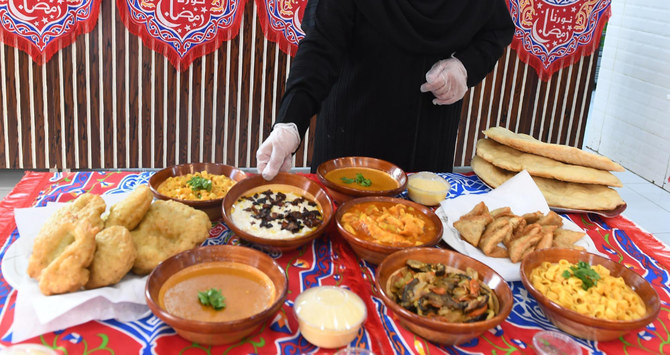
But during the holy month many dishes take on a special significance as residents of Tabuk, its governorates and centers prepare the Ramadan table with iftar and suhoor meals, such as mjallah or khamiaa, a saj dough made from wheat.
The dough is cut once ready and has ghee or olive oil, milk and honey added.
Maqtouta is another dish also known as mouqalqal or hamis, while mansaf are dishes made of meat or chicken with rice and bread, and served for sahoor.
The Ramadan table in Tabuk also contains a grain soup. Wheat is soaked overnight, then water is added, along with meat and onions. Special spices or herbs, such is black pepper and Artemisia argentea, can be added, then water is gradually added while constantly stirring. When the grain is cooked, some families add milk to increase the soup’s nutritional value. The mix is then stirred and served.
Lentil soup, another favorite, is prepared by pouring water over the lentils with vegetables added to taste, until they are cooked. The ingredients are then mashed and served as soup.
Freekeh soup is also made with wheat. Green ears of wheat are picked around six weeks before harvest, then grilled to separate the grains from the peel. Afterward, the grains are ground with millstones and cooked with water along with meat, salt and black pepper.
Some cities on the region’s coasts are known for mutabbaq, a dough cut into rectangles and stuffed with chopped leek, eggs, tomatoes, black pepper and salt. The sides are then well-folded before they are cooked on saj (a convex metal griddle) and flipped until golden.
The Tabuk table is also famous for feteer, which is made from wheat flour, water and salt, and then cooked on saj, with some ghee added when served.
Desserts are also part of the variety of dishes adorning Ramadan tables, most notably luqaimat, a dough kneaded by hand until it becomes consistent and soft.
The dough is put in a hot place for some time, then small pieces are shaped into balls, fried in hot oil and constantly flipped until they become golden. Some people add to them sesame and honey.
Kunafa, a well-known dessert in the Arab world, is made of two layers of equally small vermicelli with cream/cheese in between. It is decorated with pistachios and cooked in the oven with sugar syrup on top once served.


![]()

Ramadan recipes give a taste of Tabuk’s incredible heritage
Short Url
https://arab.news/wf6nw
Ramadan recipes give a taste of Tabuk’s incredible heritage


Latest updates


© 2026 SAUDI RESEARCH & PUBLISHING COMPANY, All Rights Reserved And subject to Terms of Use Agreement.