

Villager becomes Internet sensation for showcasing Pakistani cuisine and country life

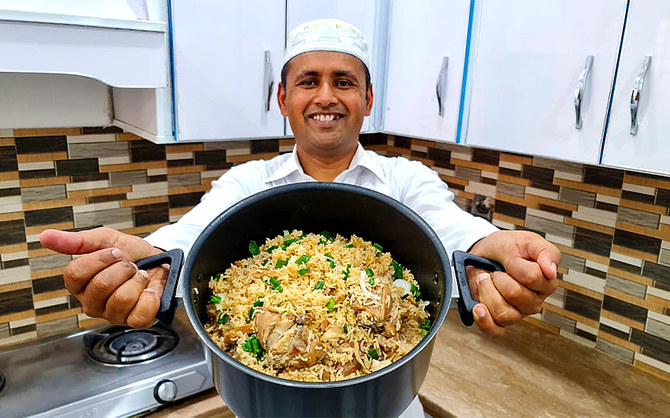
Mubashir Saddique shows yogurt chicken pulao cooked for his ‘Village Food Secrets’ YouTube channel on April 15, 2021. (Photo courtesy: Village Food Secrets)
Short Url
Updated 22 April 2021
Follow

Villager becomes Internet sensation for showcasing Pakistani cuisine and country life

  • Mubashir Saddique’s cooking channel has 2.84 million subscribers and 460 million views, was recognized by YouTube last week
  • When travel restrictions are lifted, Saddique says wants to go to Saudi Arabia for Umrah and display his Arab cuisine skills

 KARACHI: Mubashir Saddique, a 36-year-old food vlogger from a village in Pakistan’s Punjab, has become an Internet sensation, with his reality cooking show ‘Village Food Secrets’ celebrated by YouTube last week as one of the platform’s most popular channels from Pakistan.
Saddique joined YouTube in January 2017 when there were no proper Internet facilities in his village of Shahpur, recording content with a mid-range smartphone and then traveling at least fifty kilometers out to Sialkot to edit and upload.
At the time, Saddique worked at a football factory in Sialkot, and returned home on weekends where he enjoyed cooking for his family — an activity he would go on to channel into YouTube content for Village Food Secrets. Since 2017, he has made 950 videos, and his channel has amassed around 460 million views as of last week.
“I learned cooking from my mother who is key to Village Food Secrets recipes,” Saddique told Arab News in an interview, adding that though he had tried creating dishes across cuisines, for his YouTube channel, he mostly focused on local dishes from his village, cooked and presented in earthenware. “I would go to the village and try to cook something new for my mother and father. They loved it.”
Like many in Pakistan, Saddique was inspired to join the social media platform to tap into its ever-growing audiences.
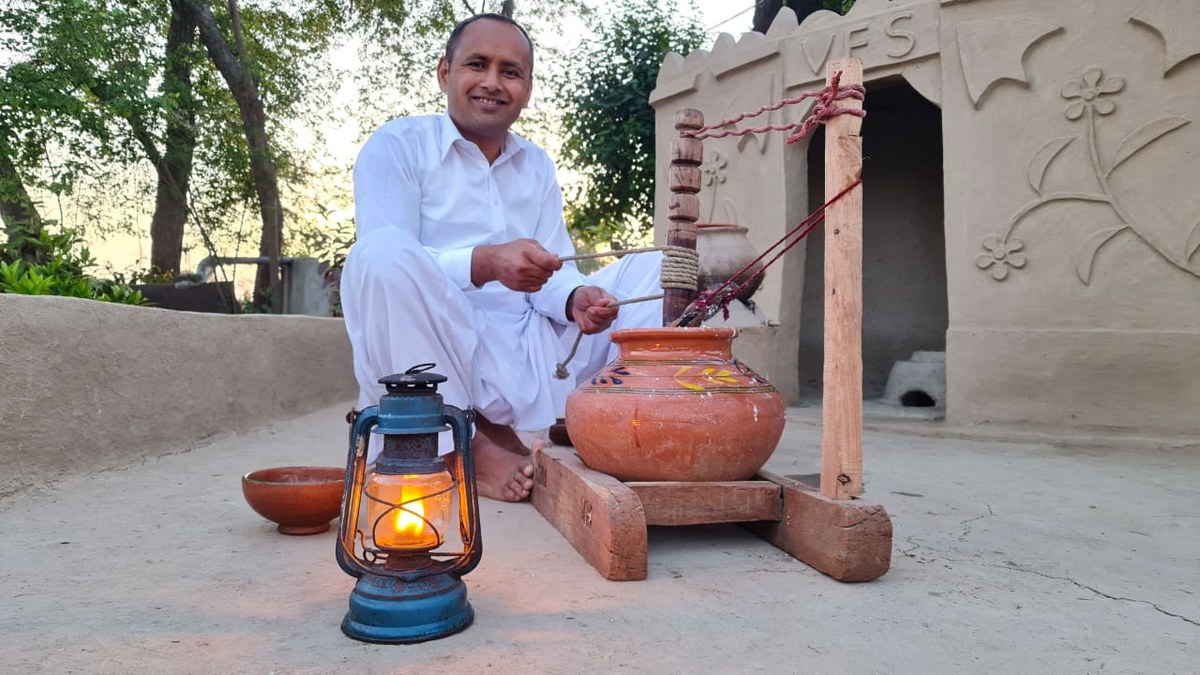


Pakistani chef, Mubashir Saddique prepares breakfast in traditional earthenware in Shahpur village, Pakistan, on April 10, 2021. (Photo courtesy: Village Food Secrets)

A 2019 profiling study by YouTube showed 73% Pakistanis who were online watched YouTube every month and 78% YouTube users in Pakistan said the platform was their first stop when looking for any kind of video.
“After four years of constantly creating inspiring content that showcased the idyllic Pakistani rural life and sharing his cooking skills, he [Saddique] has amassed over 2.84 million subscribers coming from different parts of the world,” YouTube said in a statement last week.
“Village Food Secrets provides a fresher alternative for his viewers with his portrayal of Pakistani’s beautiful countryside along with mouthwatering recipes rooted in village traditions,” YouTube added, saying the channel had enabled Saddique to financially support himself and his family, and put his village in the spotlight.
“His success on YouTube has benefited his village but more importantly, his success has become an inspiration for all Pakistanis,” the social media platform said. “People in surrounding villages are now coming to YouTube to create content, earn a living for their communities, and share their stories to YouTube’s global audiences.”
Saddique said he attributes the popularity of his YouTube channel to people from his village who first started sharing his videos at home and abroad.
“Village boys who were living in urban centers both in Pakistan and abroad made my videos viral and that is how popularity kept growing,” Saddique, whose subscribers mostly come from Pakistan, India, the United Kingdom and the United Arab Emirates, said.
To give back to the community, the vlogger now trains other aspiring bloggers from his village in cooking and content creation.
Now, once coronavirus travel restrictions are lifted, Saddique says he will travel to Saudi Arabia. 
“As soon the travel restrictions are eased, I will go to Saudi Arabia first to perform Umrah,” Saddique said, “and then display my Arabic food cooking skills.”


World Bank approves $700 million for Pakistan’s economic stability

Updated 6 sec ago
Follow

World Bank approves $700 million for Pakistan’s economic stability

  • Of this, $600 million will go for federal programs and $100 million will ⁠support a provincial program in Sindh
  • The results-based design ensures that resources are only disbursed once program objectives are achieved

ISLAMABAD: The World Bank has approved $700 million in ​financing for Pakistan under a multi-year initiative aimed at supporting the country’s macroeconomic stability and service delivery, the bank said on Friday.

The funds will be released under the bank’s Public ‌Resources for Inclusive ‌Development — Multiphase ‌Programmatic ⁠Approach (PRID-MPA) that ‌could provide up to $1.35 billion in total financing, according to the lender.

Of this amount, $600 million will go for federal programs and $100 million will ⁠support a provincial program in ‌the southern Sindh province. The results-based design ensures that resources are only disbursed once program objectives are achieved.

“Pakistan’s path to inclusive, sustainable growth requires mobilizing more domestic resources and ensuring they are used efficiently and transparently to deliver results for people,” World Bank country director Bolormaa Amgaabazar said in a statement.

“Through this MPA, we are working with the Federal and Sindh governments to deliver tangible impacts— more predictable funding for schools and clinics, fairer tax systems, and stronger data for decision‑making— while safeguarding priority social and climate investments and strengthening public trust.”

The approval ‍follows a $47.9 ‍million World Bank grant ‍in August to improve primary education in Pakistan’s most populous Punjab province.

In November, an IMF-World Bank ​report, uploaded by Pakistan’s finance ministry, said Pakistan’s fragmented ⁠regulation, opaque budgeting and political capture are curbing investment and weakening revenue.

Regional tensions may surface over international financing for Pakistan. In May, Reuters reported that India would oppose World Bank funding for Pakistan, citing a senior government ‌source in New Delhi.

“Strengthening Pakistan’s fiscal foundations is essential to restoring macroeconomic stability, delivering results and strengthening institutions,” said Tobias Akhtar Haque, Lead Country Economist for the World Bank in Pakistan.

“Through the PRID‑MPA, we are launching a coherent nationwide approach to support reforms that expand fiscal space, bolster investments in human capital and climate resilience, and strengthen revenue administration, budget execution, and statistical systems. These reforms will ensure that resources reach the frontline and deliver better outcomes for people across Pakistan with greater efficiency and accountability.”

In Sindh, the program is expected to increase provincial revenues, enhance the speed and transparency of payments, and broaden the use of data to guide provincial decision making. The program will directly support the increase of public resources for inclusive development, including more equitable and responsive financing for primary health care facilities and more funding for schools.