RIYADH: Saudi Arabia’s NEOM, a futuristic $500 billion megacity development, announced on Wednesday that it has launched three initiatives represented by the Social Responsibility Department.
The initiatives aim to support the sustainable development goals, celebrate the World Creativity and Innovation Day, and encourage the participation of the local community in developing innovative solutions that would support the UN Sustainable Development Goals (SDG).
The department said that it will work alongside the MiSK Leadership, CyberX and Digital Giving programs, and with the University of Tabuk and the General Authority for Small and Medium Enterprises, to launch these initiatives.
The first initiative is represented in the third batch of the Spark initiative and includes an innovative six-week training program designed to enhance the spirit of entrepreneurship among Saudi youth, the department said in a statement published by the Saudi Press Agency.
It introduces participants to the critical steps involved in starting a business and supports them with the necessary tools to form bright business ideas. From there, participants can turn them into vivid and realistic businesses for a sustainable future, in order for them to be able to present them to investors later.
The program is in support of the Kingdom’s drive to increase the participation of small and medium-sized enterprises in driving economic growth.
Last year, two batches of the program were successfully launched, benefiting 300 graduates, including 10 winners who passed the final round of Spark Tank.
The second initiative is the NEOM Generation Innovation Challenge, which will be held in partnership with the Industrial and Robot Innovation Center at the University of Tabuk. It involves challenging students from all over the Kingdom to present their ideas in the fields of water, energy, media, entertainment, transportation, health and food.
The ideas and their solutions must be centralized using artificial intelligence (AI) systems and be implementable in NEOM’s corresponding sectors. The participants will be evaluated based on their creativity, AI integration, and the extent to which their ideas align with NEOM’s approaches.
The third initiative is the CyberX Bootcamps, a non-profit platform for electronic awareness and digital knowledge under the supervision of the Digital Giving initiative. A training camp on AI and machine learning for youth will be held.
The department said it will spread awareness of the SDGs and provide opportunities for the local community to learn and gain important knowledge on sustainable development through quality education, gender equality, decent work and economic growth, sustainable cities and societies, as well as partnerships to achieve the goals.

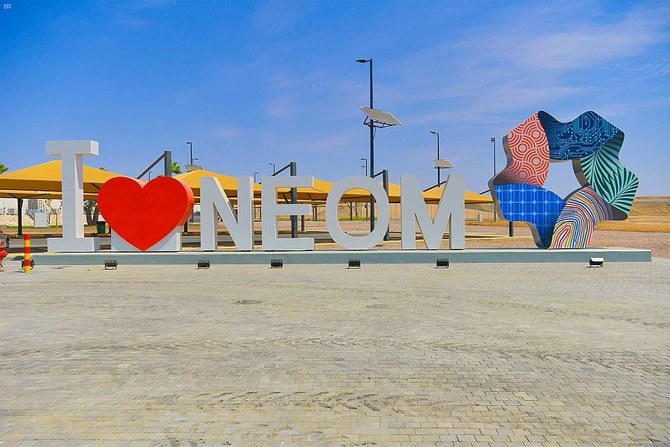
NEOM launches 3 initiatives to support UN Sustainable Development Goals
https://arab.news/5kq4h
NEOM launches 3 initiatives to support UN Sustainable Development Goals
- The initiatives were launched to celebrate World Creativity and Innovation Day
- Department will work alongside MiSK Leadership, CyberX and Digital Giving programs
Saudi Arabia witnessing comprehensive cultural development, says expert
- Clotilde Entrecanales of Acciona hails pace of change in Kingdom
JEDDAH: Museums, exhibitions and art centers play a crucial role in the development of free and educated societies such as the one now burgeoning in Saudi Arabia, an expert has told Arab News.
Clotilde Entrecanales, the Spanish art historian and cultural executive who heads Acciona Living & Culture, a leading creator of technology-driven interactive museums, exhibits and events, said the Kingdom is making efforts to expand the role of culture development to show the world the greatest possible cultural offer.
She added that the Kingdom has quickly infused new energy into the region, and is rapidly establishing itself as a global cultural hub through massive investment in world-class museums, public art and international events, aligning with its 2030 vision.
She said: “With around 70 percent of the population under 30, cultural consumption looks very different than in Europe or the US. These spaces can’t feel like quiet, isolated institutions … they need to be fast, dynamic, brave and deeply connected to the city, blending into everyday urban life rather than sitting apart from it.”
Asked about the role of these sites in the evolving global cultural landscape, particularly in emerging cultural hubs like Saudi Arabia, Entrecanales said: “Our vision is to be a purpose-led partner for cultural and entertainment institutions, helping them be more relevant, connected, inclusive and sustainable.”
She added: “In emerging cultural hubs like Saudi Arabia, that approach feels especially relevant. The cultural transformation underway is moving fast — with major heritage and cultural destinations being developed and opened to the world.”
Speaking about her impression of the Kingdom’s approach to blending heritage with modernity face, Entrecanales said: “Others who attempt to achieve this balance often end up turning heritage into a theme, a layer of storytelling or a cultural program. What feels different about Saudi’s approach is how much pressure there is to treat heritage as the foundation, not just the surface.
“When you’re building at this speed and scale, there’s always a risk that history becomes a backdrop instead of a backbone. The projects that work best are the ones that slow down just enough to let the past set the rhythm for the present.”
Regarding opportunities and challenges, she said: “The opportunity is nothing less than positioning Saudi Arabia as a global cultural center. The challenge, as always, lies in balancing the speed and scale of that ambition with long-term sustainability and a sense of authenticity that remains credible and rooted.”
She added: “You can really feel this in places like the Islamic Arts Biennale, which shows hundreds of historical artefacts of the Islamic world, while re-framing them through contemporary scenography and designs by some of the best design studios in the world; or in AlUla, a world-class heritage site that hosts a major contemporary platform like Desert X, allowing ancient context and present-day artistic practice to coexist in a way that feels genuine.”
Under her guidance, ACCIONA Cultura aspires to create museums and cultural experiences that function as landmarks while fostering sustainable, inclusive and immersive interactions.
She elaborated on how the company is integrating technology, culture, and sustainability to preserve and promote the region’s cultural heritage: “We always start with human connection and storytelling: what’s the story, what should people leave with? Tech comes later.”
Recently, ACCIONA Cultura has been involved in significant projects in Saudi Arabia and is looking forward for more.
She said: “Right now, for example, we’re designing and curating a museum gallery where the entire space is shaped by the practice of a Saudi artist. Another example is the Net Zero exhibition at the King Abdulaziz Center for World Culture (Ithra), where we brought together Saudi and international artists to explore sustainability and our relationship with the planet, including voices like Dina Haddadin, Mohammed Al-Faraj, and Zahrah Al-Ghamdi.”
She added: “One of the projects I’m most proud of isn’t a museum, but our NEXT IN Summit, which we’ve hosted in two editions in our ACCIONA Campus in Madrid, highlighting the Kingdom’s unprecedented cultural momentum as it builds future-facing institutions with a startup mindset.”
About further collaboration with Saudi Arabia, she said: “Let’s just say … something’s definitely simmering in the kitchen.”
Commenting on being recognized among the Blooloop 50 Museum Influencers for 2025, she said: “It means a lot. More than anything, it feels like a nod to the years of teamwork and dedication behind Acciona Cultura, rather than to me personally.”


