

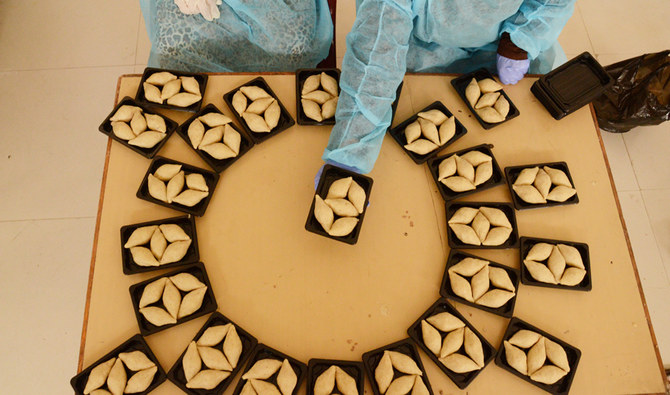
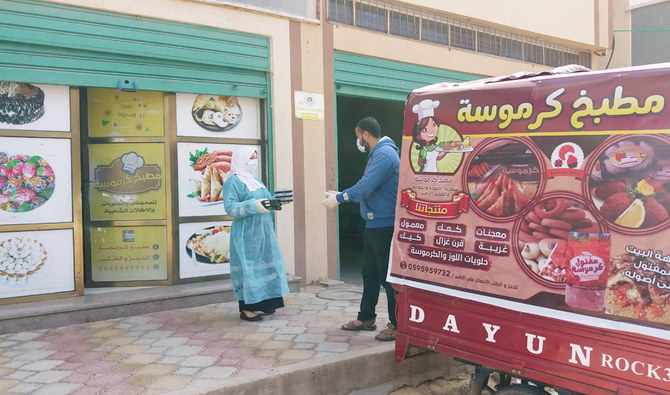


GAZA: Warda Erbee and other women are busy preparing Ramadan foods and sweets in a Gaza Strip kitchen.
Erbee and her colleagues work in Karmousa Kitchen, from the Baraem Development Association, for about seven hours a day to cater for the increased demand during the fasting month.
Erbee, who joined the team in 2017, became the main breadwinner for her family after her husband lost his job due to the pandemic.
She works every day, from 7 a.m. until 2 p.m.
“We work throughout the year at a normal pace, but work increases significantly in the blessed month of Ramadan as the demand is greater for items related to this month, specifically the kubba and sambousak,” she said.
The kitchen’s stand-out offering the rest of the year is the maftool, which is made from wheat or white flour and has earned the satisfaction and admiration of customers.
Karmousa, named after an Algerian delicacy, relies on social media platforms to promote and market its products.
The goal of the Baraem Development Association when launching this project was to help marginalized women cope with poor living conditions.
Kitchen manager Khetam Arafat said that while work did not stop throughout the year, its production doubled during Ramadan and provided additional job opportunities for poor women.
Women shared the work among themselves, with each group undertaking a specific task that they must finish in the shortest period of time.
They need to maintain high levels of accuracy and quality to meet the demands of customers, maintain the position of their products in the market and compete with other factories and kitchens.
According to Arafat, the kitchen’s most famous products are the vegetable and cheese-stuffed sambousak and the Syrian kibbeh made of bulgur and stuffed with minced meat.
“Preparing for Ramadan begins days before in order to meet the demands received by the kitchen and to produce large quantities of items that are in high demand and consumption during this month.”
Despite the emergency conditions resulting from the pandemic, Arafat believed that the demand for Ramadan appetizers and sweets was in line with the annual average.
“Because of an increase in demand this year, the number of female workers has doubled from five to 10, and the number depends on the quality and quantity of the orders.”
From the middle of Ramadan until its end, work in Karmousa is focused on making cakes and maamoul, which are sweets associated with Eid Al-Fitr.
But Arafat feared that an increase in COVID-19 infections in Gaza may lead to a comprehensive closure and inflict heavy losses on the kitchen and all economic sectors.


