

From Riyadh to Dubai, why is good coffee in the region so expensive?

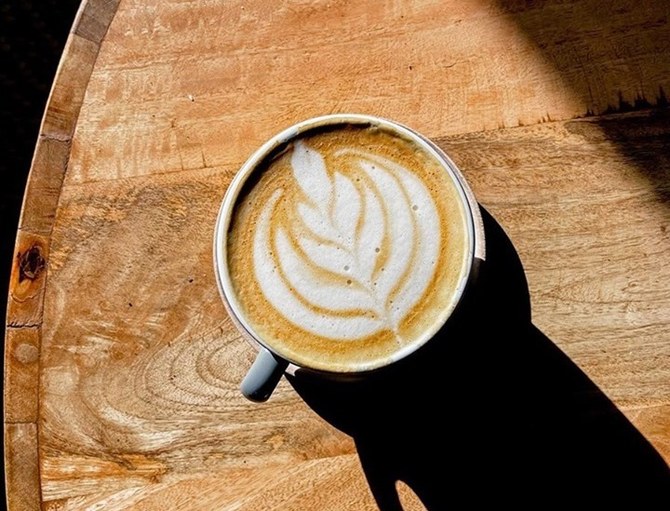
A cup of coffee from Dubai-based Nightjar costs $5. File/[email protected]
Short Url
Updated 19 April 2021
Follow

From Riyadh to Dubai, why is good coffee in the region so expensive?

DUBAI: Buying a cup of coffee in the Gulf can be quite expensive.

Coffee lovers often bemoan the fact that their latte costs double in Dubai or Riyadh what it does in other countries.

What we might not realize, however, is that we are paying for a lot more than milk and beans in that cup of coffee.

Last week, social media was set alight by a complaint over the price of a $7 flat white in Dubai. Coffee lovers from Kuwait, Bahrain, Saudi Arabia and Qatar chimed in on whether the cost was justified. It begs the question: Why is coffee so expensive in this region?

We spoke to cafe operators to find out.

Leon Surynt, owner of Nightjar Coffee, one of Dubai’s most popular coffee brands and cafes, said that it is “really hard” to keep his coffee affordable.

Nightjar imports its own beans directly from farms around the world, roasts them at its Alserkal Avenue roastery and sells to hotels and cafes across the country. 

“You need to have multiple avenues, which is a bit of online, a bit of wholesale and a bit of cafe, to make money here,” Surynt says. 

“We live in a society that has a low tax rate, but we also have many compliance costs.”

If we were to break down the cost of a latte at Nightjar ($5), Surynt says, the ingredients — milk and coffee — and the cup only account for about $1 or 20 percent. He estimates that staff wages and expenses, on the other hand, make up a whopping 30 percent, while rent is another 15 percent. Other overheads, such as government fees, marketing, admin and logistics mean his profit from that one latte is about AED 4 (or $1). And that’s not accounting for the cost of delivery aggregators, his salary and kitchen operations.

“There are a lot of hidden costs here,” Surynt said. 

The story is the same for many others.

Samer Harkous, business development manager for Cypher Coffee, supplies hundreds of cafes in the UAE and overseas with green and roasted beans. 

Cypher does not operate a cafe but offers samples at its roastery.

When pricing Cypher’s products, Harkous said rent and municipality fees must be built into the price of beans, and a profit needs to be made on top of that. The cafe selling those beans must then add on its own costs.

And roasting beans is a costly — and difficult — process.

Equipment is imported from overseas. Each bean requires a different roasting method, which is meticulously recorded on charts by staff, from monitoring the necessary temperature and gas levels to listening for the “first crack.” 

Beans themselves command a range of prices. Cypher’s most expensive roast is from Yemen (up to $136 per kilogram) and its cheapest, and most popular, is from Brazil (between $16 to $82 per kilogram). 

Brazilian beans are therefore used by cafes wanting to keep costs down. More expensive beans, usually used by specialty coffee houses, will command a higher price.

Ali Al-Fahad, founder of Earth Roastery, which was established in Kuwait in 2014 and has spread across the region since, adjusts his coffee prices depending on the country he operates in. 

He said that Kuwait is the most expensive and logistically difficult location for a cafe business, while Dubai is the easiest and cheapest. That is why it took them until 2019 to open a café. Before that, he was solely selling wholesale coffee beans.

“Business here is very risky. Very few people can be successful,” he said. “When we opened the coffee shop, we understood that.”

Al-Fahad said their highest costs go on salaries and visa costs, followed by rent and logistics.

“Customers travel. They want the same quality and experience as they have in Europe. But to be on that level, you need to invest more.”


A post shared by (@crustandcrema)

Cyrus Woo, deputy director at Bahrain’s Crust and Crema, said pricing was a “sensitive” subject when they opened.

“We had to be very careful. We only had other coffee shops to compare to, so we did market research and then did our own costing.”

Of the $4 it costs for an Americano or $5 for a latte, Woo agreed that what the customer is mostly paying for is staff salaries.

“If you factor in how much of the coffee and milk you’re going to use for one drink, those are the minimal costs involved,” Woo said.


A post shared by (@crustandcrema)

“You’re paying for the atmosphere, overheads, marketing, utilities, rent, insurance, equipment and labor costs. The market is saturated, and baristas are in high demand, so you have to pay more for them.”

Woo said that while coffee makes more money than food at a cafe, for coffee to be profitable, a cafe has to “sell a lot.”

“We are a for-profit business. We need to be able to survive, but we don’t want to be greedy. 

“I hope that when people come in and have coffee, they appreciate there’s a lot more involved, that they’re paying for the experience.”

So, when you’re handing over $7 for your latte, lamenting the expense, remember: You’re not just buying a coffee. You’re paying for your surroundings and for your barista’s wages. And actually, for $7, that’s pretty reasonable.


‘One Battle After Another’ wins 6 prizes including best picture at Britain’s BAFTA film awards

Updated 59 min 15 sec ago
Follow

‘One Battle After Another’ wins 6 prizes including best picture at Britain’s BAFTA film awards

  • Paul Thomas Anderson was named best director for “One Battle After Another”
  • The British awards offer clues about who may win at the Academy Awards in Hollywood next month

LONDON: Politically charged thriller “One Battle After Another” won six prizes, including best picture, at the British Academy Film Awards on Sunday, building momentum ahead of Hollywood’s Academy Awards next month.
Blues-steeped vampire epic “Sinners” and gothic horror story “Frankenstein” won three awards each, while Shakespearean family tragedy “Hamnet” won two including best British film.
“One Battle After Another,” Paul Thomas Anderson’s explosive film about a group of revolutionaries in chaotic conflict with the state, won awards for directing, adapted screenplay, cinematography and editing, as well as for Sean Penn’s supporting performance as an obsessed military officer.
“This is very overwhelming and wonderful,” Anderson said as he accepted the directing prize. He paid tribute to his longstanding assistant director, Adam Somner, who died of cancer in November 2024 a few weeks into production.
“We have a line from Nina Simone that we used in our film, ‘I know what freedom is: It’s no fear,’” the director said. “Let’s keep making things without fear. It’s a good idea.”
Bookies’ favorite Jessie Buckley won the best actress prize for playing grieving mother Agnes Hathaway, wife of William Shakespeare, in “Hamnet.” Buckley, 36, is the first Irish performer to win a best actress prize at the awards, known as BAFTAs.
She dedicated her award “to the women past, present and future who taught me and continue to teach me how to do it differently.”
In a major upset, Robert Aramayo won the best actor category for his performance in “I Swear,” a fact-based British indie drama about a campaigner for people with Tourette syndrome.
The 33-year-old British actor looked stunned and called the victory over Ethan Hawke, Michael B. Jordan, Leonardo DiCaprio and Timothée Chalamet “absolutely mad.”
“I absolutely can’t believe this,” he said. “Everyone in this category blows me away.”
“Sinners” took home trophies for director Ryan Coogler’s original screenplay, the film’s musical score and for Wunmi Mosaku’s supporting actress performance as herbalist and healer Annie.
The British-Nigerian actor said that in the role she found “a part of my hopes, my ancestral power and my connection, parts I thought I had lost or tried to dim as an immigrant trying to fit in.”
Stars and royalty
Hollywood stars and British celebrities, from Paddington Bear to the Prince and Princess of Wales, gathered at London’s Royal Festival Hall for the awards. DiCaprio, Chalamet, Emma Stone, Cillian Murphy, Glenn Close and Ethan Hawke were among the stars walking the red carpet before a black-tie ceremony hosted by Scottish actor Alan Cumming.
Prince William and Catherine, Princess of Wales also attended, three days after William’s uncle Andrew Mountbatten-Windsor was arrested by police and held for 11 hours over allegations he sent sensitive government information to the late financier and sex offender Jeffrey Epstein.
The scandal has rocked the royal family led by King Charles III, though William and Kate remain popular standard-bearers for the monarchy. William presented an award in his role as president of the British Academy of Film and Television Arts.
Among the biggest receptions from gathered fans was for Paddington, the puppet bear who stars in a musical stage adaption of the beloved children’s classic.
Oscars bellwether
The British prizes, officially called the EE BAFTA Film Awards, often provide hints about who will win at Hollywood’s Academy Awards, held this year on March 15. “Sinners” has a record 16 Oscar nominations, followed by “One Battle After Another” with 13.
“One Battle” went into the BAFTAs ceremony with 14 nominations. “Sinners” was just behind with 13, while “Hamnet” had 11.
Ping-pong odyssey “Marty Supreme” also had 11 nominations but went home empty=handed.
Guillermo del Toro’s reimagining of “Frankenstein” and Norwegian family drama “Sentimental Value” each got eight nominations.
“Frankenstein” took awards for production design, costume design and for the hair and makeup artists who spent 10 hours a day transforming Jacob Elordi into the movie’s monstrous creature.
“Sentimental Value” won the prize for the best film not in English.
Cumming told the audience that it had been a strong year for cinema, if not a cheerful one, with nominated films tackling themes including child death, racism and political violence:
“Watching the films this year was like taking part in a collective nervous breakdown,” he said. “It’s almost as though there are events going on in the real world that are influencing filmmakers.”
The ceremony was more glitz than gloom, though, including a performance by Ejae, Audrey Nuna and Rei Ami — the voices of animated band HUNTR/X in box office juggernaut “KPop Demon Hunters” — singing the movie hit “Golden.”
Putin critic wins best documentary
The best-documentary prize went to “Mr. Nobody Against Putin,” about a Russian teacher who documented the propaganda imposed on Russian schools after the invasion of Ukraine.
The film’s American director David Borenstein said that teacher Pavel Talankin had shown that “whether it’s in Russia or the streets of Minneapolis, we always face a moral choice,” referring to the protests against US immigration enforcement in Minnesota.
“We need more Mr. Nobodies,” he said.
It beat documentaries including Mstyslav Chernov’s harrowing Ukraine war portrait “2000 Meters to Andriivka, ” co-produced by The Associated Press and Frontline PBS.
Most BAFTA winners are chosen by 8,500 members of the UK academy of industry professionals. The Rising Star award, which is decided by public vote, went to Aramayo.
Donna Langley, the UK-born chairwoman of NBCUniversal Entertainment, was awarded the British Academy’s highest honor, the BAFTA fellowship.