


WINDSOR: Queen Elizabeth and her family paid their last respects to Prince Philip on Saturday at a funeral that celebrated his naval past, his international heritage and seven decades of service in which he helped guide the queen through repeated crises.
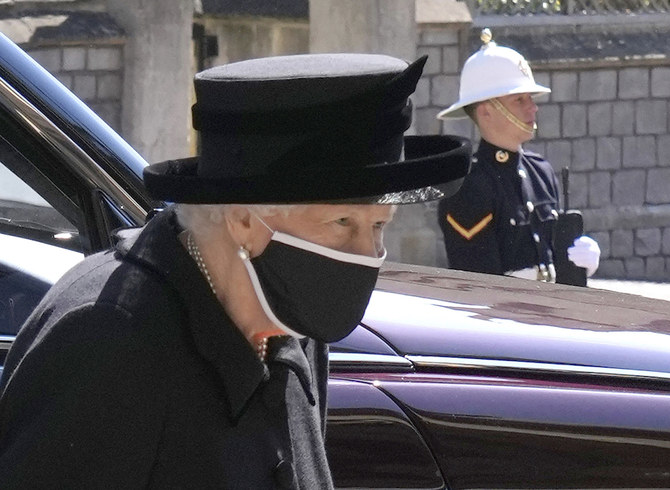
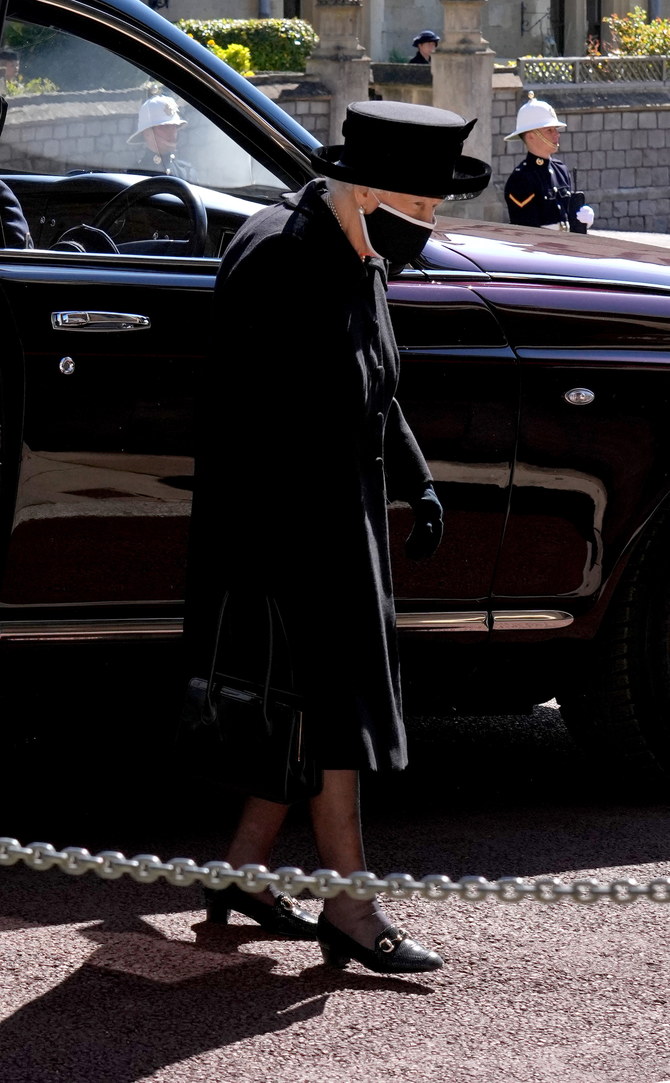
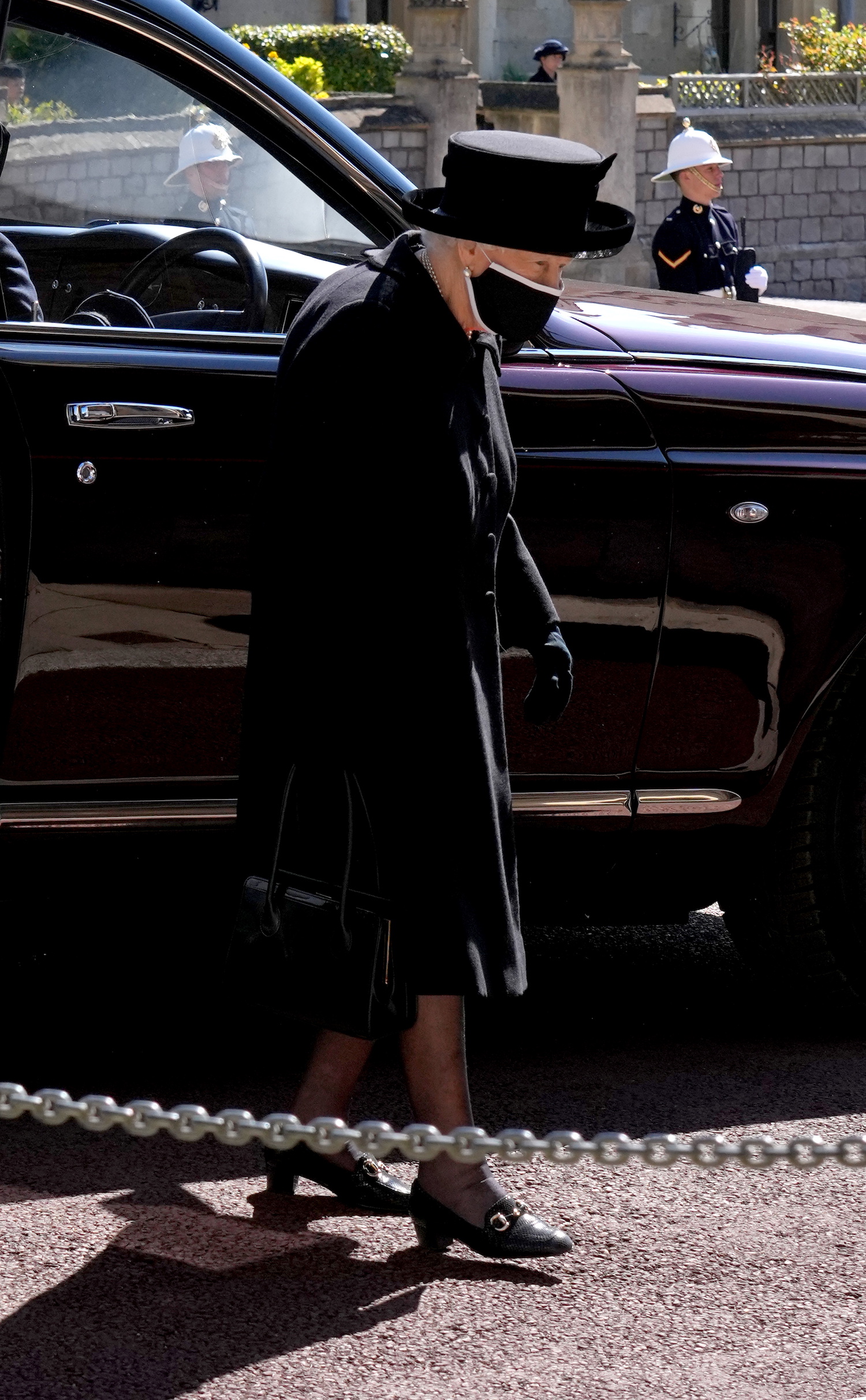
Elizabeth, dressed in black and in a white trimmed black mask, stood alone as the funeral service began in St George's Chapel, which dates back to 1475.
Mourners at the ceremony in Windsor Castle, including Prince Charles and his sons Princes William and Harry, were limited in number and separated due to COVID-19 rules.
"We are here today in St George’s Chapel to commit into the hands of God the soul of his servant Prince Philip, Duke of Edinburgh," the Dean of Windsor, David Conner, said.
"We have been inspired by his unwavering loyalty to our Queen, by his service to the Nation and the Commonwealth, by his courage, fortitude and faith."
After the nation observed a minute's silence in brilliant sunshine, Harry and William took up their places on opposite sides of the chapel with the final resting place of Tudor monarch Henry VIII dividing them.
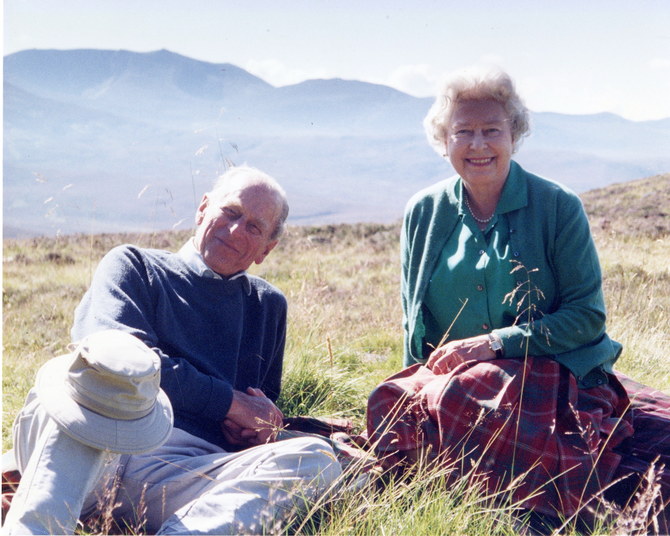
Philip, officially known as the Duke of Edinburgh, died aged 99 on April 9. The queen in 1997 described Philip as her "strength and stay" over their decades of marriage.
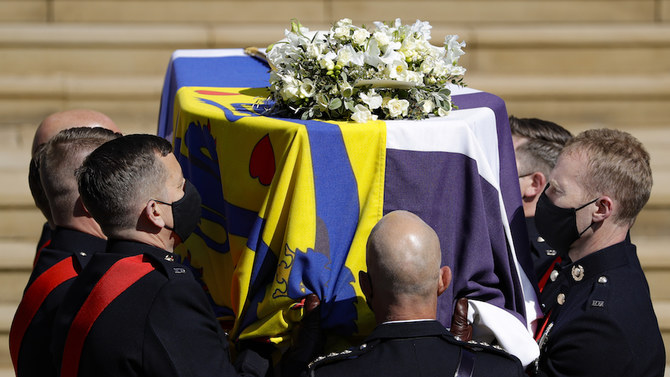
His naval cap and sword lay on top of the coffin, which was covered with the Duke of Edinburgh's personal standard featuring the Danish coat of arms, the Greek cross, Edinburgh Castle and the stripes of the Mountbatten family.
The choir sang a sailors' hymn, "Eternal Father, Strong to Save", and shortly before he is lowered into the Royal Vault, the Russian "Kontakion of the Departed", a hymn of the Orthodox and Eastern churches, will echo around the ancient church.
Philip's coffin was borne to the chapel on a bespoke Defender TD 130 in military green as a minute gun fired eight times.
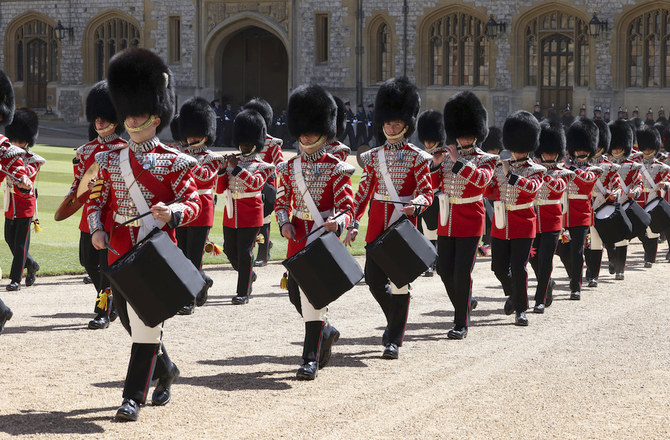
Before the procession, military bands spaced out across the quadrangle of Windsor Castle to play the prince's chosen music, including "I Vow To Thee My Country,", "Jerusalem" and "Nimrod".
Philip, who married Elizabeth in 1947, helped the young queen adapt the monarchy to the changing world of the post-World War Two era as the loss of empire and the decline of deference challenged the world's most prominent royal family.
She has now been widowed just as she grapples with one of the gravest crises to hit the royal family in decades - allegations of racism and neglect by it from her grandson Harry and his American-born wife Meghan.
Attention on Harry
Much media attention will focus on the royals' behaviour towards Harry as he made his first public appearance with the family since the couple gave an explosive interview to Oprah Winfrey last month.
In the interview they accused one unnamed royal of making a racist comment, and said Meghan's pleas for help when she felt suicidal were ignored.
The couple, who moved to Los Angeles and quit royal duties last year, laid bare their perceptions of the family's attitudes in what amounted to a critique of the old-fashioned customs of an ancient institution.
Meghan said she had been silenced by "the Firm" while Harry said his father, Charles, had refused to take his calls. Harry said both Charles and his brother William were trapped in the royal family.
Meghan watched the funeral at her home in California after she was advised by her doctor not to travel while pregnant, a source familiar with the situation said. US networks showed the funeral live as did British TV stations.
Mourners eschewed the tradition of wearing military uniforms, a step newspapers said was to prevent embarrassment to Harry, who despite serving two tours in Afghanistan during his army career, is not be entitled to wear a uniform because he was stripped of his honorary military titles.
Prince Andrew, who stepped down from public duties in 2019 over controversy surrounding his what he termed his "ill-judged" association with late US financier Jeffrey Epstein, had wanted to wear an admiral's uniform at the funeral, British media reported.
Queen alone
The palace emphasised beforehand that while the occasion would have the due pageantry that marks the passing of a senior royal, it remained an occasion for a mourning family to mark the passing of a husband, father, grandfather and great-grandfather.
There were just 30 mourners inside the chapel for the service because of continuing coronavirus restrictions in Britain.
Philip's dedication to his duty earned him widespread popularity in Britain, but he was also criticised by some for a number of off-the-cuff racist or abrupt comments which shocked princes, priests and presidents.
"He was authentically himself, with a seriously sharp wit, and could hold the attention of any room due to his charm and also because you never knew what he might say next," Harry said of his grandfather.
Philip was a decorated Royal Navy veteran of World War Two and his funeral, much of which was planned in meticulous detail by the prince himself, will have a strong military feel, with personnel from across the armed forces playing prominent roles.