

Arab League chief ‘deeply concerned’ over Iran’s uranium enrichment move

1 / 2
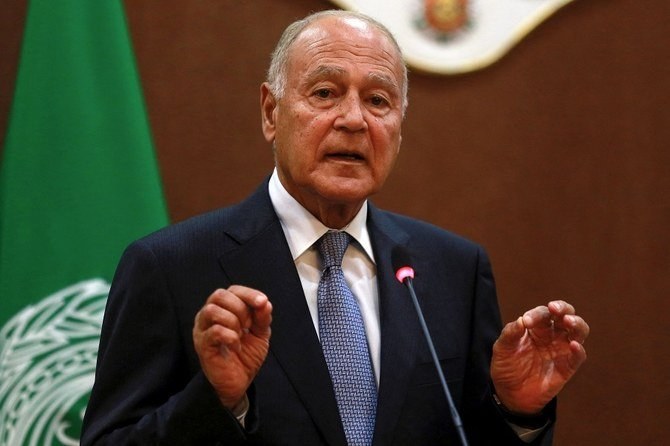
The secretary-general of the Arab League Ahmed Aboul Gheit. (AFP/File)
2 / 2
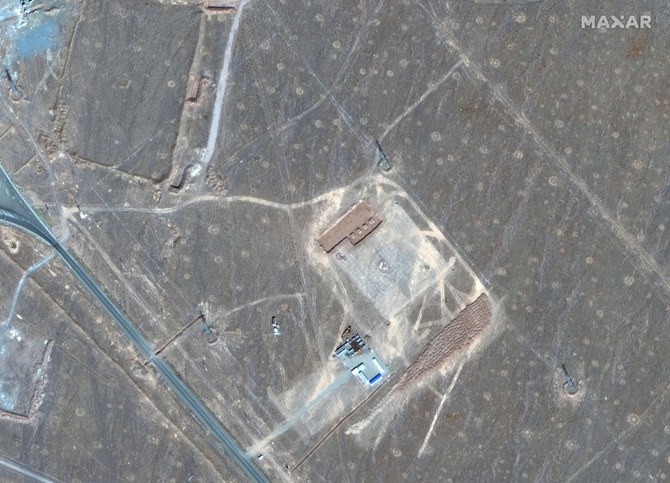
This handout satellite image provided by Maxar Technologies on January 8, 2020 shows an overview of Iran's Fordow Fuel Enrichment Plant (FFEP), northeast of the Iranian city of Qom. (AFP/File Photo)
Short Url
Updated 16 April 2021
Follow

Arab League chief ‘deeply concerned’ over Iran’s uranium enrichment move

CAIRO: The secretary-general of the Arab League has expressed his deep concerns over Iran’s decision to increase its enrichment of uranium to 60 percent, nudging it ever closer to bomb-grade purity.

Ahmed Aboul Gheit has described Tehran’s move as a dangerous development and a clear step toward developing a nuclear weapon, an official source at the General Secretariat of the Arab League said.

READ MORE

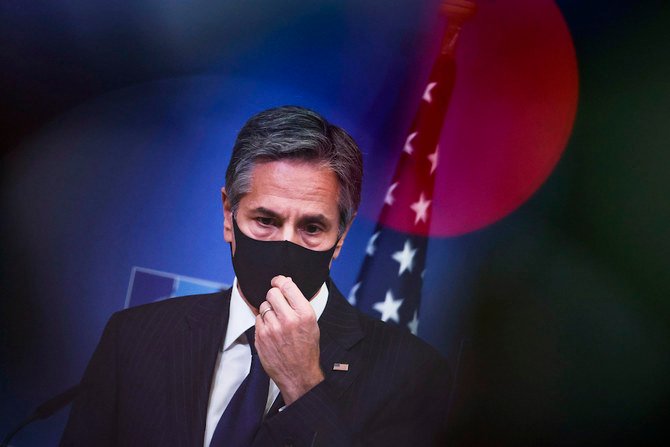
US Secretary of State Antony Blinken on Wednesday called Iran’s announcement of an intent to begin enriching uranium at 60 percent purity “provocative.” Click here to read more.
Further enriching uranium from 20 percent purity by using advanced centrifuges, added more doubts about the real goals of the Iranian nuclear program, as such high levels of enrichment were unnecessary for peaceful uses of nuclear energy, the source added.

Iran’s decision is the latest violation of its obligations under the collapsed Joint Comprehensive Plan of Action, a nuclear deal that leading world powers are currently working to revive.

The league wants any renegotiated agreement to also address the concerns of Arab countries regarding Iran’s destabilizing policies in the region and its ongoing interference in the internal affairs of Arab countries.


In Gaza hospital, patients cling to MSF as Israel orders it out

Updated 2 sec ago
Follow

In Gaza hospital, patients cling to MSF as Israel orders it out

KHAN YUNIS: At a hospital in Gaza, wards are filled with patients fearing they will be left without care if Doctors Without Borders (MSF) is forced out under an Israeli ban due to take effect in March.
Last month, Israel announced it would prevent 37 aid organizations, including MSF, from operating in Gaza from March 1 for failing to provide detailed information on their Palestinian staff.
“They stood by us throughout the war,” said 10-year-old Adam Asfour, his left arm pinned with metal rods after he was wounded by shrapnel in a bombing in September.
“When I heard it was possible they would stop providing services, it made me very sad,” he added from his bed at Gaza’s Nasser Hospital.
Israel’s Ministry of Diaspora Affairs and Combating Antisemitism, which oversees NGO registrations, has accused two MSF employees of links to Palestinian militant groups Hamas and Islamic Jihad, allegations MSF vehemently denies.
The ministry’s decision triggered international condemnation, with aid groups warning it would severely disrupt food and medical supplies to Gaza, where relief items are already scarce after more than two years of war.
Inside the packed Nasser Hospital in southern Gaza, one of the few medical facilities still functioning in the territory, MSF staff were still tending to children with burns, shrapnel wounds and chronic illnesses, an AFP journalist reported.
But their presence may end soon.
The prospect was unthinkable for Fayrouz Barhoum, whose grandson is being treated at the facility.
“Say bye to the lady, blow her a kiss,” she told her 18-month-old grandson, Joud, as MSF official Claire Nicolet left the room.
Joud’s head was wrapped in bandages covering burns on his cheek after boiling water spilled on him when strong winds battered the family’s makeshift shelter.
“At first his condition was very serious, but then it improved considerably,” Barhoum said.
“The scarring on his face has largely diminished. We need continuity of care,” she said.

- ‘We will continue working’ -

AFP spoke with patients and relatives at Nasser Hospital, all of whom expressed the same fear: that without MSF, there would be nowhere left to turn.
MSF says it currently provides at least 20 percent of hospital beds in Gaza and operates around 20 health centers.
In 2025 alone, it carried out more than 800,000 medical consultations and over 10,000 deliveries.
“It’s almost impossible to find an organization that will come here and be able to replace all what we are doing currently in Gaza,” Nicolet told AFP, noting that MSF not only provides medical care but also distributes drinking water to a population worn down by a prolonged war.
“So this is not really realistic.”
Since the start of the war in October 2023, triggered by Hamas’s deadly attack on southern Israel, Israeli officials and the military have repeatedly accused Hamas of using Gaza’s medical facilities as command centers.
Many have been damaged by two years of bombardments or overcrowded by casualties, while electricity, water and fuel supplies remain unreliable.
Aid groups warn that without international support, critical services such as emergency care, maternal health, and paediatric treatment could collapse entirely, leaving hundreds of thousands of residents without basic medical care.
Humanitarian sources say at least three international NGO employees whose files were rejected by Israeli authorities have already been prevented from entering Gaza through the Kerem Shalom crossing.
“For now, we will continue working as long as we can,” said Kelsie Meaden, an MSF logistics manager at Nasser Hospital, adding that constraints were already mounting.
“We can’t have any more international staff enter into Gaza, as well as supplies... we will run into shortages.”