

Iran admits nuclear plant hit by blast

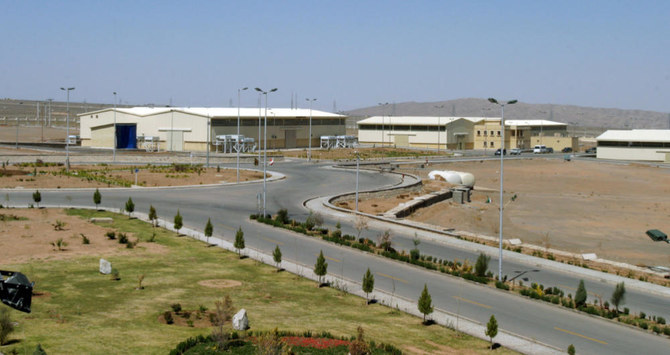
A view of the Natanz uranium enrichment facility 250 km (155 miles) south of the Iranian capital Tehran. (Reuters)
Short Url
Updated 13 April 2021
Follow

Iran admits nuclear plant hit by blast

  • The attack came amid diplomatic efforts by Iran and the US to revive Tehran’s 2015 nuclear deal with major powers
  • Netanyahu:I will never allow Iran to obtain the nuclear capability to carry out its genocidal goal of eliminating Israel

JEDDAH:Iran admitted on Monday that an explosion had disabled uranium enrichment centrifuges at its flagship Natanz nuclear plant.

Officials in Tehran initially claimed that a power cut on Sunday had disrupted activities at Natanz, the center of Iran’s nuclear program, but it later emerged that Israel’s Mossad spy agency had carried out a cyberattack on the plant.

The attack came amid diplomatic efforts by Iran and the US to revive Tehran’s 2015 nuclear deal with major powers, after former US President Donald Trump abandoned it three years ago and reimposed sanctions.

The Israelis “want to take revenge because of our progress in the way to lift sanctions,” Iranian Foreign Minister Mohammad Javad Zarif said on Monday.

“We will not fall into their trap. We will not allow this act of sabotage to affect the nuclear talks, but we will take our revenge.”

Israel and US allies in the Gulf strongly oppose restoration of the deal in its current form, without also addressing Iran’s ballistic missile program and its regional meddling through proxy militias in Iraq, Yemen and elsewhere.

Israeli Prime Minister Benjamin Netanyahu said after talks on Monday with US Defense Secretary Lloyd Austin: “I will never allow Iran to obtain the nuclear capability to carry out its genocidal goal of eliminating Israel, and Israel will continue to defend itself against Iran’s aggression and terrorism.”

Sunday’s attack on Natanz came a day after Iran started up advanced uranium enrichment centrifuges, which are banned under the nuclear deal.

“Our nuclear experts are assessing the damage but I can assure you that Iran will replace damaged centrifuges in Natanz with advanced ones,” Foreign Ministry spokesman Saeed Khatibzadeh said.


Jordanian king, Egyptian president discuss Gaza in Cairo meeting

Updated 3 sec ago
Follow

Jordanian king, Egyptian president discuss Gaza in Cairo meeting

  • Talks emphasize need to enhance joint Arab efforts to restore stability in region, including Palestinian coastal enclave
  • Jordan, Egypt firmly reject any attempts to displace Palestinians from West Bank, condemn Israeli violations

LONDON: King Abdullah II of Jordan and Egyptian President Abdel Fattah El-Sisi emphasized the importance of implementing the ceasefire agreement for the Gaza Strip during their meeting at Al-Ittihadiya Palace in Cairo.

The meeting stressed the need to enhance joint Arab efforts to restore stability in the region, including the Palestinian coastal enclave of Gaza, according to the Jordan News Agency.

The two leaders emphasized the need to fully implement the Gaza ceasefire, allow unhindered humanitarian aid, and accelerate recovery efforts in the territory.

Jordan and Egypt also firmly rejected any attempts to displace Palestinians from the West Bank and condemned all violations and arbitrary actions against them.

King Abdullah cautioned against the repeated attacks on holy sites in Jerusalem, both Muslim and Christian, which have reportedly been perpetrated by Israeli authorities or settlers.

The parties emphasized the importance of de-escalation and the peaceful resolution of regional crises while respecting national sovereignty, unity, and territorial integrity.

Jordan’s Deputy Prime Minister and Foreign Minister Ayman Safadi, along with Director of the Office of His Majesty Alaa Batayneh, also attended the meeting.

Israel announced on Sunday the limited reopening of the Rafah crossing between Gaza and Egypt. The crossing, which is considered a vital gateway for both civilians and aid, had remained closed since Israeli forces seized control of it in May 2024 during the conflict in Gaza, aside from a brief reopening in early 2025.