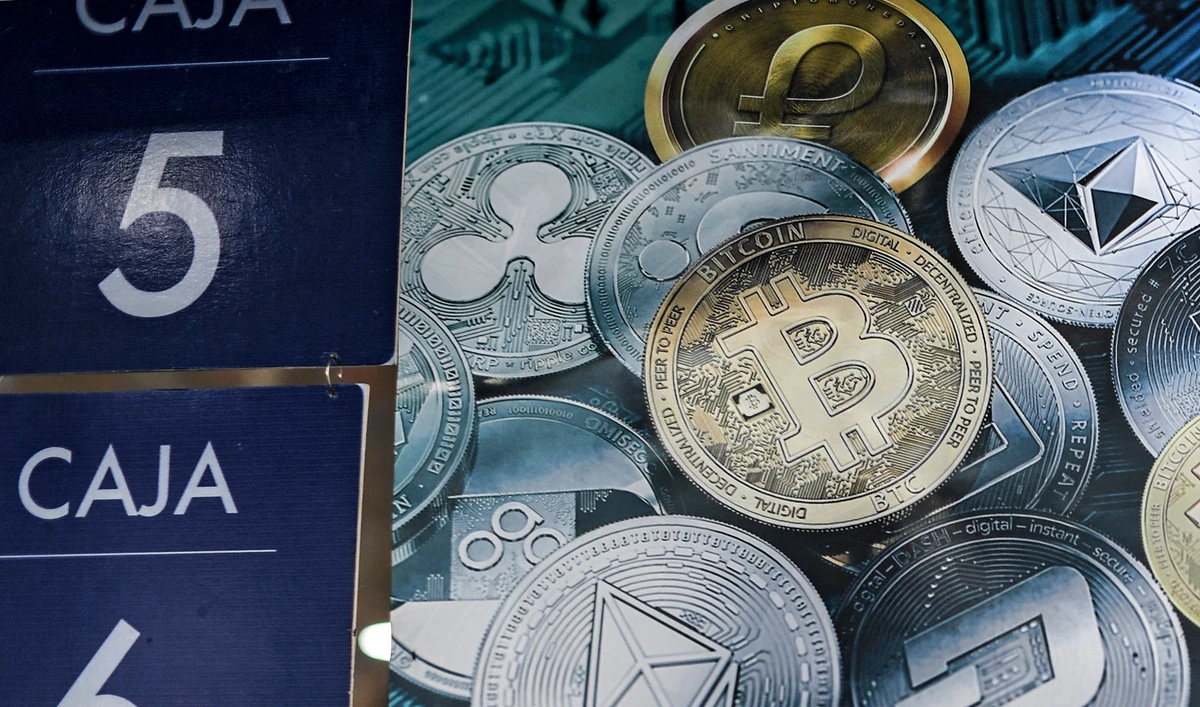
- State Bank governor says “comprehensive internal survey” being carried out to learn about trends in other countries
- Global central banks developing digital currencies to modernise financial systems, ward off threat from cryptocurrencies, speed up payments
KARACHI: Pakistan’s central bank is conducting a “comprehensive internal survey” to study the feasibility of launching a digital currency in the country, the governor of the State Bank of Pakistan said on Monday.
Global central banks are looking at developing digital currencies to modernise their financial systems, ward off the threat from cryptocurrencies like bitcoin and speed up domestic and international payments. China is one of the most advanced in its effort, and last month proposed a set of global rules for central bank digital currencies, from how they can be used around the world to highly sensitive issues such as monitoring and information sharing.
“There are many things involved and we are conducting a comprehensive internal study that what are the trends in other central banks,” governor State Bank Dr Reza Baqir said while speaking to journalists at the Pakistan Stock Exchange. “When our study would be completed the outcome will be shared … The experience of other central banks and may be the basis for our considerations.”

In an interview to international media last month, Baqir said introducing a digital currency would boost the government’s efforts at financial inclusion and allow it to make “progress in our fight towards anti-money laundering and towards countering terrorism financing.”
The Bank of Japan began experiments this month to study the feasibility of issuing its own digital currency, joining efforts by other central banks that are aiming to match the innovation in the field achieved by the private sector. The first phase of Japan's experiments, to be carried out until March 2022, will focus on testing the technical feasibility of issuing, distributing and redeeming a central bank digital currency (CBDC).
As digital currencies such as bitcoin gain more traction with mainstream companies and investors, and as private efforts like the Facebook-backed Diem seek approval, the onus is on central banks to accelerate plans to issue digital cash to fend off threats to their control over money.
The People's Bank of China is aiming to become the first major central bank to issue a CBDC, part of its push to internationalise the yuan and reduce dependence on the dollar-dominated global banking system.
The European Central Bank is also exploring the introduction of a digital euro, within the next five years. It’s running into opposition from Germany, though, where the Bundesbank worries that a digital euro could pose risks to banks.
A CBDC that gains wide acceptance in international trade and payments could ultimately erode the dollar’s status as the de facto currency of world trade and undermine US influence, many analysts say.
But cybersecurity experts also warn against threats to security as well as privacy risks.
“It provides opportunities for malicious hackers and cyber crooks to carry out frauds, scams, and theft through phishing and ransomware attacks,” Muhammad Khurram Khan, founder & CEO of the Washington DC-based Global Foundation for Cyber Studies and Research, told Arab News. “To build a secure, resilient and privacy-preserving ecosystem, the central bank of Pakistan needs to implement strong data security standards, processes, protocols, and technologies to protect against burgeoning cyber risks.”
“One major challenge associated with digital currencies is the consumer's privacy concerns,” Khan added. “Therefore, the central bank has to make sure to protect the rights of users for their privacy while they make transactions.”