Ramadan 2021 will start on Tuesday: Saudi Arabia

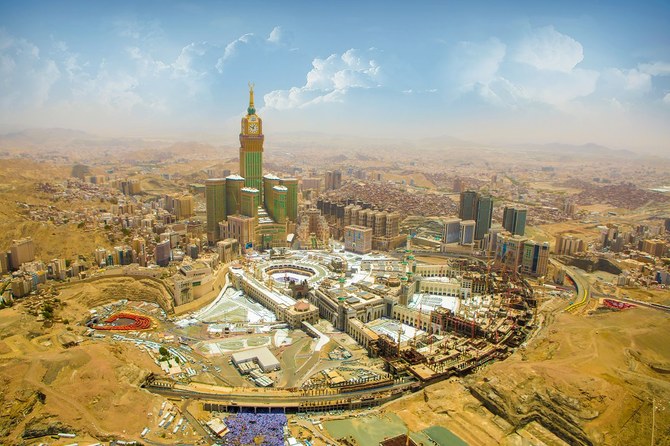
Only those who have received the coronavirus vaccine or have recovered from the disease can enter the mosques. (File/Shutterstock)
Short Url
Updated 13 April 2021
Follow

Ramadan 2021 will start on Tuesday: Saudi Arabia

RIYADH: Nearly 2 billion Muslims worldwide will mark the first day of Ramadan on Tuesday after an official sighting of the new crescent moon, Saudi Arabia’s Supreme Court said on Monday evening.

The court extended its best wishes to King Salman, the crown prince, citizens and expatriates in the Kingdom, and all Muslims on the advent of the holy month.

For a second year, Ramadan in Saudi Arabia will be observed under coronavirus precautions.

“The month of Ramadan is upon us and the world is suffering from the coronavirus pandemic,” King Salman said.

“We thank God for the scientific efforts in developing vaccines to curb the pandemic.”
READ MORE

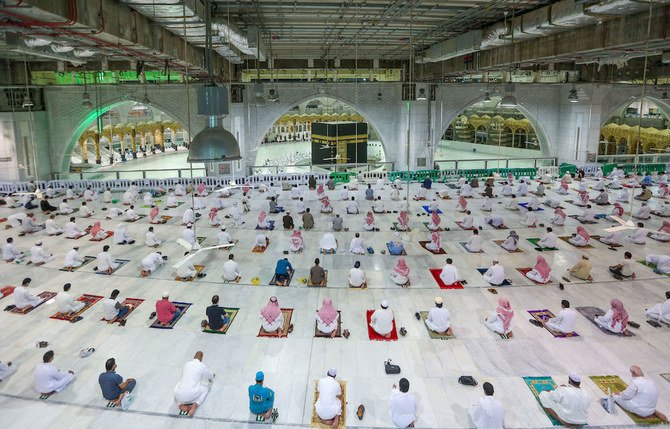
Saudi Arabia’s King Salman approves Tarawih prayers in Two Holy Mosques Read more here.

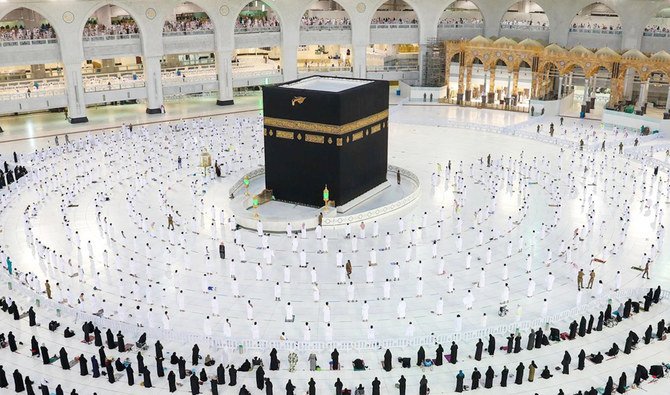
Preventive measures remain in place to curb the spread of the coronavirus during Ramadan. Only vaccinated or immune worshippers will be allowed to enter the Prophet’s Mosque in Madinah, and pilgrims who try to perform Umrah at the Grand Mosque in Makkah without a permit will face a fine of up to 10,000 riyals.

Nevertheless, with more than 6 million people already vaccinated, more people will be able to attend the holy sites than a year ago, and many Saudi families are looking forward to a more “normal” Ramadan after a year of restrictions.
READ MORE

Hajj Ministry announce Ramadan guidelines for Umrah and prayers Read more here.

Rahaf Hussain and her husband Abdullah Al-Rashidi both have families in Jeddah but live in the Eastern Province. They have made it their mission this Ramadan to spend as much holiday time together as they can for the sake of their children.

The couple have planned careful iftar gatherings of no more than 20 people this year, in line with official recommendations.

“This year, we plan on a COVID-free Ramadan,” Hussain told Arab News. “We got our vaccines, and we are still wearing masks and constantly washing our hands.

“We were deprived of our families, and we lost some dear ones. Our Ramadan gatherings last year were spent on screens, but I’m making sure that won’t happen this year. We’re sticking to the rules.”


Saudi foreign ministry welcomes second phase of Gaza peace plan, formation of transitional committee

Updated 16 January 2026
Follow

Saudi foreign ministry welcomes second phase of Gaza peace plan, formation of transitional committee

  • Ministry also thanked US President Donald Trump for his leadership and efforts to end the war in Gaza

RIYADH: The Saudi Ministry of Foreign Affairs on Friday welcomed the announcement of the second phase of a comprehensive peace plan for Gaza, the Saudi Press Agency reported.

The ministry said it also welcomed the formation of the Palestinian National Committee for the Administration of the Gaza Strip as a temporary transitional body, established under UN Security Council Resolution 2803, which met in Cairo on Friday.

In a statement, the ministry also thanked US President Donald Trump, who declared the formation of the Gaza “board of peace,” for his leadership and efforts to end the war in Gaza.

It highlighted his commitment to the withdrawal of Israeli forces, the prevention of any annexation of parts of the West Bank, and efforts to advance sustainable peace in the region.

The ministry commended the role of mediators Qatar, Egypt and Turkiye, stressing the importance of international and regional cooperation in supporting the peace process.

It underlined the need to support the work of the temporary Palestinian National Committee in managing the daily affairs of Gaza’s residents, while preserving the institutional and geographical link between the West Bank and the Gaza Strip, ensuring Gaza’s unity and rejecting any attempts to divide it.

The statement also called for consolidating the ceasefire, halting violations, ensuring the unhindered delivery of humanitarian aid, and accelerating early recovery and reconstruction efforts across Gaza.

It said these steps were essential to enabling the Palestinian National Authority to resume its responsibilities in the Gaza Strip, leading to an end to the Israeli occupation of Palestinian territory in Gaza and the West Bank and the establishment of an independent Palestinian state in line with UN resolutions, the Arab Peace Initiative and the two-state solution.