PIA flight ban to be lifted after UN aviation agency’s audit in July — CAA

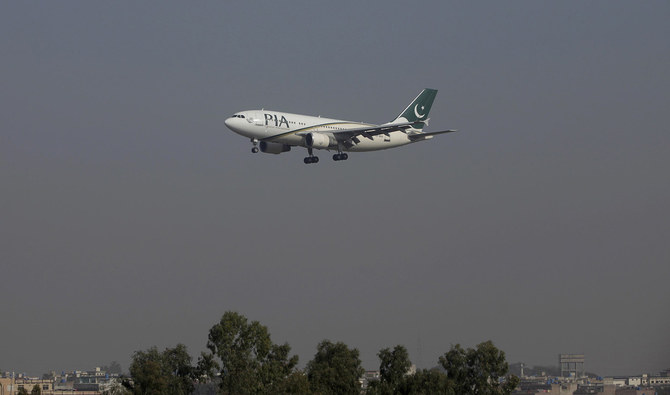
A Pakistan International Airlines (PIA) passenger plane arrives at the Benazir International airport in Islamabad, Pakistan, on December 2, 2015. (REUTERS/File)
Short Url
Updated 09 April 2021
Follow

PIA flight ban to be lifted after UN aviation agency’s audit in July — CAA

  • PIA says has cleared global airlines body IATA’s safety audit but can’t resume flights to UK, Europe, US until CAA clears ICAO audit
  • Pakistan faced global censure and flight bans last year following a scandal involving fraudulently obtained pilots’ licenses

ISLAMABAD: A Civil Aviation Authority (CAA) spokesperson said on Thursday a flight ban on Pakistan’s national carrier, Pakistan International Airlines, would be lifted after the CAA cleared a July 5 audit from the International Civil Aviation Organization (ICAO), a specialized agency of the United Nations that works to ensure safety in international air transport.

Pakistan faced global censure and flight bans last year following a scandal involving fraudulently obtained pilots’ licenses that came to light after a Pakistan International Airlines jet crashed in Karachi.

An inquiry into the crash in which 97 people were killed pointed to the pilots not following procedures, while a government minister said the voice recorder suggested the pilots were distracted by a conversation about the COVID-19 outbreak.

Following the crash, Pakistan opened criminal investigations into 50 pilots and at least five civil aviation officials who allegedly helped them falsify credentials to secure licenses.

The scandal tainted Pakistan’s aviation industry globally, and especially hurt PIA, which has been barred from flying to Europe and the United States after dozens of its pilots were named in an initial list of 262 with “dubious” licenses. 

A CAA official said his organization’s ICAO audit was scheduled for July 5, after which the PIA flight ban would be lifted.

“We are preparing for the ICAO audit from all aspects and are hopeful to clear it,” Saad bin Ayub, a spokesperson for the CAA, told Arab News. 

A spokesperson for PIA said the airline had received the mandatory International Air Transport Association’s (IATA) operational clearance certificate for the next two years, but could not resume its suspended flight operations to the United Kingdom, European Union and United States anytime soon.

The European Union Aviation Safety Agency (EASA) placed a six-month ban on PIA flights in July 2020 and has since been extending the ban until CAA clears its mandatory external audit from the ICAO.

“We have passed the IATA Operational Safety Audit (IOSA) for the next two years … but still we can’t resume our flight operations until the civil aviation authority also clears its ICAO audit,” Abdullah Hafeez Khan, a PIA spokesperson, told Arab News.

The IOSA issues an operational clearance certificate every two years to all its member airlines after performing a thorough safety audit. It conducted the audit for PIA in October last year and has now granted the license to the airlines for the next two years.

“The scrutiny of our operations was increased after the plane crash and the pilots’ flying licenses scandal,” Khan said, adding that PIA was waiting for CAA’s audit clearance to resume its flight operations to the UK, EU and US.

The Civil Aviation Authority has had its international audit deferred since 2009 for different reasons, including manpower shortages and lack of expertise. Officials said the International Civil Aviation Organization was not ready to let the CAA continue its operations without a complete audit of its regulatory functions, licensing, airworthiness and flight standards.



Pakistan Air Force conducts ‘Exercise Golden Eagle’ to test combat readiness, agility

Updated 10 February 2026
Follow

Pakistan Air Force conducts ‘Exercise Golden Eagle’ to test combat readiness, agility

  • The exercise follows an intense, four-day Pakistan-India military conflict in May 2025
  • It focused on AI-enabled operations integrating disruptive technologies, military says

ISLAMABAD: The Pakistan Air Force (PAF) has conducted “Exercise Golden Eagle” that successfully validated its combat readiness and operational agility through synchronized employment of the PAF’s complete combat potential, the Pakistani military said on Tuesday.

It comes months after Pakistan’s four-day military conflict with India in May, with Islamabad claiming victory in the standoff after the PAF claimed to have shot down at least six Indian fighter aircraft, including the French-made Rafale. New Delhi acknowledged some losses but did not specify a number.

The exercise was conducted on a Two-Force construct, focusing on AI-enabled, net-centric operations while integrating indigenous niche, disruptive and smart technologies in line with evolving regional security dynamics, according to the Inter-Services Public Relations (ISPR), the Pakistani military’s media wing.

Operating within a robust Integrated Air Defense System, friendly forces shaped the battlespace through seamless fusion of kinetic operations with cyber, space and electro-magnetic spectrum operations.

“The kinetic phase featured First-Shoot, First-Kill swing-role combat aircraft equipped with long-range BVR air-to-air missiles, extended-range stand-off weapons and precision strike capabilities, supported by Airborne Early Warning & Control platforms and Air-to-Air Refuelers,” the ISPR said in a statement.

“A key highlight of the exercise was Manned–Unmanned Teaming, with deep-reach killer drones and loitering munitions operating in a highly contested, congested and degraded environment, validating PAF’s capability to conduct high-tempo operations in modern warfare.”

In recent months, many countries have stepped up defense engagement with Pakistan, while delegations from multiple nations have proposed learning from the PAF’s multi-domain air warfare capabilities that officials say were successfully employed during the May conflict.

“The successful conduct of Exercise Golden Eagle reaffirms Pakistan Air Force’s unwavering commitment to maintaining a high state of operational preparedness, leveraging indigenous innovation and effectively countering emerging and future security challenges,” the ISPR added.