UAE’s Agthia approves 75% acquisition of Egypt’s Ismailia Agricultural

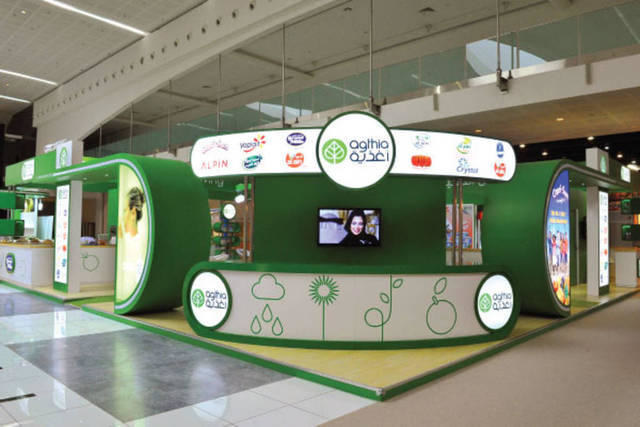
Agthia has made a series of recent acquisitions as it seeks to become a big player in the region’s food and beverage industry. (Supplied)
Short Url
Updated 07 April 2021
Follow

UAE’s Agthia approves 75% acquisition of Egypt’s Ismailia Agricultural

  • Agthia’s acquisition of the 75.02 percent stake would give Ismailia an enterprise value of 3.22 billion Egyptian pounds ($205.6 million)

DUBAI: Abu Dhabi-listed food and beverage company Agthia Group on Wednesday said its board has approved an indirect acquisition of three quarters of Egypt’s Ismailia Agricultural and Industrial Investment.
Agthia’s acquisition of the 75.02 percent stake would give Ismailia an enterprise value of 3.22 billion Egyptian pounds ($205.6 million), Agthia said in a stock exchange filing.
Two wholly-owned units of Agthia will be incorporated as private limited companies with nominal share capital in the Abu Dhabi Global Market and used as acquisition vehicles for the transaction.
Agthia, owned by Abu Dhabi state-owned holding company ADQ, has made a series of recent acquisitions as it seeks to become a big player in the region’s food and beverage industry.
Ismailia produces frozen chicken and beef products under four brands in the Egyptian market.


Saudi exchange leads GCC in foreign net buying in 2025, hits $5.5bn: Kamco Invest

Updated 10 sec ago
Follow

Saudi exchange leads GCC in foreign net buying in 2025, hits $5.5bn: Kamco Invest

RIYADH: Foreign investors poured $5.5 billion into the Saudi exchange in 2025, the highest net buying in the Gulf Cooperation Council, an analysis showed. 

In its latest report, Kamco Invest said the Kingdom was followed by the Abu Dhabi and Kuwait exchanges, which saw net foreign inflows of $3.4 billion and $1.5 billion, respectively, over the 12 months.

Dubai and Qatar also registered net buying in 2025, amounting to $1.3 billion and $171 million, respectively. 

The steady performance in the majority of exchanges in the region comes as GCC equity markets continue to attract global capital, buoyed by strong corporate earnings and ongoing economic reforms.

“The yearly trend indicated continued positive activity by foreign investors on GCC exchanges in 2025, although total buying declined over the course of the year,” said Kamco Invest in the report. 

According to the analysis, the Oman Exchange recorded the largest net sales by foreign investors in 2025 at $440 million, followed by Bahrain, which posted net sales of $10.3 million. 

In the fourth quarter of 2025, net buying by foreign investors in the Kingdom stood at $1 billion, followed by Oman at $86.6 million. 

All other exchanges, excluding the Kingdom and Oman, witnessed a net selling trend in the fourth quarter. 

“Quarterly trading data showed that foreign investors were net sellers in Q4-2025 on all exchanges barring Saudi Arabia and Oman. Saudi Arabia recorded net foreign buying of $1 billion, while Oman saw net inflows of $86.6 million during the (fourth) quarter, partially offsetting the overall net sales across the region,” added Kamco Invest. 

Foreign investors were the biggest sellers of Abu Dhabi stocks with net sales of $1 billion during the quarter, followed by Kuwait at $187.9 million, Bahrain at $45.6 million, and Qatar at $8.8 million. 

Saudi Arabia and Oman also recorded consecutive net buying by foreign investors across all three months of the fourth quarter, signaling rising investor interest in these countries. 

Dubai exhibited a net selling trend during the first two months of the fourth quarter, which subsequently reversed to net buying in the final month of the year. 

Qatar registered net buying in the first month of the quarter before shifting to net selling in the second month, and returned to net buying in the final month.

The UAE and Kuwait exchanges experienced consistent net selling by foreign investors across all three months of the fourth quarter.

Kamco Invest said that the key factors which affected the flow of foreign money in the region included regional market trends, economic health of individual countries and crude oil prices.