JERUSALEM: Prime Minister Benjamin Netanyahu got a new lease on his political life on Tuesday, receiving a mandate from Israel's president to form a new government after an inconclusive election.
Israel's longest-serving leader, in power consecutively since 2009, now faces the tough task of breaking an unprecedented political stalemate and enlisting enough allies for a governing coalition.
Under law, Netanyahu will have 28 days to do so, with the possibility of a two-week extension before President Reuven Rivlin picks another candidate or asks parliament to choose one.
Israel's election on March 23, its fourth in two years, ended with neither a Netanyahu-led right-wing and religious bloc nor a prospective alliance of his opponents winning a parliamentary majority.
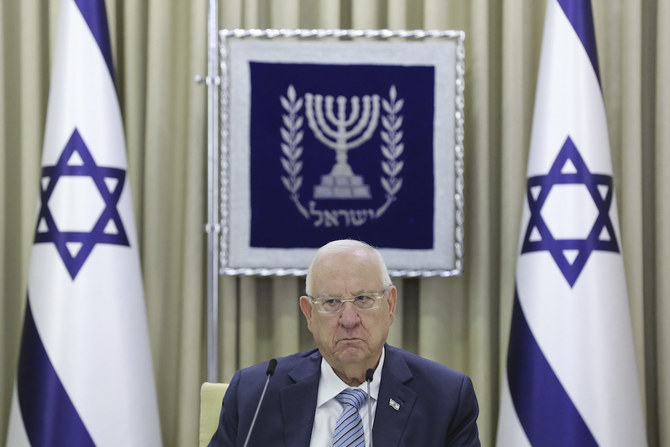
But in consultations Rivlin held with political parties on Monday on granting the coalition-building mandate, Netanyahu received more endorsements than his challengers, leading to the president's televised announcement giving him the nod.

Israeli president picks Netanyahu to try to form government
https://arab.news/g8gwf
Israeli president picks Netanyahu to try to form government
Moroccan lawyers end strike after reform bill suspended: bar
- Moroccan lawyers had launched a rolling strike protesting the bill several weeks ago, deeming it a threat to their independence and demanding a participatory approach
RABAT: Lawyers in Morocco ended a weeks-long strike on Monday after the government suspended a bill regulating the legal sector and created a commission tasked with initiating dialogue, a professional association said.
Omar Mahmoud Bendjelloun, a board member of the Association of Moroccan Bars (ABAM), told AFP that Prime Minister Aziz Akhannouch had promised on Wednesday to “personally take charge” of the bill with the cooperation of the ABAM, “putting in place a mixed commission” of officials and legal practitioners.
Justice Minister Abdellatif Ouahbi had initiated the legislation, which was presented as being intended to modernize the sector and strengthen anti-corruption measures.
The government approved the text of the bill in December, but has now put off forwarding it to the parliament for a vote as previously planned.
Moroccan lawyers had launched a rolling strike protesting the bill several weeks ago, deeming it a threat to their independence and demanding a participatory approach.
Early this month, thousands of black-robed lawyers gathered in the capital Rabat for a demonstration against the measure.
A main point of contention was the provision to grant the courts direct disciplinary power over lawyers. Normally, disciplinary matters are handled internally by the bar association.
According to Bendjelloun, the government has since taken “a step back,” opening the door for a “way out of the crisis.”
Justice Minister Ouahbi told a session of parliament earlier this month that the “matter is in your hands.”
“Let them (the lawyers) give you the changes they want and I will discuss them with you,” he said. “I am ready to drop, modify or reform anything that harms lawyers.”
But, he added, “the legal profession needs change, and I will implement that change.”


