



QUETTA: As the sun began to set on Friday behind the western terrain of Koh-e-Chiltan in Quetta city, dozens of old men from the Hazara community entered Zawar Shah Stadium, a small ground flattened out in the heart of the rocky mountains, to watch the All Hazara Sang Gerak Tournament.
The ancient stone-throwing sport, Sang Gerak, which literally translates to ‘holding a stone,’ involves players from two teams first combing the mountains to choose heavy, perfectly rounded stones with which they hit tiny, four inch wooden targets from a 90 ft distance.
The game first began in Central Asia centuries ago, and after Hazaras began migrating from Afghanistan to the region that is now Quetta during the 18th century, the sport spread across Balochistan. Now, it is widely considered a game old men play and watch, but its popularity is gradually rising among young people.
Abdul Ali, 73, has been playing Sang Gerak for 40 years. He travels to the city’s eastern mountains to reach the stadium every Friday in order to play with other team members. At age 69, he was diagnosed with Parkinson’s disease but that doesn’t hold him back from playing his favorite game.
“Sang Gerak gives me strength. This is not just a sport but a healthy exercise for old, ailing men like me,” Abdul Ali smiled on Friday, at this year’s ‘All Hazara Sang Gerak Tournament.’
“My hand shakes while lifting and hurling the sang (stone) to the target, but still I play with spirit three to four hours every day, and am able to hit the target with perfect accuracy,” Ali beamed.
This year, the Balochistan government registered Sang Gerak as part of the provincial sports board, and helps players organize annual tournaments.
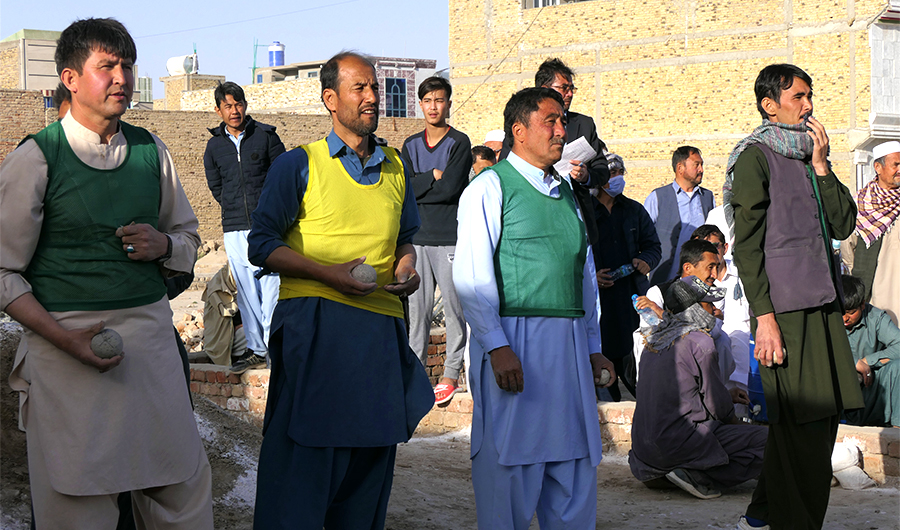
Players await their turn to play centuries-old sport Sang Gerak in Quetta, Balochistan, on April 2, 2021. (AN Photo)
Abdul Qadir Nail, a provincial assembly member and chief guest at the tournament said it was encouraging that Quetta residents from ethnicities other than Hazara were also coming to watch and practice the community’s favorite sport.
“Though the sport is a cultural mark of the Hazara community who brought the game to Pakistan from Afghan soil centuries ago, now we seek to foster Sang Gerak among other nations (ethnicities) as well... we have been planning to organize Sang Gerak’s tournaments in Karachi, Lahore and Islamabad.” Nail told Arab News on Thursday in Hazara Town.
Zawar Shah, 71, is the most respected Sang Gerak player among the entire community, and holds the record for hitting the target for five consecutive rounds. The Sang Gerak stadium is named after him.
“I have been playing for the last 50 years because this traditional game reminds us of our forefathers who used to play the sport some 500 years ago,” Shah told Arab News.
“When a player hits the target, he receives just 10 to 50 rupees ($0.33) as a reward from the audience, because Sang Gerak is the sport of poor people,” he added.
Hazara Shias, who are easily recognized by their distinct facial features, are a historically persecuted community inside Quetta, and routinely targeted by sectarian groups in bomb attacks and assassinations. Thousands have migrated from the southwestern province due to a prevailing sense of insecurity and real danger to their lives.
Abdul Qadir, 37, is a young player and one of the organizers of the Sang Gerak Tournament this year. He said sports were a remedy for the persecution his community continuously faced.
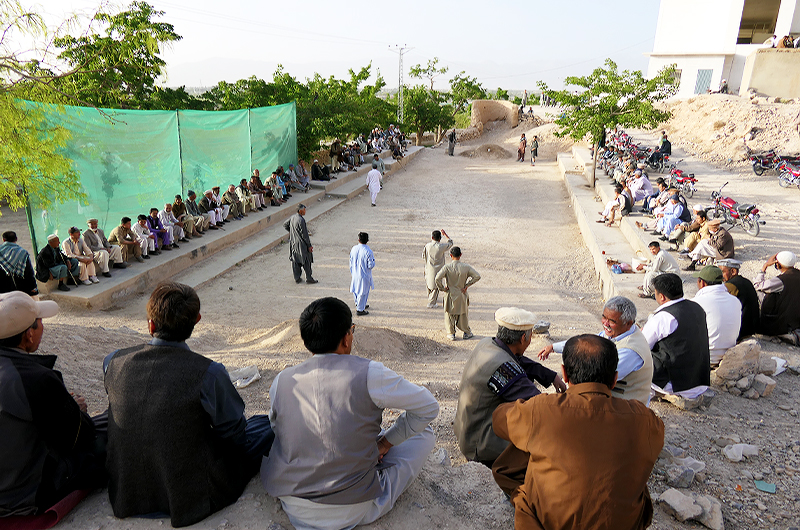
Spectators gather to watch the All Hazara Sang Gerak Tournament in Quetta, Pakistan, on April 2, 2021. (AN Photo)
“Now I am bringing my son to the Sang Gerak ground because I want him to carry this sport forward in the future,” Abdul Qadir said.
These days, he added, young people wanted to become soccer players and cricketers, but he wanted his son to become a famous Sang Gerak player.
In the audience, old men sip tea and watch the game.
“I used to play the game, but now I can’t even pick up the stone,” Hussain Dad, 80, told Arab News as the crowd cheered their teams on.
“But coming here, just seeing my friends and these youngsters... it gives me strength and joy.”


