

OSN looks to major investment in original content

(supplied)
Short Url
Updated 02 April 2021
Follow

OSN looks to major investment in original content

  • Orbit Showtime Network Streaming aims to have 40 percent of original content in 2021

DUBAI: Last year, Orbit Showtime Network (OSN) rebranded its streaming app Wavo to OSN Streaming with the aim of unifying its traditional and digital offering.

Within two months, content consumption on the app grew by an astounding 900 percent and the download of its apps increased by 1700 percent.

Last year, OSN also announced new original productions that are expected to further expand the streaming service. Arab News spoke to Rolla Karam, Interim Chief Content Officer at OSN, to better understand the growth of the service and its future plans.

The partnership with Disney+ last year was a major propeller for OSN Streaming, which already had partnerships with other major channels and studios including HBO, NBC Universal, Paramount and MGM.

“We have all the major studios on board and we have independent content providers from all over the world so it’s a fresh and unique proposition,” said Karam.

OSN Streaming also has exclusive content, originals, and first-run content, which is content that is exclusively aired on the service for at least a year before being aired on any other channels. “You won’t find it on any competitive platform or free TV, it’s only available on OSN for a minimum of a year,” she said.

The service has also focused on getting and airing content at the same time as it does in Western markets. For instance, new episodes of “New Amsterdam” were being made available on the platform the same minute as they were in the US.

OSN hadn’t really ventured into original content before May 2020, said Karam. However, within a year, 20 percent of its content is original productions with that number expected to go up to 40 percent this year.

This includes “A’adet Rigala” Season 3, the food reality show “Yalla Neta’asha” (Come Dine With Me), the Syrian war drama “No Man’s Land” and the Egyptian film “Curfew.”

In 2021, OSN plans to launch a Ramadan version for the next season of “Yalla Neta’asha” and is also working on two unscripted shows that will be announced soon, said Karam. The aim is to have one piece of original content every two months, if not every month, she said.

At the moment, original content is made to be relevant to the entire Middle East and North Africa (MENA) region. “Even though we speak different dialects, at the end of the day we are Arabs; we speak the same language and have the same traditions,” said Karam.

Despite OSN doubling its investment in original content this year, it is “challenging” to develop content especially for certain countries, not least because of COVID-related restrictions, said Karam. However, she remains hopeful that the company would be able to do so in 2022.

It does try to cater to needs of certain markets such as Morocco, for instance, by ensuring French subtitles as well as French content.

She also added that Egypt is a big market for OSN with Egyptian content performing well on the platform, along with Turkish content.

In March 2021, OSN launched a new channel called OSN Woman on both traditional TV and its streaming service. All the content on the channel is picked and curated by women at OSN.

In the future, said Karam, OSN hopes to produce original content for this channel. “We are hoping to produce content for OSN woman,” she said. “I am currently receiving some pitches from female talents in the region and I hope that we can announce by Q3-Q4 2021 some original content on that channel.”

OSN’s goal is to reach the entire spectrum of audiences through its content and traditional TV and streaming offering. “People are watching more TV and people are watching more on their own devices,” said Karam. That’s why OSN caters to both the “old and new generation.”

More and more people want to binge watch series, and not just Western TV shows. There’s a growing demand for Arabic, especially Turkish, TV shows.

There is a common perception that the period after Ramadan is a ‘dead’ period for TV production. However, that’s not the case for OSN, promised Karam, with new shows, including original ones, lined up from May all the way to the end of the year.

OSN Originals

Yalla Neta’asha

Four strangers each week take turns to each host a dinner party in their home, with the other guests rating the evening out of 10. The reality show is hosted by Egyptian comedian Khalid Mansour, bringing together participants from all over the MENA region.

No Man’s Land

Produced in partnership with Fremantle, this Syrian war drama in set in the Daesh and Kurdish camps of Syria in the aftermath of the Iraq war.

Curfew
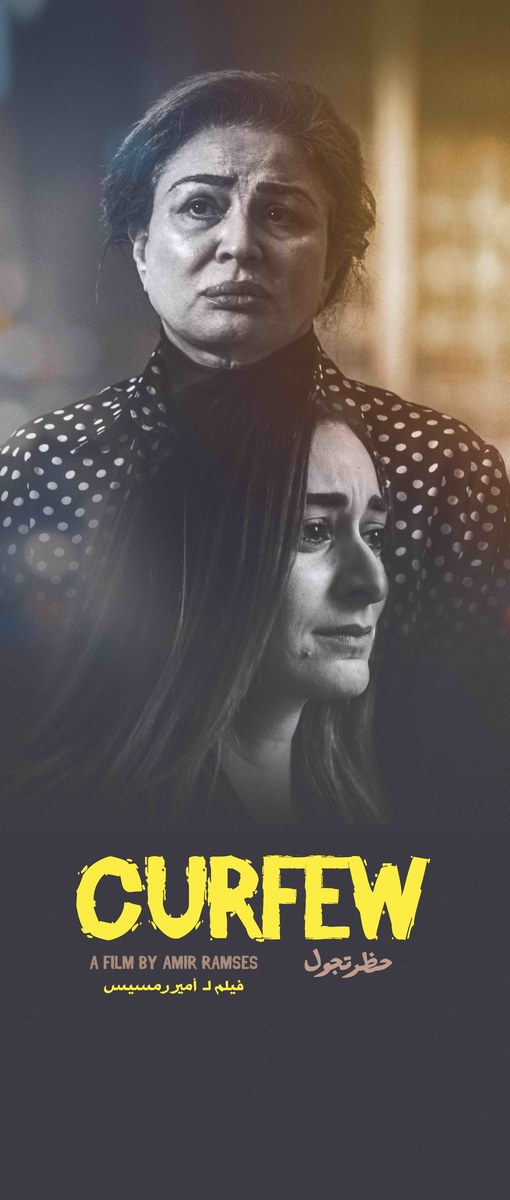
The feature-length Egyptian film is directed by one of the stalwarts of Egyptian cinema, Amir Ramses. It premiered at the Cairo Film Festival in December.

Aa’det Regala

Three acclaimed Arab celebrities Qays Sheikh Najib, Nicolas Mouawad and Khaled Selim host one A-list female guest star per episode.

Kayd Majhool (Anonymous)

Psycho-thriller drama series Kayd Majhool debuted last month featuring Basel Khayat and Abdelmonem Amayri. The eight-episode thriller is directed by Alsadeer Masoud and written by Mohamed Abu Laban and Lewa’a Yazajy.


A matter of trust: Media leaders look to rebuild credibility in age of AI

Updated 52 min 31 sec ago
Follow

A matter of trust: Media leaders look to rebuild credibility in age of AI

  • ‘Don’t do what pleases platforms, do what is right,’ journalism professor says
  • ‘General journalism is going to be very difficult,’ media boss says

ABU DHABI: Media organizations are facing unprecedented disruption to their industry, as traditional business models come under strain from rapid technological shifts, the rise of independent creators and a growing public distrust in news.

This fragmented landscape has transformed the essence of journalism and content creation in the 21st century.

Amid the upset, journalists, creators and industry executives were in Abu Dhabi on Monday for the opening day of the inaugural Bridge Media summit, where they hoped to map a path forward in a rapidly evolving industry.

Jeff Zucker, CEO and operating partner at RedBird IMI and RedBird Capital Partners, said that while storytelling remained at the core of the media, artificial intelligence was fundamentally reshaping how stories were created, delivered and consumed.

“General journalism, by and large, is going to be very difficult in a world of AI,” he told the conference.

Having been at the helm of some of the biggest media businesses in the world, including CNN and NBC Universal, Zucker emphasized the value of deep, niche journalism, arguing that the viability of future news models will hinge on offering something readers cannot get elsewhere.

“Economic models may broaden, so I think that niche journalism that goes deep and gives the consumer an edge and a reason to subscribe to that journalistic outlet — that’s what will work and that’s what will succeed.”

It is an idea that featured across the first day of the summit, with media practitioners from all disciplines pushing colleagues to focus on elevating the quality and originality of their content, rather than being dismayed at the fall in advertising revenue and chokehold of algorithms.

Moataz Fattah, a journalism professor and presenter at Al-Mashhad TV, decried media organizations’ constant focus on algorithms, saying they would be better served by honing their craft.

“Don’t do what pleases platforms, do what is right and go to where the audience is,” he said.

“How to be authentic is to be true to what you believe in.”

Fattah argued that while it was true that younger generations gravitated toward short form content, it was still possible to engage them to take deeper dives on subjects.

What mattered most, he said, was ensuring that the right format was used for the subject matter, applying creativity and flair to keep audiences challenged and informed so that they might get the full context.

This idea of challenging audiences, rather than caving to what may seem trendy was echoed by Branko Brkic, leader at Project Kontinuum, an initiative that aims to reaffirm news media’s positive role in the global community.

“If we are giving readers and audiences (only) what they want, why do we exist? Why do they need us?” he said.

“We have to be half a step ahead, we need to satisfy the needs that they know they have but also fill the needs they didn’t know they wanted.”

Sulemana Braimah, executive director at the Media Foundation for West Africa, said transparency, credibility and, ultimately, the impact on society were what should drive storytelling, rather than just views and likes.

“In the newsroom, we always have to ask why we are doing this story, what is the story in the story, who is it for?” she said, urging media outlets to choose depth over superficial recognition of content.

“Stories that get views don’t necessarily mean they hold value. We need to keep asking why, what’s the value, what are we helping by making this story.”

Individuals over institutions 

Another theme that dominated discussions at the conference was the idea that trust was increasingly being driven by individuals rather than brands and institutions. The argument, put forward by Zucker, is that unlike in the past, when legacy outlets conferred trust upon journalists, audiences now place their trust in individual voices within a media institution, making personal reputation a critical currency in modern journalism.

“People are looking much more to individuals in this new creator economy, this new AI world,” he said.

Jim Bankoff, co-founder and CEO of Vox Media, echoed that sentiment and predicted that more news content would be led by trustworthy and notable personalities.

Speaking on the strategy of his own media company, he said the future would likely see lower headcounts within institutions, due to AI and automation, but more emphasis on talented individuals.

“Work on something that makes you essential to your core audience,” he said.

Consolidation, AI and finances in flux

One of the big talking points of the opening day was Netflix’s attempt to acquire Warner Bros., a move seen by some as evidence of a rapidly consolidating industry challenged by shrinking profit margins.

AI seemingly only seeks to further challenge these margins. With many more people using AI summaries and overviews to get news and information, chatbots are becoming the new face of the internet, reducing traffic flow to news websites and destroying the ad-based revenue model.

Pooja Bagga, chief information officer at Guardian Media Group, said audiences defined the rules of the internet and delivery of news content and that the onus lay with media companies to reinvent themselves.

“It’s all about what our audience want, what they want to see, how they want to see it, which formats they want to interact with and when they want to consume the news,” she said.

Many media outlets have signed licensing deals with AI companies to include the use of their content as reference points for user queries in tools like ChatGPT while ensuring attribution back to their websites.

These agreements also allow tech firms to access publishers’ content — including material held behind paywalls — to train large language models and power AI-driven services in exchange for media organizations’ use of the tech to build their own products or for revenue sharing.

In October last year, the Financial Times, Reuters, Axel Springer, Hearst and USA Today Network signed an agreement with Microsoft allowing it to republish their content in exchange for a share of the advertising revenue.

Bagga said that such agreements were essential to safeguarding news content and ensuring tech companies upheld their responsibility to handle journalistic material with integrity and accountability.

She also stressed the need for greater transparency from tech companies in how they use journalistic content to train large language models, emphasizing the importance of ensuring accuracy in AI-generated overviews.

An alternative route, she said, was collaborating with other publishing companies under rules and regulations that ensure intellectual property was protected.

In newsrooms, amid the fast-evolving world of tech and artificial intelligence, there must be a trusted supervisory body to safeguard editorial integrity, she said.

Elizabeth Linder, founder and chief diplomatic officer at Brooch Associates, stressed the need for transparency and broad understanding on how decisions are made by media and tech companies to ensure “a productive social contract.”

She called for conversations between governments, tech platforms and individuals, citing Australia's Communications Minister Anika Wells, who introduced a bill to ban social media use for children under the age of 16.

“Especially with the development of AI technology coming in, we need to take a really big step back and reframe this entire conversation.”