Saudi fuel grant to Yemen will address power cuts, save millions of dollars, officials say

The Saudi donation came just in time as the Yemeni government was frantically searching for funds to buy fuel to keep power stations functioning. (AFP/File)
Short Url
Updated 01 April 2021
Follow

Saudi fuel grant to Yemen will address power cuts, save millions of dollars, officials say

  • Mainly due to a chronic shortage of fuel, power cuts in some Yemeni cities, including the port city of Aden, currently reach 18 hours a day

AL-MUKALLA: The $422 million Saudi fuel donation for power stations in Yemen would save millions of dollars and help reduce long power cuts that have been blamed for fueling unrest in hot and humid Yemeni cities, officials and analysts said on Wednesday.

Anwar Mohammed Kalshat, Yemen’s minister of electricity, told Arab News that the Saudi donation came just in time as the Yemeni government was frantically searching for funds to buy fuel to keep power stations functioning.

“This is a big boost to the power sector and would significantly stabilize electricity services. It would alleviate the suffering of the people during these days and in summer,” the minister said, thanking the Saudi leadership for standing by Yemenis during the current “difficult times.”

“We would like to thank our brothers in Saudi Arabia for this support and donation,” Kalshat said.

Shortly after Saudi Crown Prince Mohammed bin Salman announced the grant, the Yemeni riyal began rebounding against the dollar and other hard currencies.

Mainly due to a chronic shortage of fuel, power cuts in some Yemeni cities, including the port city of Aden, currently reach 18 hours a day.

The Yemeni government has long complained that fuel bills for power stations consume the nation’s meager revenues and the country is unable to fund vital projects in other important sectors such as health and education.

In September last year, Aden Gov. Ahmed Hamid Lamlis said that local authorities in Aden spent more than $1 million a day on buying fuel for power stations. The Saudi fuel donation will also stabilize fuel supplies to oil stations across the country and end long queues outside oil stations, Yemeni officials said.

Khaled Salman Al-Akbari, director of the Yemeni Oil Company in Hadramout, a government body responsible for importing fuel for power grids and the local market, told Arab News that supplying local power stations with the Saudi-funded fuel would alleviate pressure on the Yemeni company and help divert fuel to the local market.

The shortage of oil has led to unrest and long queues outside oil stations in Yemen.
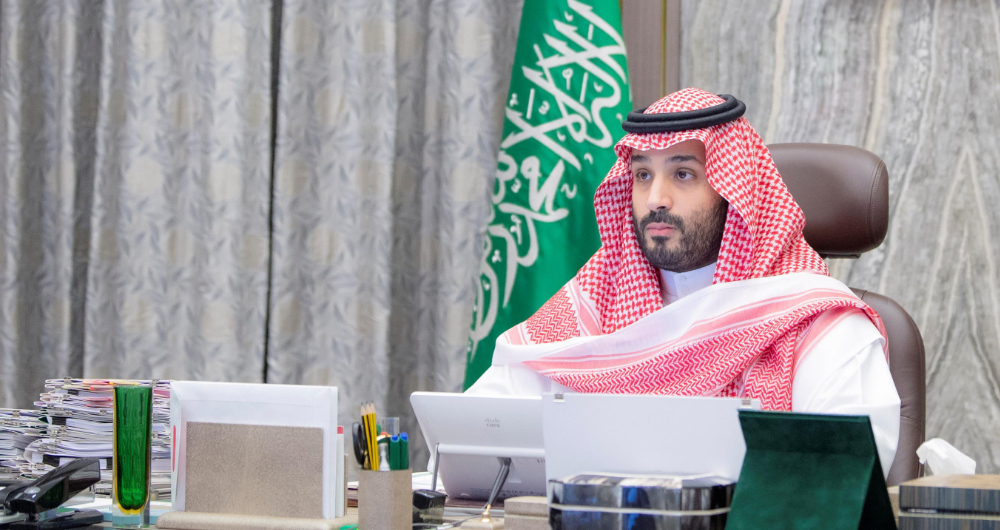


Shortly after Saudi crown prince announced the grant, the Yemeni riyal began rebounding against the dollar. (SPA)

“This is a big relief to the Yemeni people in all provinces and to the Yemeni company that has been placed under huge pressure to supply power stations and the local market with fuel,” Al-Akbari said, noting that the funds saved from fuel bills would be allocated to vital projects.

Long power cuts in the Yemeni cities, mainly in extremely hot and humid cities such as Aden and Al-Mukalla, have triggered unrest and large demonstrations over the past several years.

On Tuesday, a protester was killed when security forces in Hadramout’s Mayfa used force to disperse crowds of angry people who blocked a road to demand electricity.

The killing of the protester sparked outrage in the province, prompting the governor of Hadramout to ban large gatherings to contain the unrest.

In Aden, the interim capital of Yemen, hundreds of people have taken to the streets to demand that the government import services, including electricity.

Yemen political analysts believe that the stabilization of the electricity service will ease growing anger against the government due to crumbling basic services.

Saleh Al-Baydani, a Yemeni political analyst, advised the government to “rationally” benefit from the Saudi donation and to find sustainable solutions to long power cuts and other problems in its territories.

“These demonstrations and tension in the streets would naturally diminish if citizens saw a tangible improvement in the (electricity) service,” Al-Baydani said.

Following the Saudi grant, the Yemeni riyal began to rebound against the dollar and other hard currencies.

The Yemeni riyal, which had dropped greatly over the past couple of months, recovered against the dollar, reaching 850 on Wednesday compared to 880 on Tuesday.

Yemeni economists said that the Saudi grant would curb the growing demand for the dollar by fuel and goods traders, the main reason behind the fall of the riyal.

Mustafa Nasr, director of the Economic Media Center, told Arab News that demand for the dollar would temporarily decrease during the distribution of the Saudi grant as the country would not import much fuel.

“One of the reasons for the fall of the riyal is buying hard currencies from the market for importing fuel. The injection of almost half a billion dollars from the Saudi grant would ease the demand for hard currency,” Nasr said.

“But this is a temporary solution to the problem. The government should look for sustainable solutions to the devaluation of the currency such as resuming exports,” he said.


The Damascus book fair draws crowds, with censorship eased in post-Assad Syria

Updated 16 sec ago
Follow

The Damascus book fair draws crowds, with censorship eased in post-Assad Syria

  • The book fair was first held in Syria in 1985 and stopped for several years after the country’s civil war began in March 2011

DAMASCUS, Syria: Abdul-Razzaq Ahmad Saryoul began publishing books in Syria in 2003 but he used to abstain from participating in the annual International Damascus Book Fair because of tight measures by the country’s security agencies and bans on many books under Bashar Assad’s rule.
In the first post-Assad book fair to be held in Damascus, which wrapped up Monday, Saryoul was surprised when he was issued a permit the day he applied to take part without being asked what his books are about. The wide range of titles available made this year’s fair “unprecedented,” he said.
Another publisher, Salah Sorakji, was proud to offer Kurdish books in the Syrian capital for the first time in decades. During the Assad era, ethnic Kurds suffered from discrimination, including bans on their language.
The first book fair since Assad was unseated in December 2024 witnessed high turnout, with state media reporting that 250,000 people attended on the first day, Feb. 6, trekking out to fairgrounds where it was held about 10 miles (16 kilometers) from the city center. The fair’s director, Ahmad Naasan, said about 500 publishing companies from some 35 countries took part.
A debate over religious texts
While the new freedom of expression was widely welcomed, the introduction of some previously forbidden books by Islamist writers sparked anxiety among religious minorities.
Religious books were among the best selling at previous fairs in the majority Sunni Muslim country. This year, however, books of the Islamic scholar Ibn Taymiyya — who lived in Damascus seven centuries ago and whose teachings are followed by Sunni jihadi groups — were sold openly at the fair after being banned for decades.
The circulation of books spreading an extreme ideology raised alarms in Syria, where sectarian killings have left hundreds of Alawites and Druze dead over the past year in sectarian attacks by pro-government Sunni fighters.
Assad, a member of the Alawite religious minority, officially espoused a secular ideology. The Assad dynasty launched brutal crackdowns on the Muslim Brotherhood and other Islamist groups during the family’s five- decade rule.
The only known book to be banned this year — “Have You Heard the Talk of the Rafida?” — included audio addresses by Abu Musab Al-Zarqawi, the leader of Al-Qaeda in Iraq who was killed in a US strike in 2006. Iraq reportedly asked Syrian authorities to remove it because it incites hatred against Shiite Muslims.
A bearded man wearing a military uniform who identified himself by his nom de guerre Abu Obeida, bought a copy of Ibn Taymiyyah’s famous book “Al-Aqida Alwasitiyeh” or “The Fundamental Principles of Islam.”
“Before liberation this book was banned in Syria,” Abu Obeida told The Associated Press, standing at a stand selling religious books. ”Anyone who had such a book used to be taken to jail.”
“Now it is available, thanks be to God,” he said,adding that in the past people read “what the state wanted them to.”
A new era
The book fair was first held in Syria in 1985 and stopped for several years after the country’s civil war began in March 2011.
Hala Bishbishi, the director of the Egypt-based Al-Hala publishing house, was surprised by the number of people who showed up, although she added that the Damascus book fair cannot yet be compared to those held in oil-rich Gulf countries.
“With the circumstances that Syria passed through, this fair is excellent,” the woman said. Shuttle buses between the fair and central Damascus boosted visitor numbers, she added.
Atef Namous, a Syrian publisher who had been living abroad for 45 years, said he was participating for the first time because any book can be sold at the fair now, even those imported form Western countries.
The exhibition this year comes weeks after intense clashes between government forces and Kurdish fighters in the northeast. A ceasefire deal was reached and the government in Damascus has sought to reassure Kurds that they are equal citizens in the new political order.
Interim President Ahamd Al-Sharaa issued a decree last month giving Kurds rights unseen in decades, including restoring citizenship to Kurds who had been stripped of it under the Assad dynasty, making Kurdish one of Syria’s official languages as well as recognizing the Kurds most important holiday, the spring celebration of Newroz.
“We are very happy with this positive step toward Kurds, who for more than 60 years have been deprived of practicing the Kurdish culture,” said Sorakji, the Kurdish publisher about being allowed to show books in Kurdish for the first time in many years.
Selling history, literature and philosophy books at his stand, Sorakji said most of the people buying were Kurds, but there were also Arabs who want to know more about their compatriots.
“We are all Syrians but what caused all the differences was the (Assad) regime,” he said.
Another owner of a publishing company, Mayada Kayali, said that the most important thing to offer to the younger generations who “have emerged from war, injustice and oppression is knowledge — knowledge that is accessible to them, without placing restrictions on their ideas or their opinions.”