Teenage girls charged with killing Pakistan-origin driver during Washington carjacking

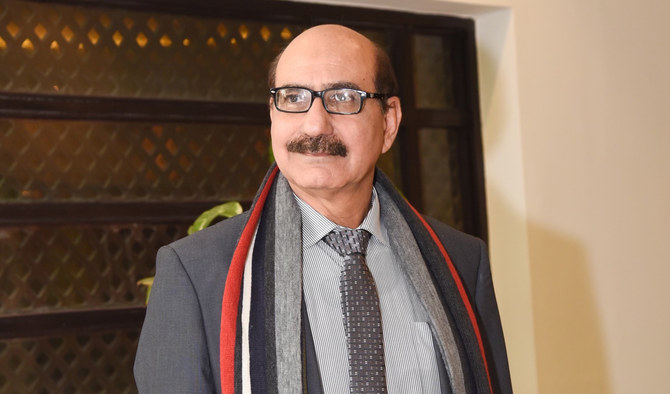
This undated file photograph shows Mohammed Anwar, a Pakistani national who was murdered during a carjacking incident in Washington DC, United States. (Photo courtesy: GoFundMe)
Short Url
Updated 29 March 2021
Follow

Teenage girls charged with killing Pakistan-origin driver during Washington carjacking

  • Mohammad Anwar died when two girls, armed with taser, sped off in his car as he clung to driver's side with door open
  • Anwar was at his delivery job for Uber Eats when he was killed, described as "a hard-working Pakistani immigrant"

WASHINGTON, DC: Two girls, ages 13 and 15, were charged with the murder and carjacking of a Pakistani immigrant killed last week while working at his job delivering food in Washington, D.C., in an incident a bystander captured on video.

Mohammad Anwar, 66, died when police said the girls, armed with a taser, sped off in his car as he clung to the driver’s side with the door open and crashed seconds later just outside the ballpark of the Washington Nationals.

A video posted on Saturday shows the encounter unfolding in a minute and a half, ending with Anwar’s Honda Accord on its side, the girls climbing out and a fatally injured Anwar sprawled and motionless on the sidewalk.

By Sunday afternoon, the video had been seen at least 5.5 million times on Twitter.

Police did not identify the juvenile suspects, one of whom is from the District of Columbia and the other is from neighboring Fort Washington, Maryland.

Anwar, who lived in suburban Springfield, Virginia, and was at his delivery job for Uber Eats when he was killed, was described in a GoFundMe post as “a hard-working Pakistani immigrant who came to the United States to create a better life for him and his family.”

The GoFundMe campaign, launched on behalf of his family, had raised more than $500,000 by Sunday afternoon to cover the costs of a funeral and to provide for his survivors.

“Anwar was a beloved husband, father, grandfather, uncle, and friend who always provided a smile when you needed one,” the family said. “Words can not describe how our family is feeling currently. Devastation, confusion, shock, anger, heartache, and anguish are just a few that come to mind.”

An Uber representative told local radio station WTOP, “We are devastated by this tragic news and our hearts go out to Mohammad’s family during this difficult time.”

Carjackings in Washington have increased to 46 in the first five weeks of the year from eight in the same period a year ago, The Post said on Wednesday, citing police statistics. There were a total of 345 carjackings last year, an increase of 143% from the prior year, the newspaper said.


UK pays Guantanamo detainee ‘substantial’ compensation over US torture questions

Updated 12 January 2026
Follow

UK pays Guantanamo detainee ‘substantial’ compensation over US torture questions

  • Abu Zubaydah has been held at Guantanamo Bay without charge for 20 years
  • British security services knew he was subjected to ‘enhanced interrogation’ but failed to raise concerns for 4 years

LONDON: A Saudi-born Palestinian being held without trial by the US has received a “substantial” compensation payment from the UK government, the BBC reported.

Abu Zubaydah has been imprisoned at Guantanamo Bay in Cuba for almost 20 years following his capture in Pakistan in 2002, and was subjected to “enhanced interrogation” techniques by the CIA.

He was accused of being a senior member of Al-Qaeda in the aftermath of the Sept. 11 terror attacks on the US. The allegations were later dropped but he remains in detention.

The compensation follows revelations that UK security services submitted questions to the US to be put to Abu Zubaydah by their US counterparts despite knowledge of his mistreatment.

He alleged that MI5 and MI6 had been “complicit” in torture, leading to a legal case and the subsequent compensation.

Dominic Grieve, the UK’s former attorney general, chaired a panel reviewing Abu Zubaydah’s case.

He described the compensation as “very unusual” but said the treatment of Abu Zubaydah had been “plainly” wrong, the BBC reported.

Grieve added that the security services had evidence that the “Americans were behaving in a way that should have given us cause for real concern,” and that “we (UK authorities) should have raised it with the US and, if necessary, closed down co-operation, but we failed to do that for a considerable period of time.”

Abu Zubaydah’s international legal counsel, Prof. Helen Duffy, said: “The compensation is important, it’s significant, but it’s insufficient.”

She added that more needs to be done to secure his release, stating: “These violations of his rights are not historic, they are ongoing.”

Duffy said Abu Zubaydah would continue to fight for his freedom, adding: “I am hopeful that the payment of the substantial sums will enable him to do that and to support himself when he’s in the outside world.”

He is one of 15 people still being held at Guantanamo, many without charge. Following his initial detention, he arrived at the prison camp having been the first person to be taken to a so-called CIA “black site.”

He spent time at six such locations, including in Lithuania and Poland, outside of US legal jurisdiction. 

Internal MI6 messages revealed that the “enhanced interrogation” techniques he was subjected to would have “broken” the resolve of an estimated 98 percent of US special forces members had they been subjected to them.

CIA officers later decided he would be permanently cut off from the outside world, with then-President George W. Bush publicly saying Abu Zubaydah had been “plotting and planning murder.”

However, the US has since withdrawn the allegations and no longer says he was a member of Al-Qaeda.

A report by the US Senate Select Committee on Intelligence said Abu Zubaydah had been waterboarded at least 83 times, was locked in a coffin-like box for extended periods, and had been regularly assaulted. Much of his treatment would be considered torture under UK law.

Despite knowledge of his treatment, it was four years before British security services raised concerns with their American counterparts, and their submission of questions within that period had “created a market” for the torture of detainees, Duffy said.

A 2018 report by the UK Parliament’s Intelligence and Security Committee was deeply critical of the behavior of MI5 and MI6 in relation to Abu Zubaydah. 

It also criticized conduct relating to Guantanamo detainee Khalid Sheikh Mohammed, widely regarded as a key architect of the Sept. 11 attacks, warning that the precedent set by Abu Zubaydah’s legal action could be used by Mohammed to bring a separate case against the UK.

MI5 and MI6 failed to comment on Abu Zubaydah’s case. Neither the UK government nor Mohammed’s legal team would comment on a possible case over his treatment.