



CHICAGO: Magic Leap, a US augmented reality startup backed by the Saudi sovereign wealth fund, is negotiating with oil giant Saudi Aramco to open a first-of-its-kind computing innovation center in the Kingdom, CEO Peggy Johnson has told Arab News.
The Florida-based tech firm, which was supported with an injection of $400 million from the Public Investment Fund (PIF) in March 2018, announced at January’s Future Investment Initiative forum in Riyadh a partnership with Aramco to expand uses of its virtual reality headset technology in the oil industry.
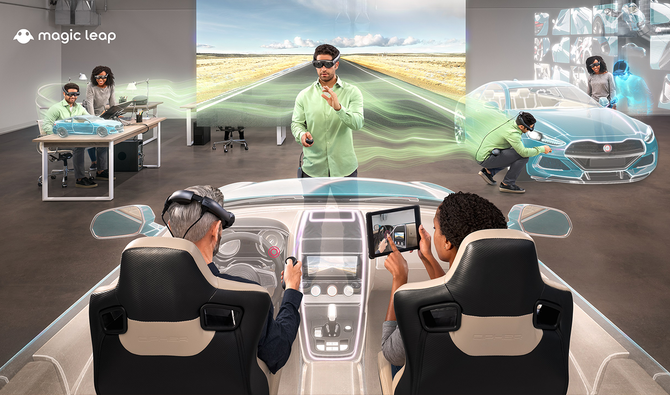
Johnson said Magic Leap I, which began manufacturing virtual reality headsets for the video gaming industry in 2010, was now at the cutting edge of a technology that allowed leaders in industries from medicine to manufacturing to collaborate on challenges in a virtual visual setting, all while being in separate geographic locations. “We are planning with Aramco eventually to jointly launch a dedicated special computing innovation center in Saudi Arabia and that will be the first of its kind in the world.
“So, it will allow us, together with Aramco and others in the Kingdom, to continue to innovate in the space and seek out new use cases for the platform and we are really excited to be working with Aramco on that,” Johnson added.
A timetable to open the center, which would bring Aramco’s physical and virtual worlds together, was still under discussion and “in the planning stages,” said the chief executive.
Johnson pointed out that Magic Leap was “digitizing the physical space” for industries by putting an industry’s physical equipment and data into the augmented reality (AR) system, which could be meticulously examined, discussed, and enhanced.
Based in southern Florida, Magic Leap signed a multiyear partnership agreement with Aramco to deploy the special transformation solutions within their operations.
When you look through the device you still see your physical world, but it enhances the environment with helpful digital content that we can place in your environment.
Peggy Johnson, Magic Leap CEO
“We are engaged right now … so the things we have been exploring, such as 3-D meetings and remote assistance, are to help solidify Aramco’s position as the leader in the oil and gas industry,” she added.
“We are starting pilot programs right away and also looking at virtual training to facilitate that idea of remote collaboration and education.”
Johnson noted that the business was preparing to release a highly advanced system, Magic Leap II, at the end of the year that would be widely available in 2022.
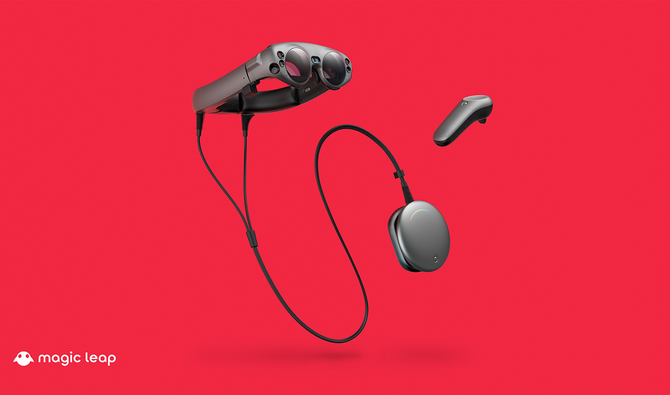
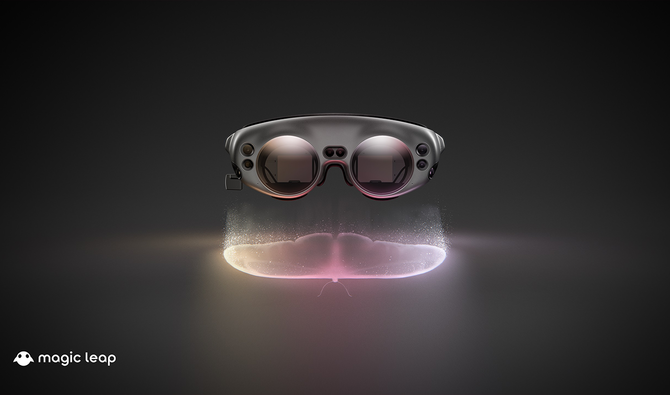
“Our first-generation product is a wearable Magic Leap I. It is essentially a head-mounted, augmented reality display. When you look through the device you still see your physical world, but it enhances the environment with helpful digital content that we can place in your environment,” she said, adding that users could interact together with the digital data and images on multiple virtual screens.
FAST FACT
The Florida-based tech firm was supported with an injection of $400 million from PIF in March 2018.
Johnson said Magic Leap II would “be half the size of Magic Leap I and it will double the field of view that you can augment on top of.” It would also reduce the size of the equipment, making it 20 percent lighter, while allowing for even more visuals to be displayed.
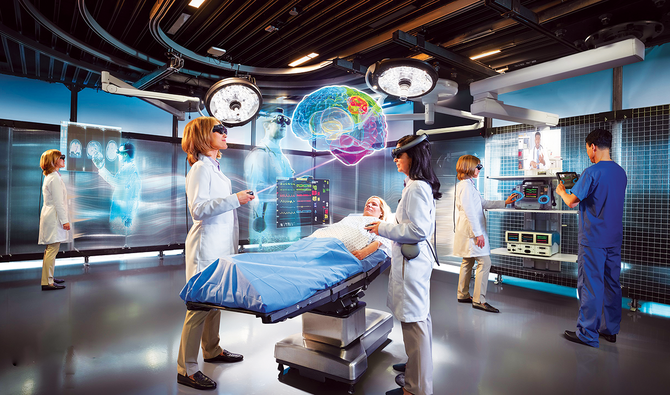
Magic Leap I has already been used in the medical industry, where doctors at the University of California Davis Children’s Hospital prepared for the surgical separation of conjoined twin babies.
Johnson said the surgical teams prepared for the operation using Magic Leap technology. “That surgeon may not be the expert in the field, but when they are performing a surgery, they can actually call an expert in for remote assistance.
“Let us say it is brain surgery. They may be in the midst of things and they have a question and they really want to talk to somebody who has done maybe a number of these surgeries. You can actually do that with the device. You can make a call to a remote expert and they can see what that surgeon is seeing and talk them through assistance,” she added. There was “no limit” to the number of experts that could be brought in to help in a complex surgical procedure, improving success rates and also reducing costs.
She said the coronavirus disease (COVID-19) pandemic had accelerated potential uses, as Magic Leap offered solutions to people who could not travel or needed to be socially distanced.
“I do think the pandemic was a catalyst. We had been working on all of these use cases, but all of a sudden it became very important to companies,” Johnson added.


