

SPE-Informa partnership to bring world-class oil & gas knowledge to MENA

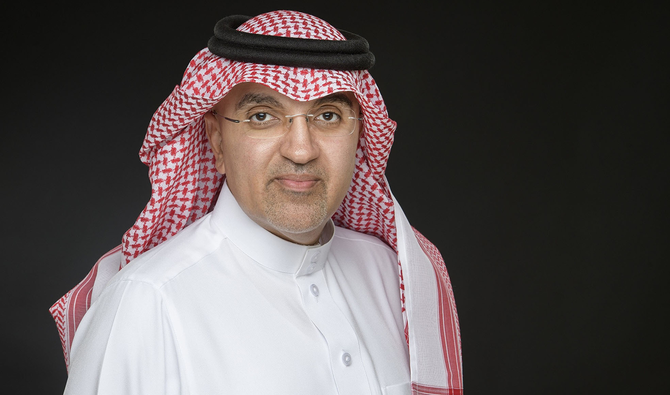
Faisal Al-Nughaimish, MEOS conference chairman.
Short Url
Updated 21 March 2021
Follow

SPE-Informa partnership to bring world-class oil & gas knowledge to MENA

Informa Markets has signed an agreement with the Society of Petroleum Engineers (SPE), a nonprofit society that specializes in sharing insights and knowledge with the global oil and gas industry, to co-organize technical conferences for the Middle East Oil and Gas Show and Conference (MEOS) in Bahrain and the Kuwait Oil and Gas Show and Conference (KOGS).

Mark Rubin, CEO and executive vice president of SPE, believes the delivery of critical insight from oil and gas professionals as part of the agreement will be key to sustainable growth for the industry in the region.

“SPE’s vision is to advance the oil and gas community’s ability to meet the world’s energy demands in a safe, environmentally responsible and sustainable manner,” said Rubin. “Our strategic alliance with Informa will assist in fulfilling that vision through two key multi-disciplinary events in MEOS and KOGS.”

According to Informa Markets, the SPE backing for both MEOS and KOGS will chart a new, dynamic course for the industry’s future as it looks to massively improve efficiencies and source innovative solutions to diversify product ranges.

“Informa’s continuing strategic alliance with the SPE underpins our commitment to the growth of our oil and gas portfolio in the Middle East,” said Peter Hall, president — EMEA of Informa Markets.

Shaikh Mohammed bin Khalifa Al-Khalifa, Bahrain’s minister of oil, said the combined strength of the alliance ultimately benefits MEOS and the wider oil and gas industry.

The MEOS technical conference will focus on innovative fourth industrial revolution technology to solve industry challenges and create future-focused opportunities with onsite content streams tackling a wide remit of industry topics. The exhibition and conference is hosted by Bahrain’s National Oil and Gas Authority, chaired by Saudi Aramco and co-chaired by Italian energy major Eni.

Faisal Al-Nughaimish, MEOS conference chairman and head of gas drilling engineering at Saudi Aramco, said: “MEOS is long established as the must-attend upstream oil and gas event in the region. It attracts the leading global players, it’s a gateway for us to find partners and develop lasting business relationships. We enjoy discovering the cutting-edge products and innovative solutions on display from others while showcasing our own projects and accomplishments.”


Jameel Research project at MIT tackles antimicrobial resistance

The ambitious project is led by Professor James J. Collins, third from left. Professor Collins and his team at MIT will develop
Updated 31 January 2026
Follow

Jameel Research project at MIT tackles antimicrobial resistance

Jameel Research, part of Abdul Latif Jameel International network, is sponsoring a research project in the Department of Biological Engineering and Institute for Medical Engineering and Science at the Massachusetts Institute of Technology, aimed at tackling the global public health crisis of antimicrobial resistance.
This ambitious, multi-disciplinary project is led by Professor James J. Collins, Termeer professor of medical engineering and science at MIT and faculty lead for life sciences at the MIT Jameel Clinic, the epicenter of artificial intelligence and health at MIT.
The project, spanning at least three years, will leverage the Collins’ lab’s cutting-edge strengths in synthetic biology and AI to create next-generation diagnostics.
The growing prevalence of antibiotic-resistant superbugs and a declining antibiotic pipeline has led to a global public health crisis. The US Centers for Disease Control and Prevention has predicted some 2 million infections and 23,000 deaths occur each year in the US alone, costing $55 billion. The World Bank predicts that up to $100 trillion of economic output may be at risk by 2050. The UK government-commissioned Review on Antimicrobial Resistance is projecting more than 10 million deaths worldwide per year by 2050 if the crisis is not addressed.
Professor Collins and his team at MIT are setting out to develop the next generation of antibacterials and rapid diagnostics to overcome AMR — using synthetic biology and advanced generative AI to deliver faster results and help control the use of antibiotics to where they can be effective.
With support from Jameel Research, the first phase of this project will develop and validate programmable antibacterials to overcome AMR in a range of bacterial pathogens. These AI-designed minibinders will be delivered by engineered microbes to neutralize key toxins and protein targets.
This directed design and engineering approach to antibiotic development technology advances a long-term vision to create programmable antibacterials to address the AMR crisis. This would then offer the potential for the more rapid development of medical countermeasures to emerging and re-emerging pathogens and a swifter response to future outbreaks and pandemics.
Mohammed Abdul Latif Jameel, KBE, chairman of Abdul Latif Jameel, said: “Antimicrobial resistance is one of the most urgent challenges we face today and addressing it will require ambitious science and sustained collaboration. We are pleased to support this new research, building on our long-standing relationship with MIT and our commitment to advancing research across the world, to strengthen global health and contribute to a more resilient future.”
“This project reflects my belief that tackling AMR requires both bold scientific ideas and a pathway to real-world impact,” Professor Collins said. “Jameel Research is keen to address this crisis by supporting innovative, translatable research at MIT.”
Jameel Research is advancing the work of pioneering pathfinders to create an extraordinary impact on a global scale.
This initial project holds the promise of rapidly developing medical countermeasures for emerging and re-emerging pathogens, offering a rapid response to future outbreaks and pandemics.
The new research project builds on the close and long-standing relationship between MIT and the Jameel family. This includes the MIT Jameel Clinic, which was co-founded in 2018 by MIT and Community Jameel, the international nonprofit organization founded by Mohammed Jameel, KBE, to advance science and learning for communities to thrive, and one of the Jameel family’s philanthropies.