- Vance says 21-hour talks were “substantive” but failed to secure nuclear commitment
- Islamabad says it will keep facilitating dialogue as key disputes remain unresolved
ISLAMABAD: Pakistan on Sunday urged the United States and Iran to uphold a fragile ceasefire after talks in Islamabad ended without a deal, as US Vice President JD Vance said Washington had failed to secure a key nuclear commitment from Tehran.
Vance arrived in Islamabad on Saturday morning with US President Donald Trump’s special envoy Steve Witkoff and son-in-law Jared Kushner. The US delegation held hours-long talks with the Iranian one, represented by Parliament Speaker Mohammad Baqer Ghalibaf and Foreign Minister Abbas Araghchi.
At least two rounds of talks were held on Saturday, one through intermediaries and another involving direct talks, as Pakistan hosted negotiations aimed at building on a two-week ceasefire announced earlier this week.
Vance announced on Sunday morning that both sides could not reach an agreement, despite “substantive” discussions with Iran that spanned 21 hours. The US vice president said Washington was seeking a “fundamental commitment” from Iran that it would not develop a nuclear weapon, adding that it hadn’t “seen that” during negotiations.
“We hope that the two sides continue with the positive spirit to achieve durable peace and prosperity for the entire region and beyond,” Dar said in a televised message.
“It is imperative that the parties continue to uphold their commitment to a ceasefire.”
He thanked Washington and Tehran for appreciating Pakistan’s efforts to help achieve a ceasefire and its mediatory role.
“Pakistan has been and will continue to play its role to facilitate engagement and dialogue between the Islamic Republic of Iran and the United States of America in the days to come,” he said.
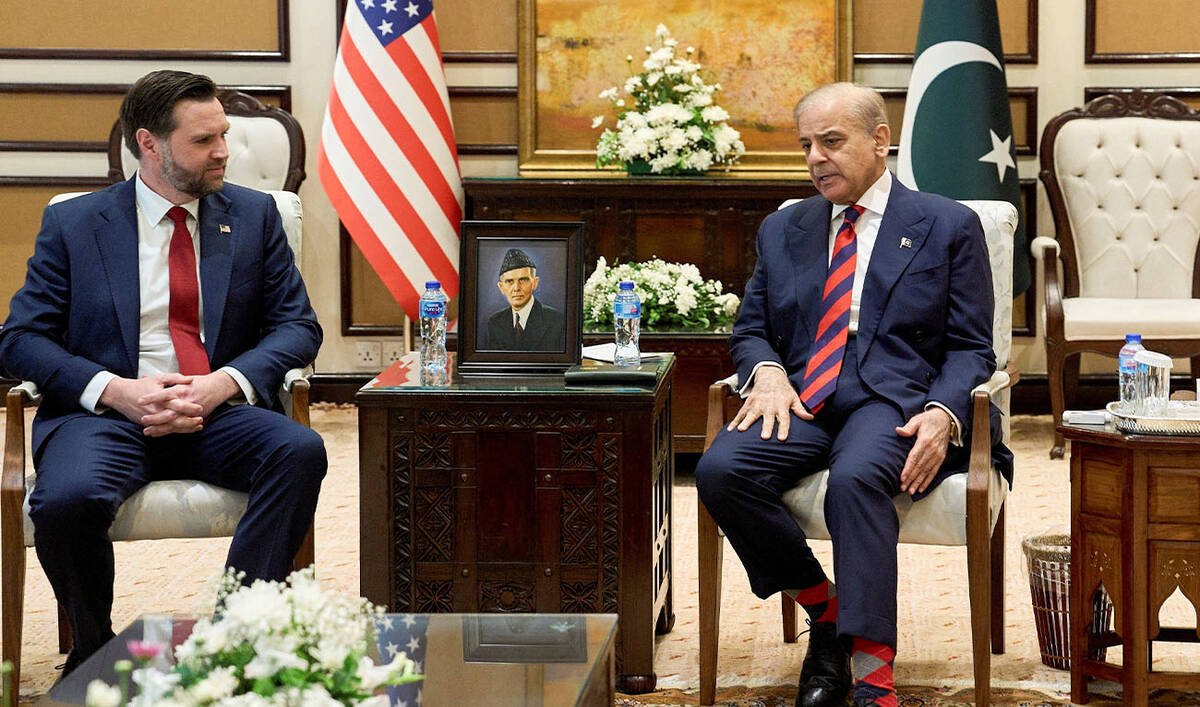
Vance had thanked Prime Minister Shehbaz Sharif and Pakistan’s Chief of Defense Forces Field Marshal Syed Asim Munir for being “incredible hosts” during the talks. The American vice president left for the US shortly after the press talk.
In a post on X prior to Vance’s announcement, Iran’s government said that the talks had concluded and technical experts from both sides would exchange documents.
“Negotiations will continue despite some remaining differences,” the post added, though it did not say when they would restart.
Iranian foreign ministry spokesperson Esmaeil Baqaei said both sides reached an understanding on “a number of issues” except for two or three matters, adding that Tehran’s and Washington’s views on them were “distant.”
He said Iran, Pakistan and other regional countries will continue to hold consultations on the tense situation in the Middle East.
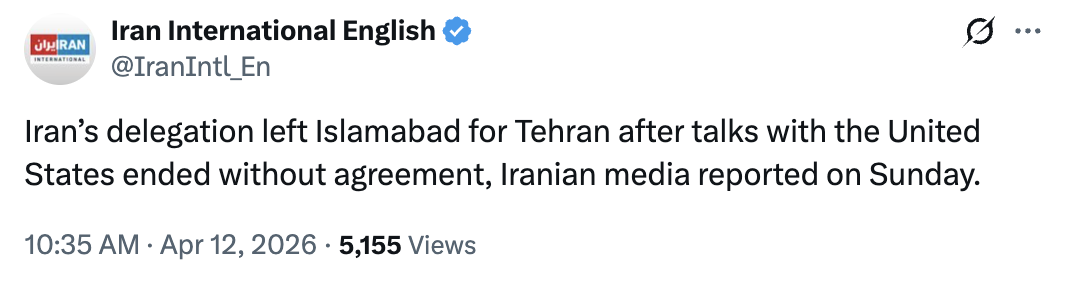
The Iranian delegation left Islamabad for Tehran after the talks concluded without a deal with Washington, Iran’s state-run Press TV reported.
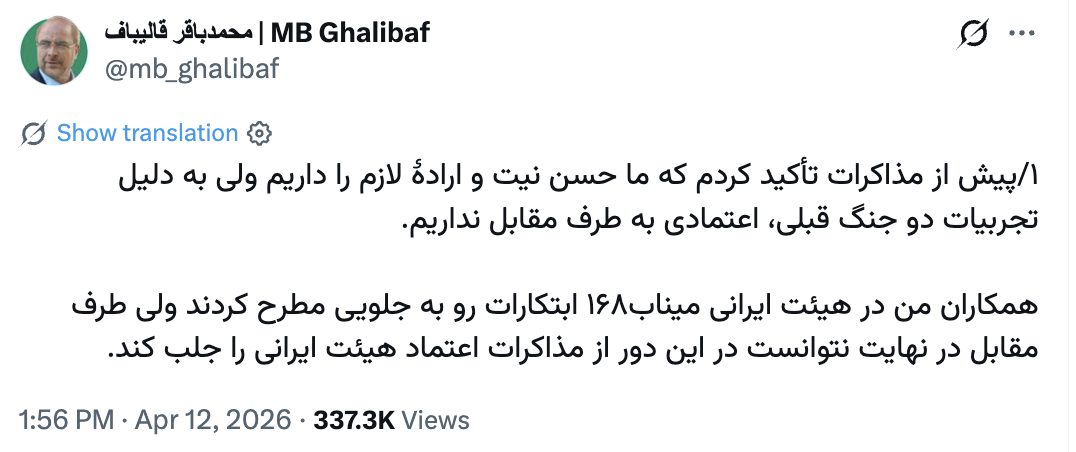
Ghalibaf later took to social media platform X to thank Pakistan for facilitating the negotiations. He said Iran did not trust the US due to its previous experiences with Washington.
“My colleagues on the Iranian delegation raised forward-looking initiatives, but the opposing side ultimately failed to gain the trust of the Iranian delegation in this round of negotiations,” he wrote.
STICKING POINTS
Despite the start of direct engagement between both sides on Saturday, the talks process remained deeply uncertain, with major sticking points threatening to derail progress.
The war began when the US and Israel launched coordinated strikes against Iran on Feb. 28. Iran responded with attacks against Israel and the Gulf countries. Tehran also effectively blocked the Strait of Hormuz, through which roughly 20 percent of the world’s oil and gas supplies pass through.
Iran has demanded that the ceasefire extend to Lebanon and that sanctions be lifted, while the United States has ruled out concessions on uranium enrichment and signaled skepticism over reopening key oil routes such as the Strait of Hormuz.
Disagreements also persist over Iran’s missile program and the broader scope of the truce, underscoring the fragile nature of the talks and the risk that negotiations could stall or require multiple rounds to make progress.
“There has been 47 years of tension between the United States and Iran,” Pakistan’s Law Minister Azam Nazeer Tarar told Geo TV on Saturday. “Such matters are not resolved in just a one- or two-hour sitting.”
Pakistan is hosting the talks after weeks of diplomatic outreach led by Sharif, Dar and Munir, positioning Islamabad as a key intermediary in a conflict that began in February.
The war has caused the biggest oil supply shock on record, damaging regional energy production and raising fears of inflation, food insecurity and a potential global economic slowdown.
Trump, ahead of midterm elections later this year, faces pressure to find an off-ramp from the conflict after announcing a ceasefire on Tuesday.
Three Pakistani officials told Arab News direct talks between the US and Iran began on Saturday afternoon — the first direct US-Iranian meetings in more than a decade and the highest-level discussions since the 1979 Islamic Revolution.
One Pakistani official, a member of cabinet, said PM Sharif was not in the negotiations, which were being chaired by army chief Munir. They were attended by Vance and Witkoff and Kushner on the American side, while Ghalibaf and Araghchi led the delegation from Tehran.
The two delegations had earlier communicated through intermediaries and held separate meetings with Sharif.
The negotiations took place as Islamabad, a city of about 2 million people, remained under tight security, with hundreds of military, paramilitary and police personnel deployed across the capital.
With additional inputs from agencies