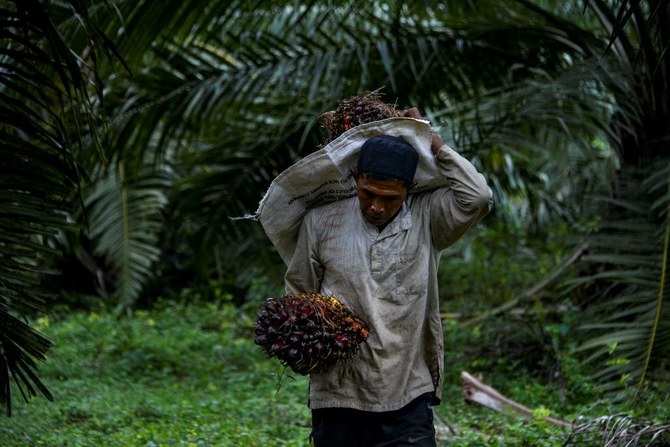
LONDON: Of the seven commodities sectors driving deforestation, palm oil companies are doing the most to alleviate their environmental impact following years of public pressure, a study by a global environmental disclosure group shows.
The CDP study, which will be released on Monday but was given to Reuters in advance, is likely to ramp up pressure on commodity companies to go green given the progress in palm oil, which is widely blamed by environmentalists for much of the destruction of tropical rainforests.
Based on responses from more than 550 leading companies in the agri-commodities sector, the study found nearly all who use or produce palm oil are taking at least one industry accepted measure to address deforestation, such as having sufficiently ambitious traceability targets.
Companies involved with rubber, by contrast, are doing the least, while the coffee and cattle products sector also perform poorly, the study found.
“Palm oil has been the subject of public campaigns in recent years. Companies see palm oil as a reputational risk,” it noted.
CDP measures the environmental risk and impact of more than 10,000 companies, cities, states and regions on behalf of leading global investors.
Sareh Forouzesh, associate director of forests at CDP said: “There is a solid business case for companies (to source) commodities sustainably.”
Companies are requested to make disclosures through CDP because they use or produce the seven commodities that drive deforestation: timber, palm oil, soy, cattle, rubber, cocoa and coffee.
However, only a third of companies asked to disclose to the CDP study did so. This still represents significant progress compared to previous studies but also shows a gap in the commodity industry’s transparency and, most likely, in its actions to tackle deforestation.
Scientists say protecting forests is one of the cheapest and most effective ways to curb climate change because trees suck in carbon dioxide, the main gas heating up the planet.
According to the United Nations, 10 million hectares of forest were destroyed annually in the five years since 2015.


![]()

Facing public pressure, palm oil firms are going green — study
Short Url
https://arab.news/g3b5d
Facing public pressure, palm oil firms are going green — study
- Study: Nearly all who use or produce palm oil are taking at least one industry accepted measure to address deforestation


Latest updates


Recommended


© 2026 SAUDI RESEARCH & PUBLISHING COMPANY, All Rights Reserved And subject to Terms of Use Agreement.