Targeting Tesla, China’s Geely to launch new premium EV brand

1 / 2
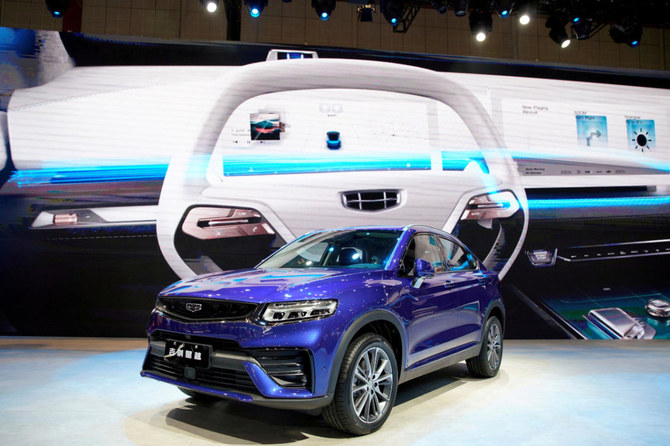
A Geely Xingyue Coupe SUV is seen displayed at the second media day for the Shanghai auto show in Shanghai, China. (REUTERS/File Photo)
2 / 2
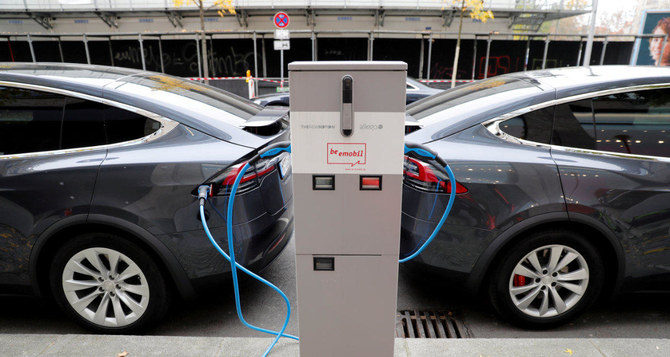
Tesla Model X electric cars recharge their batteries in Berlin, Germany. (REUTERS/Fabrizio Bensch/File Photo)
Short Url
Updated 19 March 2021
Follow

Targeting Tesla, China’s Geely to launch new premium EV brand

  • Geely is the owner of Volvo Cars and 9.7% of Daimler AG 
  • It looks to take on its main EV rival Tesla with higher-end vehicles

BEIJING: China’s Geely plans to roll out electric vehicles under a new marque with different branding and sales strategies, people familiar with the matter said, as the Volvo owner looks to take on its main EV rival Tesla with higher-end vehicles.

The brand, positioned in the premium segment and named “Zeekr,” will be housed under Geely’s to-be-launched EV entity Lingling Technologies, according to three people, who declined to be named as the plan is not yet public. Reuters reported the plans for Lingling last month.
Geely, the owner of Volvo Cars and 9.7% of Daimler AG , will roll out models under the new marque based on its open-source EV chassis, announced in September and called Sustainable Experience Architecture (SEA), the sources said.
It will be a new attempt to go up-market by Geely, and backs founder and Chairman Li Shufu’s long-held ambition to make premium cars “like Mercedes-Benz” in a bid take on EV leader Tesla Inc.
Geely will open showrooms, or “hubs,” in city centers to sell cars at a fixed price, departing from traditions to sell cars through dealerships — marketing tactics pioneered by Tesla, which last year saw sales expand quickly in China, the world’s biggest car market.
The plan follows a flurry of tie-ups by Geely earlier this year as the automaker pursues its goal of becoming a leading EV contract manufacturer and engineering service provider.
China’s automakers largely compete with entry-level and mass-market manufacturers including Volkswagen and Toyota, but EV maker Nio Inc. sells cars with higher prices and counts BMW as a rival.
Hangzhou-based Geely also plans a broad array of sales and marketing strategies to seek deeper relationships with the EV buyers. It will open lifestyle lines for clothing and accessories and launch a car owner’s club, tactics used by Nio, sources said.
Zeekr is also considering rolling out a share ownership plan that allows customers to become shareholders of Lingling, which management hopes will boost sales and the relationship between brand and customers.
Geely declined to comment.
Many conventional automakers have used a new brand to launch their EV units. Geely’s rivals including Great Wall, and SAIC Motor have rolled out their respective new standalone EV brands.
China’s government has heavily promoted new energy vehicles (NEVs) — such as battery-powered, plug-in petrol-electric hybrid and hydrogen fuel cell cars — in response to chronic air pollution and a warming climate, spurring interest from technology companies and investors alike.
China forecasts NEVs will make up 20% of its annual auto sales by 2025 from around 5% in 2020.


Saudi Arabia, Japan trade rises 38% between 2016 and 2024, minister says

Updated 11 January 2026
Follow

Saudi Arabia, Japan trade rises 38% between 2016 and 2024, minister says

RIYADH: Trade between Saudi Arabia and Japan has increased by 38 percent between 2016 and 2024 to reach SR138 billion ($36 billion), the Kingdom’s investment minister revealed.

Speaking at the Saudi-Japanese Ministerial Investment Forum 2026, Khalid Al-Falih explained that this makes the Asian country the Kingdom’s third-largest trading partner, according to Asharq Bloomberg.

This falls in line with the fact that Saudi Arabia has been a very important country for Japan from the viewpoint of its energy security, having been a stable supplier of crude oil for many years.

It also aligns well with how Japan is fully committed to supporting Vision 2030 by sharing its knowledge and advanced technologies.

“This trade is dominated by the Kingdom's exports of energy products, specifically oil, gas, and their derivatives. We certainly look forward to the Saudi private sector increasing trade with Japan, particularly in high-tech Japanese products,” Al-Falih said.

He added: “As for investment, Japanese investment in the Kingdom is good and strong, but we look forward to raising the level of Japanese investments in the Kingdom. Today, the Kingdom offers promising opportunities for Japanese companies in several fields, including the traditional sector that links the two economies: energy.”

The minister went on to note that additional sectors that both countries can also collaborate in include green and blue hydrogen, investments in advanced industries, health, food security, innovation, entrepreneurship, among others.

During his speech, Al-Falih shed light on how the Kingdom’s pavilion at Expo 2025 in Osaka achieved remarkable success, with the exhibition receiving more than 3 million visitors, reflecting the Japanese public’s interest in Saudi Arabia.

“The pavilion also organized approximately 700 new business events, several each day, including 88 major investment events led by the Ministry of Investment. Today, as we prepare for the upcoming Expo 2030, we look forward to building upon Japan’s achievements,” he said.

The minister added: “During our visit to Japan, we agreed to establish a partnership to transfer the remarkable Japanese experience from Expo Osaka 2025 to Expo Riyadh 2030. I am certain that the Japanese pavilion at Expo Riyadh will rival the Saudi pavilion at Expo Osaka in terms of organization, innovation, and visitor turnout.”

Al-Falih also shed light on how Saudi-Japanese relations celebrated their 70th anniversary last year, and today marks the 71st year of these relations as well as how they have flourished over the decades, moving from one strategic level to an even higher one.