Saudi Arabia, Middle East allies to participate in Pakistan Air Force counterterror exercise

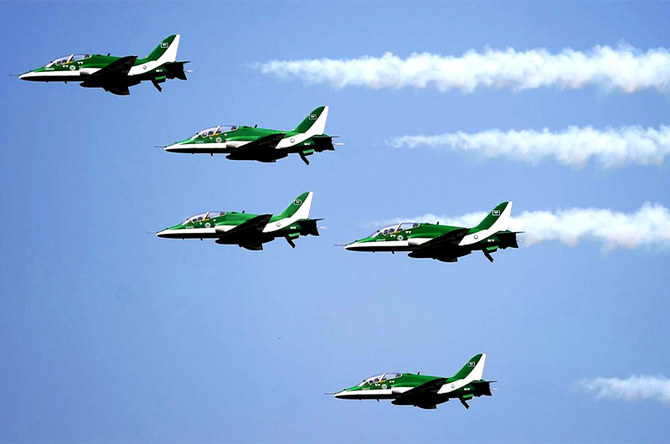
Airplanes fall into the formation during the airshow in Islamabad on the eve of Pakistan's independence day on August 14, 2017. (AFP/File)
Short Url
Updated 19 March 2021
Follow

Saudi Arabia, Middle East allies to participate in Pakistan Air Force counterterror exercise

  • American and Iraqi air force officials will also participate in the two-week-long ACES MEET 2021 exercise that is scheduled to begin from March 27
  • A PAF spokesperson says the full participation of the Royal Saudi Air Force is evident of the strong ties between the two countries

ISLAMABAD: The Pakistan Air Force (PAF) will host a two-week-long multinational air exercise from March 27 in which some of the country’s top Middle Eastern allies, including Saudi Arabia and Palestine, are also going to participate, a PAF spokesman confirmed while talking to Arab News on Thursday. 

The ACES MEET 2021 exercise is designed to maximize the combat readiness of all participants by providing them a realistic training environment for air combat and counterterrorism operations. 

“The Royal Saudi Air Force and the United States Air Force will be participating with their aircrafts,” added the spokesman who did not want to be named. “However, the Iraqi Air Force and Palestinian paratroopers will attend the exercise without fighter jets.”

“The exercise will help the participants benefit from each other’s diverse experiences and different aircrafts operations,” he continued.
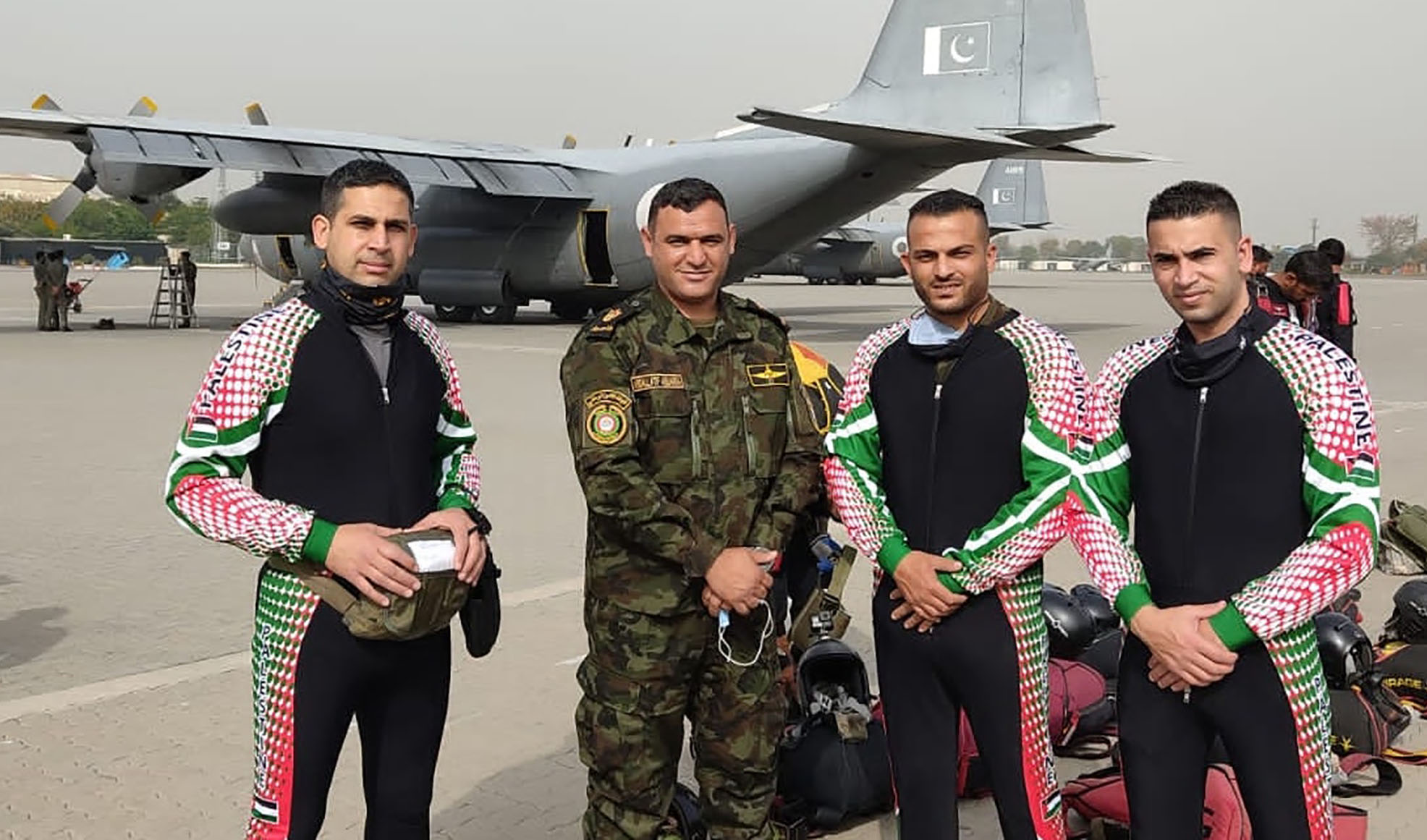


Paratroopers of the Palestinian National Security Forces, which will be participating at ACES Meet 2021 hosted by the Pakistan Air Force, are seen in Rawalpindi, Pakistan, on March 17, 2021. (Photo courtesy: Palestinian National Security Forces/Facebook)

The PAF spokesman said the Pakistani side would use F16 and JF17 fighter jets while the Royal Saudi Air Force would bring Tornado aircrafts. He said the PAF enjoyed close cooperation with many countries in the region and frequently participated in bilateral exercises with them.

“We have been part of different exercises with Saudi Arabia in the past,” he said. “Recently, we participated in Al-Saqoor II exercise in Saudi Arabia with our aircrafts.” 

The PAF official added that Pakistan had also participated in Zilzal exercise with Qatar, Anatolian Eagle exercise with Turkey and Shaheen exercise with China.

“The full participation of the Royal Saudi Air Force is a reaffirmation that both countries are doing their best to enhance bilateral cooperation and ties,” he noted.

The PAF spokesperson said the participants of the exercise would follow strict COVID-19 protocols, adding that the Pakistan Navy had also successfully conducted the recent Aman-2021 exercise during the pandemic. 


Islamabad offers skilled manpower to help Iraq in reconstruction, development efforts

Updated 21 December 2025
Follow

Islamabad offers skilled manpower to help Iraq in reconstruction, development efforts

  • The development comes during Pakistan President Asif Ali Zardari’s four-day visit to Iraq to strengthen bilateral cooperation
  • Zardari says current levels of bilateral trade do not reflect true potential of Pakistan-Iraq ties, highlights opportunities

ISLAMABAD: Pakistan has offered to provide skilled manpower to support Iraq’s reconstruction and development efforts, the Pakistani government said on Sunday, signaling Islamabad’s willingness to deepen cooperation with Baghdad in sectors including infrastructure, technical services and human resource development.

The development comes during Pakistan President Asif Ali Zardari’s four-day visit to Iraq to strengthen cooperation in trade, investment, religious tourism, energy and other sectors.

Zardari held a one-on-one meeting with his Iraqi counterpart, Dr. Abdul Latif Jamal Rashid, at Baghdad Palace, which was followed by delegation-level talks to review the state of bilateral relations.

“President Zardari reiterated Pakistan’s willingness to support Iraq’s reconstruction and development efforts through the provision of skilled and semi-skilled manpower under the existing Memorandum of Understanding on manpower transmission,” Pakistan’s Press Information Department (PID) said in a statement.

“He also highlighted Pakistan’s capacity in medical services, financial expertise and digital governance, and expressed readiness to share technical experience, including in secure data management, to support institutional capacity-building in Iraq.”

Iraq has been working to rebuild its economy and infrastructure after decades of conflict, including the 2003 US-led invasion and years of instability caused by sectarian violence and the fight against Daesh group. Although security conditions have improved in recent years, large parts of the country still face damaged roads, power plants, hospitals and housing, requiring large-scale reconstruction and public service delivery.

During Sunday’s meeting, Zardari noted that the current levels of bilateral trade do not reflect the true potential of Pakistan-Iraq economic, cultural and security relations, highlighting opportunities in agriculture, defense production, information technology, construction, pharmaceuticals and other sectors. He underscored the importance of business-to-business engagement and the establishment of direct banking channels to facilitate trade and commercial activity, according to the PID.

Zardari also requested improved facilitation for Pakistani pilgrims visiting Iraq and expressed hope for early finalization and implementation of a proposed Memorandum of Understanding on Zaireen (pilgrims) Management, aimed at ensuring orderly travel. He expressed his firm resolve to work with the Iraqi government to stop illegal entry and overstay of those Pakistanis who violate Iraqi law.

“Both Presidents expressed their resolve to fight extremism, terrorism and narco trade and enhance bilateral cooperation,” the PID said. “The two leaders reaffirmed their commitment to further deepening bilateral cooperation across political, economic and social domains.”

Pakistan and Iraq established diplomatic relations in 1947 and have traditionally maintained cordial ties, though commercial links remain modest. The volume of trade between both countries stood at $268 million in 2023.

Pakistan’s major exports to Iraq include machinery and mechanical appliances, pharmaceutical products, fish, cereals, essential oils and resinoids. Islamabad’s imports from Iraq include mineral fuels, mineral, organic chemicals, edible fruit and nuts.