DUBAI: Saudi Arabia’s inflation rate fell slightly to 5.2 percent in February from 5.7 percent in the prior month, but continued to reflect for the eighth consecutive month a tripling of the value-added tax in July, government data showed on Monday.
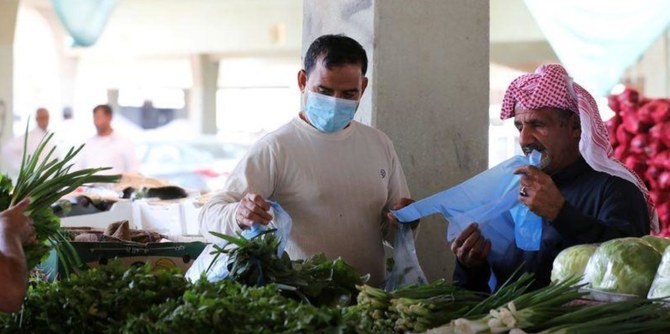
The rise in prices was again mainly driven by increases in food and beverages, which recorded their highest annual increase at 11.2 percent, the General Authority for Statistics said. Food prices have a weight of 17 percent in the Saudi consumer basket.
Transport prices increased by 9.8 percent, mainly due to a 9.9 percent rise in prices of purchase vehicles.
Annual inflation was 3.4 percent in 2020, but picked up in the second half of the year after the July VAT hike to 15 percent. The rise followed mild inflation in the first half and a deflationary trend in 2019, when the annual rate was -2.1 percent.
The economy of the world’s largest oil exporter contracted last year, but data suggest the rate of decline slowed in the third quarter as some COVID-19 restrictions were lifted, and GDP is expected to return to growth this year.
Some economists scaled back their headline growth forecasts for Saudi Arabia, the largest Arab economy, after OPEC and its allies agreed to extend most oil cuts into April, leading to a more gradual increase in Saudi oil production than previously expected.

Saudi inflation rate falls to 5.2% in February, reflects VAT hike for eighth month
https://arab.news/gnebr
Saudi inflation rate falls to 5.2% in February, reflects VAT hike for eighth month
- Price rises driven by food and beverages
- Inflation reflects VAT hike in Kingdom
Saudi-Japanese Ministerial Investment Forum witnesses the signing of 12 MoUs
RIYADH: The Saudi-Japanese Ministerial Investment Forum saw the signing of 12 memorandums of understanding across a wide range of sectors, including space, finance and agriculture.
The event aimed to enhance bilateral investment and trade cooperation, facilitate access to new investment opportunities, and review joint initiatives in key industries, including energy, machinery, and equipment, according to the Saudi Press Agency.
This cooperation will further strengthen the investment partnership between Saudi Arabia and Japan, particularly within the framework of the Saudi-Japanese Vision 2030, which aims to deepen economic collaboration and foster long-term strategic ties between the two nations.
The Kingdom has long been a key partner for Japan from an energy security perspective, serving as a stable and reliable supplier of crude oil for many years.
This relationship aligns with Japan’s strong commitment to supporting Saudi Arabia through the sharing of expertise and the transfer of advanced technologies that contribute to sustainable economic development.
The forum also explored ways to strengthen efforts to develop economic ties between the two countries and enable the private sector to capitalize on investment opportunities.
The forum was held under the umbrella of “Invest in Saudi Arabia” in the presence of Prince Faisal bin Bandar bin Sultan, president of the Saudi Esports Federation, the Minister of Investment Khalid bin Abdulaziz Al-Falih, and the Minister of Communications and Information Technology Abdullah bin Amer Al-Swaha.
Among the attendees from Japan was the country’s Minister of Economy, Trade and Industry Ryosei Akazawa along with the participation of a number of government officials, as well as representatives from major Saudi and Japanese companies.
In an interview with Al-Ekhbariya, Al-Falih said: “Japan is our third largest trading partner and one of the largest investors in the Kingdom, with investments exceeding SR25 billion ($6.67 billion), if I recall correctly.
“However, our ambition is to see this mutual trade and investment, particularly Japanese investments in the Kingdom, grow.”
He added: “Specifically, we are looking to focus on promising sectors targeted by the new Japanese Prime Minister, sectors that align perfectly with the Kingdom’s Vision 2030: the technology sector, the gaming sector, electronics, and digital content; the green energy sector, and renewable energy, which the Japanese need.”
The minister went on to note that the Kingdom was the first country to export carbon-free ammonia products to Japan.
In his speech during the forum, Al-Falih stated that Saudi Arabia is preparing to begin exporting green hydrogen to Japan soon, Al-Eqtisadiah reported.