

ANKARA: Four-year-old Fatma is the Turkey-born child of Syrian refugees from Damascus, who fled the civil war to start a new life in Istanbul.
Fatma speaks fluent Turkish and is encouraged by her parents to memorize some Arabic words too, to maintain her bond with Syria. They have used much of their money to ensure she can attend a decent kindergarten, but say they have heard stories from other Syrians whose children no longer wish to attend school because of the xenophobia they have faced.
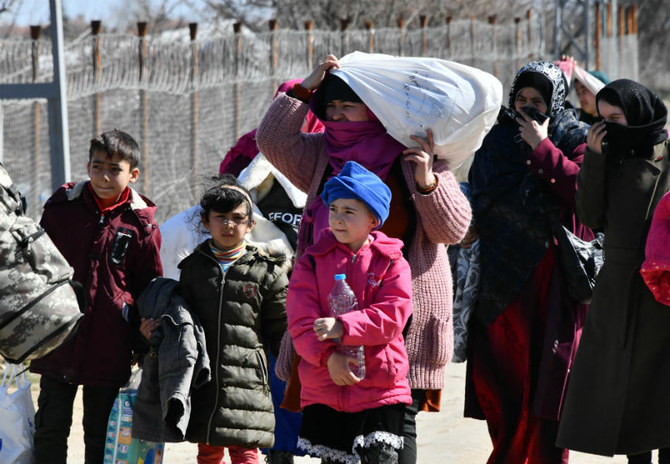
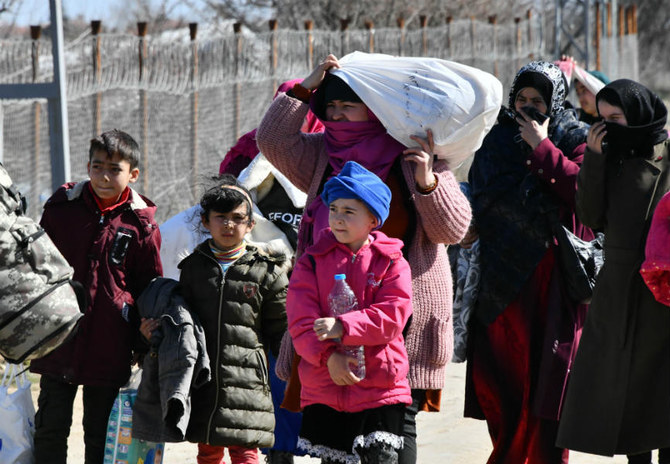
As the 10th anniversary of the Syrian civil war approaches, many refugee children who fled to neighboring Turkey still face hardship. Greater efforts need to be made to ensure they do not become another lost generation.
Since the beginning of the Syrian civil war, around 6.6 million people have been forced to flee the country and another 6.1 million are internally displaced.
On March 18, 2016, the EU and Turkey agreed on a controversial refugee deal to restrict the influx of refugees into Europe in return for an aid package worth $6.7 billion and various other political benefits for Ankara. That deal is expected to be renewed soon but the parties face challenges in finding consensus over the updated terms.
Turkey currently hosts some 3.7 million Syrian refugees, 46 percent of whom are children. Nearly 1.2 million of them are of school age, while around 500,000 are aged five or below.
Those who are enrolled in Turkish schools are — for the most part — making their best efforts to assimilate into society, but many still face discrimination from their peers and from other students’ families. That is likely one of the reasons why around 35 percent of Syrian children in Turkey do not attend school.
In 2019, 720,000 Syrian children were working in dangerous sectors such as construction, furniture and textile, according to official figures. Several of them died in fires at factories, and many were suffering from health conditions related to their work.
“Especially (once they’re over) the age of 12, Syrian refugee families in Turkey prefer that their children work and contribute to the (family’s income),” Murat Erdogan, a professor at the Turkish-German University in Istanbul, told Arab News.
According to a report released on Tuesday by Save the Children — which surveyed Syrian refugee children in Jordan, Lebanon, Turkey and the Netherlands — school enrolment at primary level has decreased by around 10 percent since the start of the COVID-19 pandemic.
Roughly 64 percent of Syrian families living in urban households in Turkey live close to or below the poverty line, but only three percent of the children surveyed in Turkey said they would want to return to Syria, the same report noted.
Prof. Erdogan says that the pandemic hit Syrian refugee children in Turkey hard, since they not only lost their human interaction with their teachers, but many do not have the necessary equipment to access remote learning.
“Each refugee student costs the Turkish education system about $1,000. Around 1,500 new schools need to be constructed and 60,000 new teachers employed to (cover) all the Syrian refugee children in Turkey. First of all, Turkey should overcome its capacity problem. Otherwise, a lost generation is very likely,” he said.
Syrians in Turkey who have not been granted citizenship are classified as having “temporary protection” status. This ambiguous label often prevents them from joining the labor force or accessing other support systems, and many live in constant fear of forced deportation or arrest if Ankara becomes involved in a dispute with the Syrian regime or the European Union.
In 2019, Turkish police conducted several operations targeting undocumented migrants and refugees in Istanbul and transferred those without the necessary papers to temporary refugee camps or to the cities in which they were originally registered.
According to Omar Kadkoy, a migration policy analyst at Ankara-based think tank TEPAV, there are several interconnected hurdles to overcome in order to ensure that Syrian children are no longer forced to work and can continue their education.
“The first is the informal nature of Syrian employment in Turkey’s labor market: while 800,000 to a million Syrians are estimated to work, only around 64,000 of them have work permits. Working informally is associated with exploitation, which hampers (the workers’ chances of) financial security,” he told Arab News. The answer, he suggested, it to change Turkey’s work-permit regulations so that greater responsibility and culpability falls on employers.
Furthermore, Kadkoy noted, many Syrian refugee parents struggle to ensure their children's attendance at school, and children will often be put to work so their families can make ends meet.
“The second issue is the inadequacy of the Conditional Cash Transfers for Education (CCTE) program,” he said. CCTE is the largest EU-funded humanitarian education program and provides financial support to Syrian families whose children attend school on a regular basis. Kadkoy said that further funding needs to be found if the threat of a lost generation is to be contained.


