DUBAI: Saudi domestic airlines are seeing a quicker recovery in routes within the Kingdom than larger regional rivals relying on pandemic-paralyzed long haul travel.
The CAPA Live aviation industry event on Wednesday heard that the Kingdom’s domestic airline sector was recovering strongly in sharp contrast to most of its neighbors.
The Middle East has been particularly hard hit by the global aviation slowdown because of its comparatively under-developed domestic market.
In 2019, the region had the lowest share of domestic air capacity, with just one in five seats on offer defined as an internal flight — compared to a global average of 59 percent, CAPA said.
It has meant that countries such as Bahrain, Kuwait, Lebanon and Qatar have not been able to rely on domestic flights to keep planes in the air. However larger countries in the region such as Saudi Arabia and Iran have bigger domestic markets to fall back on.
“The domestic recovery in Saudi Arabia is already showing positive signs, in frequency terms at least,” said CAPA analyst Richard Maslen.
Weekly domestic flights in the Kingdom have grown to about 3,000 according to CAPA data.
That represents a decline of just 23 percent over the first two months of the year compared to the same period a year ago before COVID restrictions hit.
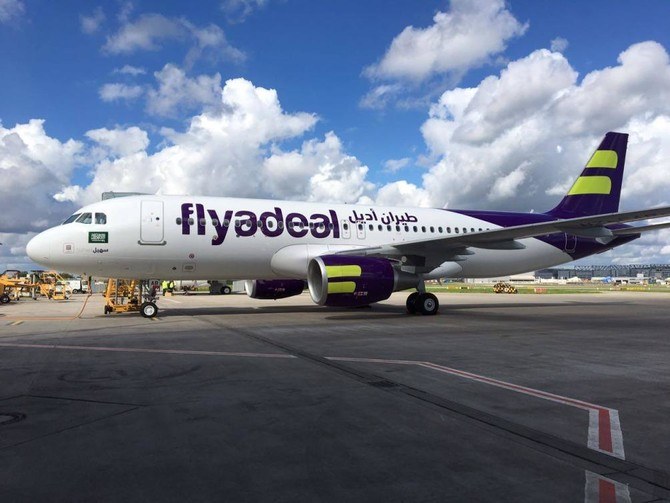
Earlier flyadeal CEO Con Korfiatis told the consultancy that the Saudi low cost carrier was offering schedules with frequencies just 10 percent lower than this time last year.

Saudi domestic flights buck Mideast air travel slowdown
https://arab.news/22f8y
Saudi domestic flights buck Mideast air travel slowdown
- The Middle East has been particularly hard hit by the global aviation slowdown
Global investors commit more than $3bn to King Salman Park as Saudi giga-project secures new deals
RIYADH: The King Salman Park Foundation has secured more than $3.8 billion in new private-sector commitments at the MIPIM 2026 real estate conference, including a landmark $3 billion fund backed by international investors to develop a major mixed-use district in the heart of Riyadh.
According to a press release, the announcements bring total committed investment in the 17.2 sq. kilometers urban regeneration project to over $5.3 billion across five major packages.
Launched in 2019 under Saudi Vision 2030, the development is designed to be the world’s largest city park and aims to boost green space, improve quality of life, and feature over 1 million trees and extensive leisure facilities.
A $3 billion metro-connected district
The largest of the two packages, designated Package 5, will see a consortium led by Kolaghassi Development Co. deliver a residential-led district with a total built-up area exceeding 1 million sq. meters.
It will provide approximately 3,700 residential units, a K–12 school, around 300 hospitality keys and more than 100,000 sq m of Grade A office space alongside a wide variety of retail and dining offerings.
The development is supported by a Saudi-domiciled, Capital Market Authority-regulated fund managed by Mulkia Investment Co. that has attracted leading investors from the Kingdom and across the world.
Kolaghassi Development Co. will lead the project alongside Al Othaim Investment, one of the Kingdom’s real estate players, and RXR, a New York-headquartered real estate investor and operator.
“Securing investment of this scale, supported by international capital and expertise, is an important milestone for King Salman Park,” said George Tanasijevich, CEO of King Salman Park Foundation.
$850 million cultural district package
In a separate announcement, the Foundation confirmed the award of Package 4 to a consortium led by Retal Urban Development Co., with support from a fund managed by SAB Invest.
The project has a total value exceeding $850 million and will host more than 600 residential units, over 140 hotel keys, and almost 50,000 sq m of Grade A office space, alongside curated retail and food and beverage experiences.
“This opportunity reflects the maturity of Saudi Arabia’s real estate investment landscape and our confidence in culture-led, mixed-use urban destinations as a driver of sustainable returns,” said Abdullah Al-Braikan, CEO and founder of Retal Urban Development Co.
Ali Al-Mansour, CEO of SAB Invest, said the fund structure brings together “long-term capital, experienced development partners, and a shared commitment to place-making excellence” while contributing to Riyadh’s cultural vibrancy and the Kingdom’s quality-of-life ambitions under Vision 2030.


