

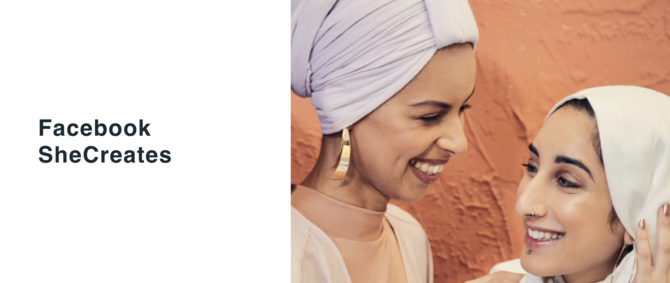
Facebook launches e-book to celebrate International Women’s Day

1 / 2
2 / 2
Short Url
Updated 09 March 2021
Follow

Facebook launches e-book to celebrate International Women’s Day

  • Digital book throws spotlight on achievements of women from MENAT region

DUBAI: Facebook has developed an e-book featuring 26 women from the media and entertainment industries in the Middle East, North Africa, and Turkey (MENAT) region.

Designed to mark International Women’s Day, the e-book includes stories and messages from women aimed at encouraging, advising, and inspiring readers.

The launch of the e-book comes on the back of the #SheCreates virtual event held in December. The program will continue throughout the year, with focused events and content tailor-made for women.

“This International Women’s Day, we’re amplifying the voices of a diverse group of women who are creating value across communities in the region,” said Moon Baz, Facebook’s strategic partner manager for the MENA region.

“These are influential individuals who, in some way or another, have shown an ability to bring people together both on and off our platforms by creating change and leaving a resounding impact on the lives of others.”

A recording of the #SheCreates event is now available on the Facebook Arabia page.

Derya Matras, regional director for Facebook in Africa, the Middle East, and Turkey, said: “The purpose of #SheCreates is embedded within its name; it’s shining a much-needed spotlight on the incredible, daily impact of women around the region, the difference they make, and the change they create.”


Study finds nearly half of UK news stories on Muslims show signs of bias

Updated 09 March 2026
Follow

Study finds nearly half of UK news stories on Muslims show signs of bias

  • Centre for Media Monitoring finds 20,000 out of 40,913 articles from 30 major news outlets contain bias and 70% link Muslims to negative behaviors or themes
  • Findings reveal ‘deeply concerning evidence of structural bias’ in portrayal of Muslims by UK press and point to ‘systemic problem’ within the media, says center’s director

LONDON: Nearly half of news articles published in the UK in 2025 that referenced Muslims or Islam contained some degree of bias, according to a report issued on Monday by the Centre for Media Monitoring. It also found that about 70 percent of stories linked Muslims to negative behaviors or themes.

The nonprofit organization, which tracks the ways in which Muslims and Islam are portrayed in the media, examined 40,913 articles from 30 major news outlets and found that about 20,000 showed some form of bias.

The study looked at “structural patterns” in coverage that “shape public narratives” about Muslims amid rising hostility toward the community.

“As the largest study of its kind ever conducted in the UK, this report presents deeply concerning evidence of structural bias in how Muslims are portrayed in the UK press,” said Rizwana Hamid, the director of the organization.

It found that 70 percent of the articles it reviewed highlighted negative aspects related to Muslims, though not all of the stories were biased in themselves. The wider patterns were also troubling: 44 percent of the coverage omitted key context, 17 percent relied on generalizations, and 13 percent included outright misrepresentation.

Taken together, the monitoring center said, the findings amounted to evidence of an “information integrity crisis” that distorts public understanding, and “a deeply concerning trend” in reporting on Muslims.

The research points to a “systemic problem within our media ecosystem,” Hamid said.

“When entire communities are repeatedly framed through lenses of suspicion or threat, it inevitably shapes public attitudes, political debate and the everyday lives of British Muslims,” she added.

News brands targeting right-wing audiences were more likely to produce biased coverage, the report found.

The Spectator magazine and GB News were identified as having the highest proportion of “very biased” articles, and as the “worst across all five bias categories”: negative framing, generalizations, misrepresentation, lack of context, and problematic headlines.

Other outlets highlighted for displaying high levels of biased content about Muslims included The Telegraph, The Jewish Chronicle, Daily Express, The Sun, Daily Mail and The Times.

In contrast, the BBC, other broadcasters and left-leaning outlets recorded the lowest rates of bias in the study.

The research comes as British Muslims report rising levels of discrimination. Official figures published in October revealed that religious hate crimes against Muslims rose by 19 percent in the year to March 2025 compared with the previous 12 months.